Tag Archives: ethics

How can John Wesley help us find social forms geared to human flourishing?


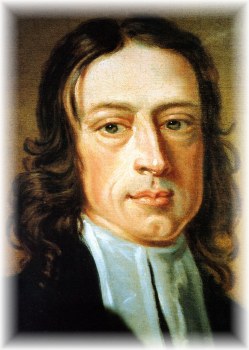
wesleyAs I mentioned in a previous post, back in April of this year (2013) I spoke twice at an event centered around a new book by Indiana Wesleyan University Provost David Wright, How God Makes the World A Better Place: A Wesleyan Primer on Faith, Work, and Economic TransformationI was invited to introduce a couple of the meetings at the conference with some remarks tied to David’s work and to Wesley’s thinking on work and economics.

This is what I said at a lunch event with a roomful of SPU professors:

“How God Makes the World a Better Place: Wesleyan Contributions to a Social Framework for Human Flourishing”

Introduction

First, I want us to understand the service that David has done to the church by opening the conversation on Wesley and economics in this little primer.

When I first knew that I’d be here today with you to think together about this topic, I contacted the smartest scholar of Wesley and things Wesleyan that I know: Randy Maddox, who is now at my alma mater, Duke University. “Randy,” I said, “A group is getting together in your old stomping grounds in April to talk about what Wesley can teach us about work and economics. Can you point me to some sources on that?”

Now I had full expectation that Randy would set me in a good direction. After all, this was the man who decades ago, in a chance conversation on an airplane, basically gave me an entire starting bibliography for my dissertation on the American Wesleyan holiness movement.

Instead, Randy said: “That’s great. So glad you’ll be talking about this. But this is a seriously understudied area. Almost nobody has written about this. There just aren’t that many sources I can point you toward.” Shocking! One of the world’s leading experts on Wesley not only couldn’t tell me much about this topic, but he couldn’t even point me to scholarly sources on it. That’s when I knew I had my work cut out for me. Continue reading

What does John Wesley teach us about work and economics?


David Wright bookA couple of months ago, Seattle Pacific University held a conference centered on a new book by Indiana Wesleyan University Provost David Wright, How God Makes the World A Better Place: A Wesleyan Primer on Faith, Work, and Economic TransformationI was invited to introduce a couple of the meetings at the conference with some remarks tied to David’s work and to Wesley’s thinking on work and economics.

This is what I said at a breakfast event with a roomful of eager SPU school of theology students and fellow-travelers:

Where can we learn from Wesley in the area of work and economics?

Theological first principles

The focus of this primer is “Work as cooperation with God.”

“In the Wesleyan view, godly work is not defined by what one does, but by the way one does it,” says David. I think that’s fair to say, and I would add, not only the way one does it, but the motivations and character out of which those actions flow. In examining the motives behind John Wesley’s extraordinary lifelong dedication toward bringing material as well as spiritual flourishing to the poor, Duke’s Richard Heitzenrater argues that it comes most fundamentally from a Christian virtue ethic, not an ethic of obligation.

An ethic of obligation sets the rules and laws for behavior, and then lays down the imperative: Go and do it! A virtue ethic recognizes that despite what Nike would tell you, you can’t “Just do it.” You have to “be it” before you can “do it.” Ethical behavior flows from ethical character. And ethical character is not a matter of gritting your teeth and performing a series of actions. It is about having your heart changed. Continue reading

C S Lewis as “medieval” moral philosopher


Cover of "The Abolition of Man"

C S Lewis was, I believe, “medieval” in the very warp and woof of his thought. To borrow from Wikipedia, b/c this morning I am lazy, and in this case Wikipedia is accurate:

Lewis then taught as a fellow of Magdalen College, Oxford, for nearly thirty years, from 1925 to 1954, and later was the first Professor of Medieval and Renaissance English at the University of Cambridge and a fellow of Magdalene College, Cambridge. Using this position, he argued that there was no such thing as an English Renaissance. Much of his scholarly work concentrated on the later Middle Ages, especially its use of allegory. His The Allegory of Love (1936) helped reinvigorate the serious study of late medieval narratives like the Roman de la Rose. Lewis wrote several prefaces to old works of literature and poetry, like Layamon’s Brut. His book “A Preface to Paradise Lost” is still one of the most valuable criticisms of that work. His last academic work, The Discarded Image: An Introduction to Medieval and Renaissance Literature (1964), is a summary of the medieval world view, the “discarded image” of the cosmos in his title.

As I have explored in another post, Lewis was in tune with medieval thought as much in his philosophical and ethical thought as in his literary scholarship, his imaginative writings, or his Christian apologetics. Continue reading

C S Lewis and “medieval morality”


The following are some thoughts on how C S Lewis will figure as a “guide” into the look and feel of the “moral fabric of the Middle Ages,” and how that fabric differs from our own. It’s basically me grinding away at the grist for this Medieval Wisdom for Modern Protestants book.

My argument in this chapter is not that Christianity—either in the medieval period or any other period—has taught some distinctive morality, or even that it taught that morality in a distinctive way (although it did, from the earliest years of the church, as Robert Louis Wilken persuasively argues in The Spirit of Early Christian Thought). Rather, my argument is that today, Protestants, especially evangelicals, have fallen so in love with Luther’s (Augustine’s) message of grace, and have so spiritualized their faith (I almost said Gnosticized, and sometimes I wonder) that questions of morality have receded from view. So we need to hear again from a time (the Middle Ages) when Christianity structured not only people’s worship, but also their moral lives. Continue reading

Has the Christian church really been historically pacifist?


As Mark van Steenwyk and I have prepared to teach both a Masters and a DMin version of our “Resources for Radical Living” course this coming winter, we have reconfigured the course significantly. Among the changes will be the figures and movements we deal with under the heading of “the prophetic life.” There we hope to deal with two public issues that continue to challenge Christians today: the problem of the poor and the problem of war.

Thus it is with interest that I read today George Weigel insisting that for some time now, following the late great Luther scholar Roland Bainton, we have been “Getting History Wrong on Just War”. Continue reading