
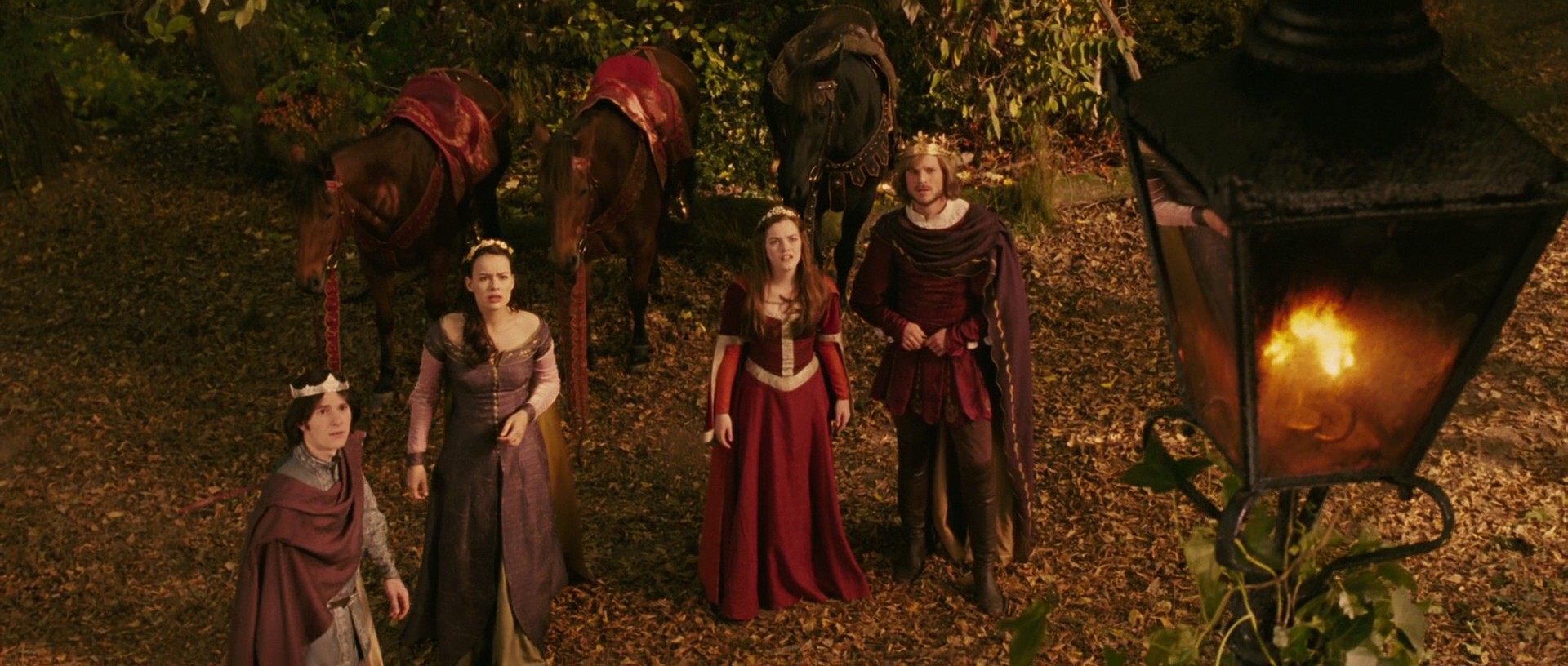
This is me reflecting in my “Tradition chapter” draft (for the forthcoming Getting Medieval with C. S. Lewis) on Paul Ford’s understanding of how C S Lewis used story, in the Narnia Chronicles, to initiate readers into a traditional moral reality by drawing their desires into play. It supports and resonates with this post.
Paul Ford, Companion to Narnia, “Introduction” and “Story”
“Story, Stories” (pp. 412-13)
“The seven books of the Chronicles of Narnia are testament to the fact that Lewis valued stories and story-telling as the best way to transmit values down through the generations. The difference in quality between the New Narnians and the Old Narnians (as personified by Miraz and Prince Caspian) is faith. Miraz thinks fairy tales are for children and to be outgrown, while for Caspian the old stories are his salvation.” (412)
“Introduction,” sub-section “What Is a Story?
There is much wisdom here about story as moral education because it is a key way our emotions are trained. So too tradition: it is handed down as of immense value, it forms our culture’s “ways of seeing,” of “Enjoying” truths by indwelling them and using them to “see other things by”—like “looking along the beam” rather than “looking at the beam”—the latter being the analytical mode that Lewis calls Contemplating, rather than Enjoying.
The nature of the education that story gives us is described by Gilbert Meilaender, quoted at length in this section: “‘Moral education . . . does not look much like teaching. One cannot have classes in it. It involves the inculcation of proper emotional responses and is as much a ‘knowing how’ as a ‘knowing that.’ . . . The picture we get when we think of ‘knowing how’ is the apprentice working with the master. And the inculcation of right emotional responses [see “men without chests” image in Abolition of Man] will take place only if the youth has around him examples of men and women for whom such responses have become natural. . . . Lewis, like Aristotle, believes that moral principles are learned indirectly from others around us, who serve as exemplars Continue reading
 Medieval Wisdom for Modern Christians





 Grateful to the dead