
Alister McGrath and Timothy George’s book For All the Saints came out a few years ago and didn’t get nearly the attention it deserved. As a historian, I am not deterred from lauding something just because it is a few (or a few hundred) years old, so here we go:
You should read this book if you are concerned with the “sanctification gap” in evangelical culture–that is, if you think evangelical thought and evangelical life have become woefully separated, favoring either thought over life or life over thought, to the detriment of both:
Christian History Corner: For All the Saints
A fascinating book reminds us to get our heads and hearts together, in the company of the cloud of witnesses.
By Chris Armstrong
“Evangelicals,” gather round. Fellow-travelers and outsiders, lend an ear. For we are about to talk about evangelicalism’s “dirty little secret.” It’s what historian Richard Lovelace has called “the Sanctification Gap.” And it was the subject of a conference held in October, 2000 at Beeson Divinity School, Birmingham, Alabama, which has now resulted in a book worth reading.
The book, like the conference, is titled For All the Saints: Evangelical Theology and Christian Spirituality (Westminster John Knox, 2003). Continue reading
 Medieval Wisdom for Modern Christians
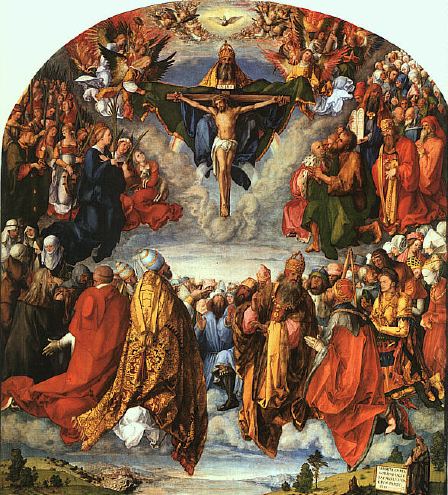

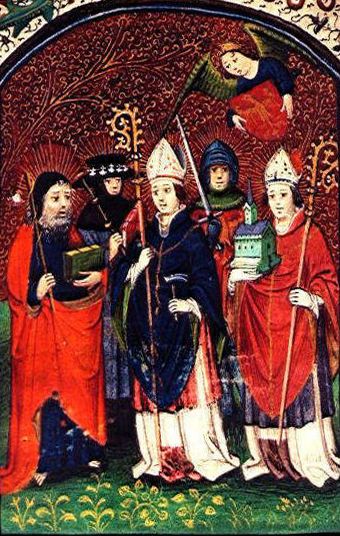




 Grateful to the dead