Category Archives: Patron Saints for Postmoderns

Saints: The three things early Lutherans thought they could do for us


Martin Luther by Lucas Cranach the Elder, pain...

I once wrote that Luther tossed the saints off of the church calendar and thus removed an important spiritual tool from Protestantism. Now I am reminded by the “Here I Walk” blogger(s) that I should have qualified that statement. The document cited in the following is Lutheranism’s primary confessional document, the Augsburg Confession.

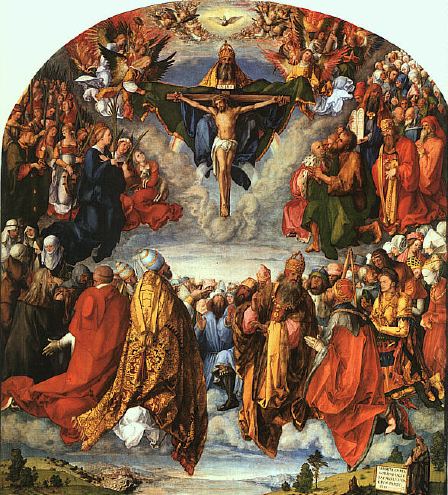
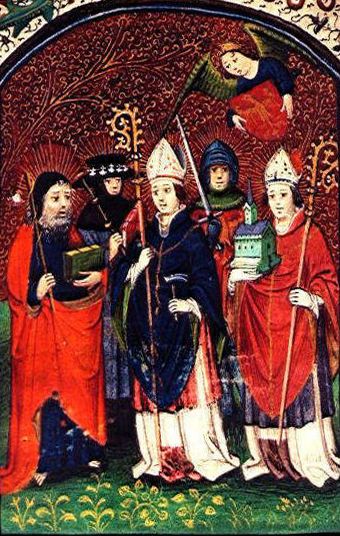
Melanchthon gives an account of why Chris­tians should not invoke the saints in prayer (Apol­ogy to the Augs­burg Con­fes­sion, Arti­cle xxi). But he and Luther both allowed for the pos­si­bil­ity that the saints pray for us, and nei­ther of them denied the des­ig­na­tion of some believ­ers as saints in the sense of “extra­or­di­nary wit­nesses to Christ.” In fact, Melanchthon lays out three extremely impor­tant things that saints do for believ­ers that makes “giv­ing honor” to them per­fectly appropriate: Continue reading

Ancient and medieval historical theology: Ur doin it wrong?


The subhead above should have read: “A group dedicated to doing it right.” But then I couldn’t have used this lolcat picture. And I have a weakness for lolcats.

Once in a while a bright seminary student will come to me and tell me that they want to “go on” and study historical theology, in the service of the church. What theology doctoral program should they enter?

I think of Duke and UVA, and then I’m flummoxed. Now, I know there are other good programs out there. I’m not the best-connected academic. So I suggest that the student email their question to one of the prominent senior historical theologians–UVA’s Robert Wilken is one–who are in fact pursuing their field in the explicit service of the church (may Jaroslav Pelikan rest in peace).

But it has seemed to me that the field has never quite recovered from the mid-twentieth-century assimilation of theology to the “religious studies departments” of the major universities, nor from the academy’s quite proper dismissiveness of the squabbling “my dogma is better than your dogma” confessionalism that marked the field in the decades leading up to that assimilation. Certainly, as theology still languishes far from her erstwhile status as “queen of the sciences,” historical theology as the queen’s handmaiden has also fallen on hard times.

Now I discover that a group of historical theologians at Boston College have, for the past few years, been dedicating themselves to leading their field of historical theology back to the pursuit of (this will shock you) the history of theology–instead of defense of dogma, study of philosophy, or other things only tangentially related to the health of the church. Continue reading

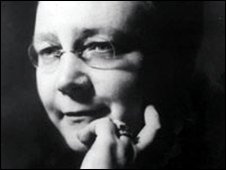
“The Incarnation is the most dramatic thing that ever entered into the mind of man; but if you tell people so, they stare at you in bewilderment.” Dorothy Sayers


Cover of

An excellent book on the theology of Dorothy Sayers–indeed the only such book that I know of–is George Fox University professor Laura K. Simmons’s Creed Without Chaos (Grand Rapids: Baker Academic, 2005). Simmons goes methodically through Sayers’s theological thought, stopping at one point to examine the writer’s handling of the Incarnation:

77: “The dogma of the Incarnation is the most dramatic thing about Christianity,” Dorothy L. Sayers wrote in October 1937, “and indeed, the most dramatic thing that ever entered into the mind of man; but if you tell people so, they stare at you in bewilderment.”One of the doctrines on which Sayers reflected perhaps more than any other was the incarnation. A proper understanding of Christ’s essence, character, and mission on earth was “the difference between pseudo-Christianity and Christianity,” she wrote in June of 1945. The relationship between the God who created the world and God’s Son, Jesus, who walked in it, was a crucial part of her theology. Continue reading

Would we fail this exam on what the church believes? Dorothy Sayers at her best


Into her famous mid-20th century essay “The Dogma Is the Drama,” mystery writer, religious playwright, and Dante translator Dorothy L. Sayers inserts the following scathing and humorous assessment of what many unchurched people think the church believes. Sadly, this portrait may still not be far off. And as they were then, these sorts of mistakes are still largely the fault of the church itself.

Q.:          What does the Church think of God the Father?
A.:          He is omnipotent and holy. He created the world and imposed on man conditions impossible of fulfillment. He is very angry if these are not carried out. He sometimes interferers by means of arbitrary judgments and miracles, distributed with a good deal of favoritism. He . . . is always ready to pound on anybody who trips up over a difficulty in the Law, or is having a bit of fun. He is rather like a dictator, only larger and more arbitrary. Continue reading

Beyond C S Lewis: Glimpses of 20th-century British literary Christians from biographer Joseph Pearce


Cover of "Literary Converts: Spiritual In...

A Christian literary feast

One of the more fascinating books I’ve read in the last 10 years is a sort of group biography by the prolific Catholic writer Joseph Pearce. Called Literary Converts (San Francisco: Ignatius, 2000), this sprawling account leads us through a surprisingly large and varied network of 20th-century British literary Christians. Here are G. K. Chesterton, Hilaire Belloc, Evelyn Waugh, C. S. Lewis, J. R. R. Tolkien, Ronald Knox, T. S. Eliot, Dorothy L. Sayers, and many more. They all play their part in the spread of Christianity in English literary culture after the spiritual doldrums of the 1910s and 20s.

Pearce weaves themes and connections that will grip any fan of those writers who shares their faith. His keen eye for the telling detail, the revealing vignette, and the colorful anecdote make this book both a rich resource and a pleasure to read, if you can forgive the Roman Catholic triumphalism that emerges here and there along the way. Continue reading

John H. Armstrong says Your Church Is Too Small—a blog review


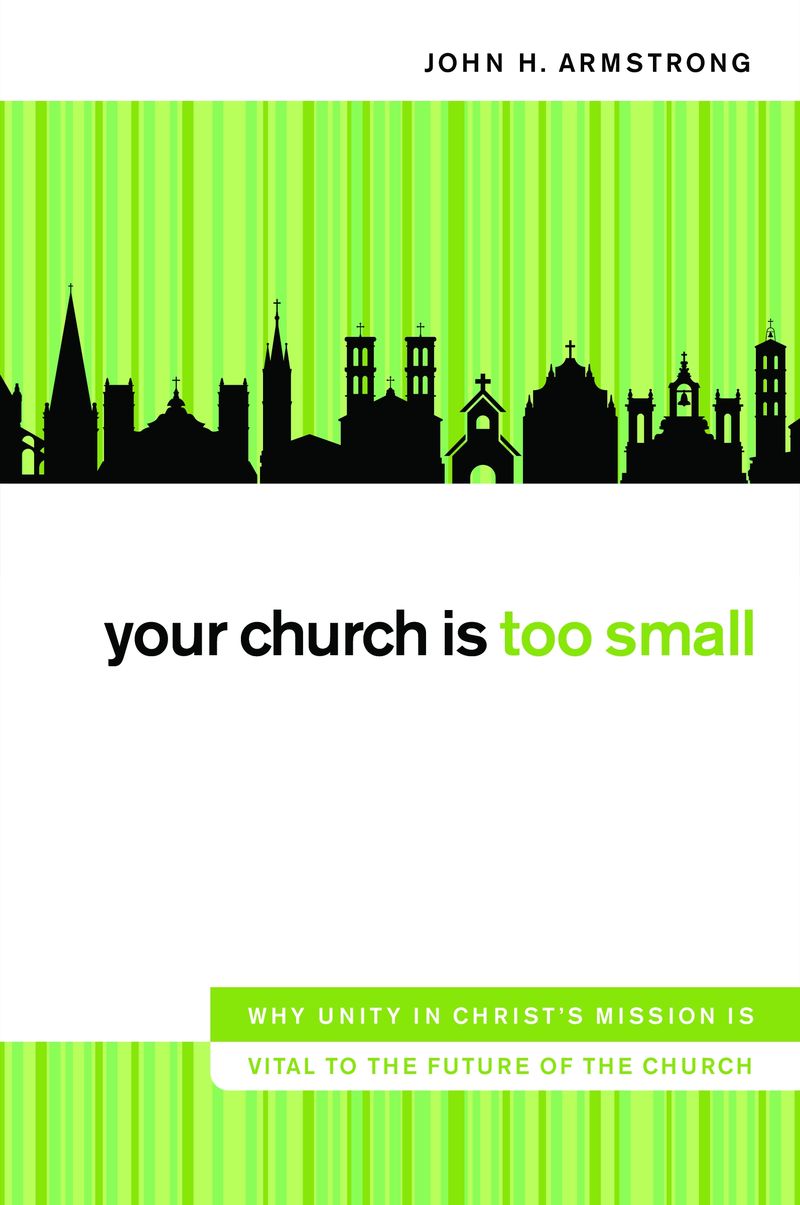
I’ve been browsing the Deep Creek Anglican Church Blog‘s chapter-by-chapter review of John H. Armstrong’s new book, Your Church Is Too Small: Why Unity in Christ’s Mission Is Vital to the Future of the Church.

I was unfamiliar with John’s [no relation, as far as I know!] ministry until now. But having skimmed the review at the above blog, I think I find in him a kindred spirit. Sectarianism based on epistemological modernism is indeed a scourge of the church today. A balanced, critical ecumenism rooted in a heightened appreciation for tradition is indeed a much-needed balm. What I see here makes me want to know more about Armstrong’s ministry. Continue reading

Is contemplative prayer a legitimate Christian practice?


Cover of

Over at Internet Monk, an excellent review of a book on classic Christian spirituality, Gary Thomas’s Sacred Pathways, has stirred up a heck of a hornet’s nest. A couple of critics are insisting at some length that contemplative prayer of the sort Thomas, Foster, Willard, and others recommend is “syncretistic” and thus dangerous.

Here is an excerpt from the review:

If you’ve read anything else by Gary Thomas or checked out his website, you know that unlike some evangelicals he believes that the Holy Spirit has been active throughout Christian history, not just since 1517. Continue reading

Patron Saints for Postmoderns Fall 2010 Bethel Seminary course syllabus


Here is the syllabus for the Patron Saints for Postmoderns course being taught this fall at Bethel Seminary. If you are a Bethel seminarian looking for a course in the SP or HS area, there’s still time to sign up! Eight have registered so far: This should just the right size to be a stimulating seminar.

Patron Saints HS-SP707 2010 Syllabus FINAL

Re-post: Patron Saints narrated slideshow


The link in this one didn’t work the first time, and in any case I’m trying to get this to “bump” on Facebook and Twitter–so I’m re-posting:

Next month I’ll be teaching the Bethel Seminary course from which my book Patron Saints for Postmoderns was developed. In the past I’ve opened the course with an introductory talk accompanied by a fancy PowerPoint with lots of cool pictures. This year I figured out how to do the thing as an audio narrated PowerPoint and convert it into a slick Flash movie with user controls.

The talk includes the following:

–A rationale for studying Christian biographies

–What I mean by “saints” and why we should care

–How church history and biography got added to Protestant seminary curricula

–A bunch of vignettes of the figures in my book (and the course)

–Other incredibly fascinating stuff

The file is currently here. It should load in a browser window pretty quickly–then just hit “play” and you can pause, switch slides, etc., and hear my mellifluous voice and see the cool pictures. :)

Patron Saints narrated slideshow


Next month I’ll be teaching the Bethel Seminary course from which my book Patron Saints for Postmoderns was developed. In the past I’ve opened the course with an introductory talk accompanied by a fancy PowerPoint with lots of cool pictures. This year I figured out how to do the thing as an audio narrated PowerPoint and convert it into a slick Flash movie with user controls.

The talk includes the following:

–A rationale for studying Christian biographies

–What I mean by “saints” and why we should care

–How church history and biography got added to Protestant seminary curricula

–A bunch of vignettes of the figures in my book (and the course)

–Other incredibly fascinating stuff

The file is currently here. It should load in a browser window pretty quickly–then just hit “play” and you can pause, switch slides, etc., and hear my mellifluous voice and see the cool pictures. 🙂