Category Archives: Work with purpose

Millions of Western Christians experience a painful bifurcation between their faith and their work. How can Christians see the divine purpose in their “secular” labors? And where can God’s purposes be found in the economic sphere?

Early Christianity and everyday work – a quick introduction


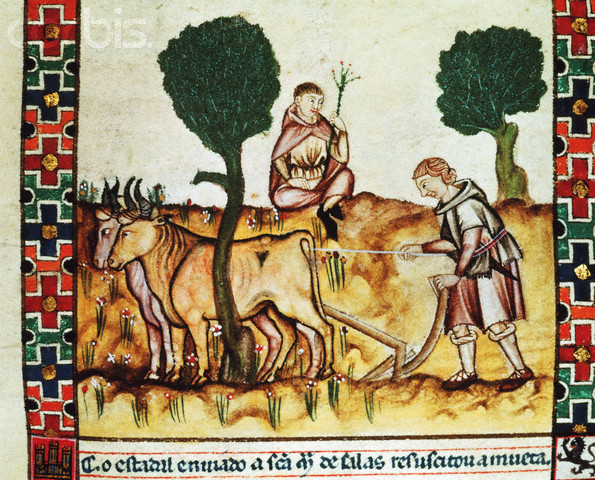
Medieval Manuscript Illumination of a Farmer Teaching His Son to Plow From Alphonse Le Sage'sChristian views of work, before and since the Reformation
Having laid a biblical basis for thinking about work, I’d like to take us now on something of a whirlwind tour through some of the different ways the historical church has viewed work, vocation, and economics.

Is there a theological tradition, rooted in Scripture and passed on through the ages of the church, that affirms “secular,” even menial economic work is part of a larger picture of God-given vocation?

In a word, yes.

Of course, in the New Testament God’s primary call to the church is to preach and disciple. Yet, says Max Stackhouse, “many passages also recognize that people have earthly obligations, and the calling is closely identified with one’s responsibilities in life, which one is to fulfill dutifully.” Continue reading

A brass-tacks, real-world theology of work and vocation, with thanks to Tim Keller


depressed working guyThe current series of posts (starting here) has been sketching a theological understanding of work and vocation, drawing from Tim Keller and Katherine Leary Alsdorf’s excellent book Every Good Endeavor. The last two posts have tapped traditional Christian understandings of Creation and Incarnation for what they have to say about this important topic. This one wraps up with the New Heavens and New Earth, and then asks what difference all this lovely meaty theology makes to how we experience our own work and vocations here in the Real World:

Heavenly-earthly work

But there is one more part of the Bible story that evangelicals have forgotten, and that prevents us from having a healthy view of ordinary work. That is the ending of the story—not in heaven on fluffy clouds with angels playing harps, but in the New Heavens and the New Earth.

“According to the Bible, this world is the forerunner of the new heavens and new earth, which will be purified, restored, and enhanced at the ‘renewal of all things; (Matthew 19:28; Romans 8:19–25),” say Keller and Alsdorf. “No other religion envisions matter and spirit living together in integrity forever. And so birds flying and oceans roaring and people eating, walking, and loving are permanently good things.”

What does this triumphant re-creation in the End Times mean to our ordinary, daily work today? It means that contrary to some popular opinion, the things we do and make and even accumulate are not “all going to burn.” True, there are no U-Hauls on hearses. Continue reading

Jesus the Incarnate Worker God


Christ-in-the-Carpenters-ShopINcarnation

In the last post, we looked briefly at the story and doctrine of Creation – what it means to us as human workers.

But we also miss the wonder and dignity of work because, although we love to meditate on the cross, the resurrection, and the salvation that comes from those events, we don’t stop to be amazed and edified by the Incarnation. If you look at the thousand years of Western medieval art, you’ll find lots of depictions of the crucifixion and the empty tomb, but neither of these is the most-painted scene of that millennium.

What was the most-painted scene? The Annunciation: the moment that the Angel appears to Mary and tells her that God is about to come to earth, to take on human form, through her own womb. This is the moment that the incredible news first comes to humanity: God is about to become Incarnate—to become part of his own creation. Continue reading

We were made to work (really! It’s there in the book of Genesis)


garden-e1372528446638Creation

At the very beginning of Genesis, God shows himself as a working God, who creates valuable things. And then right away we see that we ourselves as made in his image, also to work. Timothy Keller cites biblical scholar Derek Kidner, who notices a profound detail in the account of God’s creation of animals and humans in Genesis 1:

Only man is set apart and given a job description, “an office (1:26b, 28b; 2:19; cf. Ps.8:4–8; James 3:7) . . .” In other words, while the plants and animals are called to simply reproduce, only humans are explicitly given a job. They are called to “subdue” and “have dominion,” or rule the earth. We are given specific work to do because we are made in God’s image. (Every Good Endeavor, 48.)

So as long as the Jewish and Christian religions have been on this earth, these peoples have worked for most of the week, then set aside the seventh day for rest. Why? Continue reading

What our pastors need to know about faith, work, and economics – part 1: Getting the beginning and end of the story right


cut-up-bibleA couple of months back, I was invited to come to the world headquarters of the Wesleyan denomination in Indianapolis to talk with a group of professors from Indiana Wesleyan University’s seminary about how we can train tomorrow’s pastors better in the area of faith, work, and economics. This series of posts is from the two talks I gave there.

Introduction: getting the story right

As we start our reflections today, I think a fair question is: Why does the church today find itself needing to pour time and effort into connecting our people’s faith with their work? Shouldn’t it be obvious that God cares about all aspects of our life as human beings, and that he works in many ways through our work?

Then I read key contemporary thinkers in the faith-and-work movement, and a picture emerges. I’d put it like this:

Evangelical Christians are really, really good at “the middle part” of the grand story told in the Bible. Continue reading

How can I find meaning in my work? A Twin Cities area October mini-conference addresses the question


Faith work t-shirtOne more post related to my faith-and-work activities. The Bethel Work with Purpose initiative team has put a lot of time and care into developing a well-resourced conference on work and vocation. The other day we sent out an invitation to pastors and seminary alumni, and I’d like to extend this invitation to Grateful to the Dead readers too. If this question of how our faith and work lives relate to each other, or questions about finding meaning and “a vocation” in work, engages you, please join us for this “mini-conference.” If you know someone who could benefit from the conference, please let them know:

Greetings,

I write to invite you to join us at MISSION:WORK, a mini-conference for workers and their pastors (seminary.bethel.edu/work-with-purpose), Thursday night, Oct. 10, and Friday morning, Oct. 11.

Recent Barna research shows that young adults of the Millennial generation who have remained active in their churches are three times more likely than those who “dropped out” to say they learned to view their gifts and passions as part of God’s calling (45% versus 17%). They are four times more likely to have learned at church “how the Bible applies to my field or career interests” (29% versus 7%).

The truth is: churches benefit in many ways from equipping their members–especially young adults–for applying their faith to their work. But “most churches,” says Barna president David Kinnaman, “leave this kind of vocation-based outcome largely at the door unless these students show interest in traditional church-based ministry.” Continue reading

Check out this cool conference on faith and work


faith-work-cultureJust wanted to show y’all this conference we’ve been working on here at Bethel Seminary, for Thur-Fri Oct 10-11, 2013. Come one, come all!

Scott Rae on business for the common good


Image[The following is reposted from the Acton Institute’s blog:]

In a lecture at Acton University titled “Business and the Common Good,” Dr. Scott Rae of Biola University examined the role of business in serving the common good.

Rae began by examining some of the common criticisms lobbed against business, namely, that it promotes greed, inequality, and consumerism. As Michael Miller often notes, these are human vices, not economic ones, and thus business, properly understood, is not immoral in and of itself.

On the contrary, business has great potential for serving and contributing to the common good. Though some believe profit-seeking enterprises are only valuable insofar as they can “give something back” out of what’s leftover, Rae emphasized how business advances the common good right from the get-go.

Rae offers four primary ways this occurs:

  • By peaceably providing needed goods and services that allow human beings to flourish and enhance their well being
  • By providing meaningful work that allows human beings to flourish and enhances their well being
  • By facilitating wealth creation and economic growth
  • By enabling the poor to lift themselves out of poverty

By leveraging business, we not only yield profits that can be used for the glory of God outside of business, we can serve our neighbors in the here and now. “God is not just redeeming individuals,” Rae concluded. “He is redeeming all of creation. He is redeeming the marketplace.”

business-for-common-good

To listen to Rae’s lecture, you can purchase “Business and the Common Good” here.

Purchase Rae’s book, Business for the Common Good: A Christian Vision for the Marketplace

To join the On Call in Culture community, like us on Facebook or follow us on Twitter.

How can John Wesley help us find social forms geared to human flourishing?


wesleyAs I mentioned in a previous post, back in April of this year (2013) I spoke twice at an event centered around a new book by Indiana Wesleyan University Provost David Wright, How God Makes the World A Better Place: A Wesleyan Primer on Faith, Work, and Economic TransformationI was invited to introduce a couple of the meetings at the conference with some remarks tied to David’s work and to Wesley’s thinking on work and economics.

This is what I said at a lunch event with a roomful of SPU professors:

“How God Makes the World a Better Place: Wesleyan Contributions to a Social Framework for Human Flourishing”

Introduction

First, I want us to understand the service that David has done to the church by opening the conversation on Wesley and economics in this little primer.

When I first knew that I’d be here today with you to think together about this topic, I contacted the smartest scholar of Wesley and things Wesleyan that I know: Randy Maddox, who is now at my alma mater, Duke University. “Randy,” I said, “A group is getting together in your old stomping grounds in April to talk about what Wesley can teach us about work and economics. Can you point me to some sources on that?”

Now I had full expectation that Randy would set me in a good direction. After all, this was the man who decades ago, in a chance conversation on an airplane, basically gave me an entire starting bibliography for my dissertation on the American Wesleyan holiness movement.

Instead, Randy said: “That’s great. So glad you’ll be talking about this. But this is a seriously understudied area. Almost nobody has written about this. There just aren’t that many sources I can point you toward.” Shocking! One of the world’s leading experts on Wesley not only couldn’t tell me much about this topic, but he couldn’t even point me to scholarly sources on it. That’s when I knew I had my work cut out for me. Continue reading

What does John Wesley teach us about work and economics?


David Wright bookA couple of months ago, Seattle Pacific University held a conference centered on a new book by Indiana Wesleyan University Provost David Wright, How God Makes the World A Better Place: A Wesleyan Primer on Faith, Work, and Economic TransformationI was invited to introduce a couple of the meetings at the conference with some remarks tied to David’s work and to Wesley’s thinking on work and economics.

This is what I said at a breakfast event with a roomful of eager SPU school of theology students and fellow-travelers:

Where can we learn from Wesley in the area of work and economics?

Theological first principles

The focus of this primer is “Work as cooperation with God.”

“In the Wesleyan view, godly work is not defined by what one does, but by the way one does it,” says David. I think that’s fair to say, and I would add, not only the way one does it, but the motivations and character out of which those actions flow. In examining the motives behind John Wesley’s extraordinary lifelong dedication toward bringing material as well as spiritual flourishing to the poor, Duke’s Richard Heitzenrater argues that it comes most fundamentally from a Christian virtue ethic, not an ethic of obligation.

An ethic of obligation sets the rules and laws for behavior, and then lays down the imperative: Go and do it! A virtue ethic recognizes that despite what Nike would tell you, you can’t “Just do it.” You have to “be it” before you can “do it.” Ethical behavior flows from ethical character. And ethical character is not a matter of gritting your teeth and performing a series of actions. It is about having your heart changed. Continue reading