

This article is continued from “Debunking the Protestant ‘T’ word: An edifying tale, part I,“ “Debunking the Protestant ‘T’ Word part II: How to spot a heresy, “Debunking the Protestant ‘T’ Word part III: What was the beef at Nicea?“ and “Debunking the Protestant “T” word part IV: How sausage was made.”
So now in conclusion: Some of you may be inclined to say: “All I need is my Bible, and I know everything about God and Jesus and salvation that I need to know.” I hope you’ll see the moral of this story about the Council of Nicea. The doctrine of the Trinity—that is, the doctrine that the Father, Son, and Holy Spirit are all uncreated, all co-eternal, all equal in divinity—is, in one sense, all over the Bible. But in another, very literal sense, the Trinity is never mentioned even once in the Bible. Nor is the exact nature and relationship of the “two natures of Christ”—his divine nature and his human nature. Those were clarified at later councils. Nor will you find in the Bible every detail of the right way to run a church—including church government, baptism, the Lord’s Supper, and so much more. (That’s why there are so many denominations!) Nor, of course, does the Bible contain instructions about what job each of you should take, or who you should marry.
You can and should ask the Bible each of those kinds of questions. But it’s not a great idea to just ask the Bible. Continue reading


 You said 14 hours ago:
 Medieval Wisdom for Modern Christians
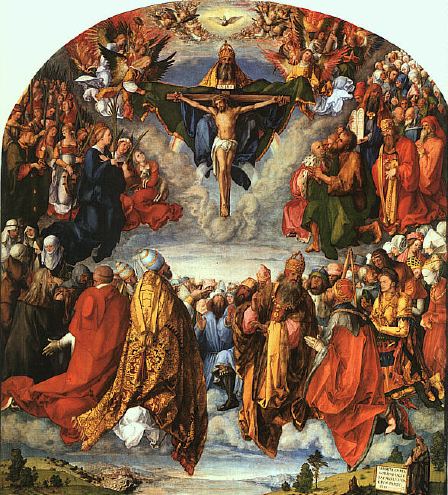

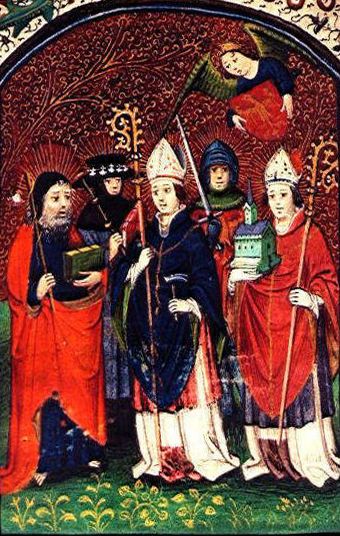




 Grateful to the dead
Thanks, Da Vinci Code . . . for sending us back to Christianity’s founding fathers
Once in a while, a book or movie comes along that presents its own twisted version of the Christian faith or of events from Christian history, and the faithful rise up to object. And sometimes, the faithful also dig into our history to find out “what really happened.” This was the case with Dan Brown’s The Da Vinci Code, first published in 2003:
Thanks, Da Vinci Code …
… for sending us back to Christianity’s “founding fathers”—and the Bible we share with them.
Chris Armstrong
It’s been a while since Christian History got an online response to rival the emails that poured in after last week’s “Behind the News”. We enjoyed reading your responses to staff writer Collin Hansen’s fact-checking piece on Dan Brown’s Da Vinci Code.
Anything that leads people back to those dynamic early centuries of the church can only help the Christian cause. Obviously no human untruth can obscure the truth of the Gospel. And the first thing you notice when you read the early “church fathers” is that they are completely convinced Jesus is God himself. I’m talking about those bishops and teachers from the 100s and 200s too—long before the Nicean council (Brown claims) enforced on the church the supposedly minority position of Christ’s divinity. Continue reading →
Leave a comment
Posted in Uncategorized
Tagged Ancient Christian Commentary Series, Bible, canon, Church fathers, Da Vinci Code, Dan Brown, Greek philosophy, Torah