Tag Archives: Early Christianity

Christianity as healing religion: Gary Ferngren on the roles and rationales of healing in the early church


As I have done my early research on the history of medical care in the Christian west, I have benefitted greatly from (and blogged extensively on) the work of Guenther Risse and Darrel Amundson (if you chuck those names into the search box at the upper right of this blog, you can see a number of posts of material from those scholars).

But I have still been left with questions unanswered about the theological underpinnings of Christian medical care. Didn’t early/medieval understandings of human dignity, rooted in a scriptural insistence that we bear the “image of God,” join the Matthean sheep-and-goats passage to set the table for a Christian imperative that all should serve the sick, the dying, the poor? I was looking for a smoking gun on those things in the secondary literature.

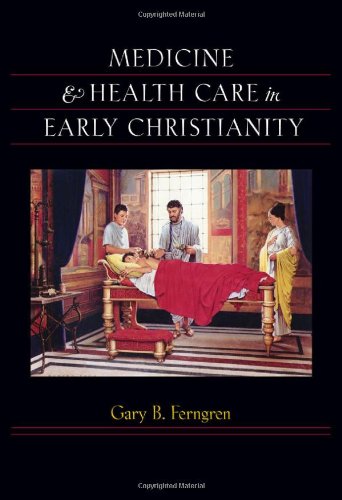
Well, now I’ve found it. It’s the wonderful and relatively new (2009) book by an Amundson colleague and collaborator, Gary B. Ferngren. The book is called Medicine & Health Care in Early Christianity. Continue reading
Controversies about Christ in the early church, part IV: The divine swallowing the human and the fourth council’s “four fences”


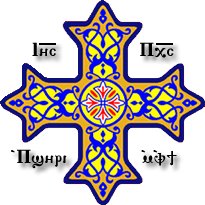
Cross of the Coptic Church, mistakenly called a “monophysite” church

This post follows from “Who do you say that I am: Controversies about Christ in the early church,” , and

So now we’re in the run-up to the fourth council: the council of Chalcedon. The major issue here was this: Eutyches was abbot of a large monastery. He was a strong supporter of Cyril, who had started to fight the Nestorians. This Eutyches was not going to compromise his position against Nestorius: he eliminated all possibility of a werewolf-Jesus by saying Christ had only one nature: his divine nature.

Remember the orthodox position: from the moment the 2nd person of the trinity became incarnate, this divine nature or person also possessed a human nature.

But how did Eutyches explain our salvation if Christ had only a divine and not a human nature? Continue reading

“Who do you say that I am?” Controversies about Christ in the early church


Detail - Glory of the New Born Christ in prese...

Glory of the newborn Christ in the presence of God the Father and the Holy Spirit; ceiling painting made by Daniel Gran (1694-1757), Annakirche, Vienna

The Council of Nicea in 325 established as orthodoxy the belief that Jesus Christ was co-eternal with the Father–an equal partner in the Trinity of Father, Son and Spirit (though a full theology of the Holy Spirit had yet to be developed).

But another controversy was beginning to heat up–one that would cause the first great schism of the church. And this one involved many more heretical bunny trails than the controversy with the Arians–even counting all of the Eusebians, Homoians, and so forth who muddied the Trinitarian waters between Nicea and the First Council of Constantinople (381).

This is the story of the tangled web of controversy about the person of Christ: how it was woven, what its strands were, and how at last the controversy was resolved. If you’re like I was when I first learned this stuff, this will stretch your mind and make you ask some questions you’ve never asked before: Continue reading

Debunking the Protestant “T” Word part III: What was the beef at Nicea?


The emperor Constantine and the council of Nic...

The Emperor Constantine and the Council of Nicaea, with Arius's books being burned, below. (Drawing on vellum. From MS CLXV, Biblioteca Capitolare, Vercelli, a compendium of canon law produced in northern Italy ca. 825.)

This article is continued from “Debunking the Protestant ‘T’ word: An edifying tale, part I“ and Debunking the Protestant ‘T’ Word part II: How to spot a heresy.“

Now, before Nicea, there had been many councils. But they had been regional affairs, to deal with this or that issue—sometimes a heresy, sometimes a question of church order, and so forth. But the church had not yet seen something as widespread and threatening as the Arian heresy of the late 200s and early 300s. So let’s look now at how that started, and how it was resolved at the Council of Nicea.

To understand the significance of the Council of Nicaea, we need to enter into the minds of those involved and ask why so much bitterness and confusion had been caused by one apparently simple question: “In what way is Jesus divine?” Continue reading

Debunking the Protestant “T” word part II: How to spot a heresy


Statue de Constantin Ier, Musée du Capitole, Rome

Constantine, looking imperial

This article is continued from “Debunking the Protestant ‘T’ word: An edifying tale, part I” and continues in “Debunking the Protestant ‘T’ word part III: What was the beef at Nicea?

But we’re getting ahead of ourselves. When the debate about Jesus’ divinity first hit the streets of Alexandria, the Emperor Constantine saw the handwriting on the wall (perhaps literally, if he came across some of that theological graffiti!). He said to himself, “This empire isn’t going to fall apart on my watch!” And so he called together a giant council of the church at his summer palace in Nicea (Nicea is now a town called Iznik, in Turkey—and sadly for us historians, there’s nothing left of that palace). Constantine was doing, on a larger scale, what the church had always done in its first three hundred years when a crucial matter like this came up. He called on the bishops—that is, the teaching pastors of key churches—to come together.

The point was not to have these top pastors get all creative and brilliant and make up some new doctrine that everyone would have to follow from then on. No, since the beginning, the bishops in the church had had only one main function, and everyone understood it. The job of each bishop—and especially of all the bishops together—was simple: they were expected to faithfully pass on the teachings of the Apostles. Continue reading

Debunking the Protestant “T” word: An edifying tale, part I


Icon depicting the First Council of Nicaea.

Icon of the First Council of Nicea

Once in a while I get to talk to a group of Protestants about one of our shibboleths, the “T word”–that is, tradition. And I make the case that tradition is not the sort of extra- and anti-biblical “rules of man” thing that they think it is. It’s not “stuff added to the Scripture to which the consciences of good Christians have been bound by an evil hierarchical church.”

In fact, tradition has been for 2,000 years the stuff of the faith of quite possibly the majority of world Christians. And it was the stuff of the faith of almost every Christian not just before the Reformation, but right through the Reformation, including the thought and commitments of Luther, Calvin, and other great Reformers. Calvin’s Institutes are full of footnotes to the church fathers. Why do that if Scripture is your only authority and is perfectly clear on all matters? Continue reading