Tag Archives: sacramentality

The principle that enchanted everyday life for the medievals (including the arts and sciences)


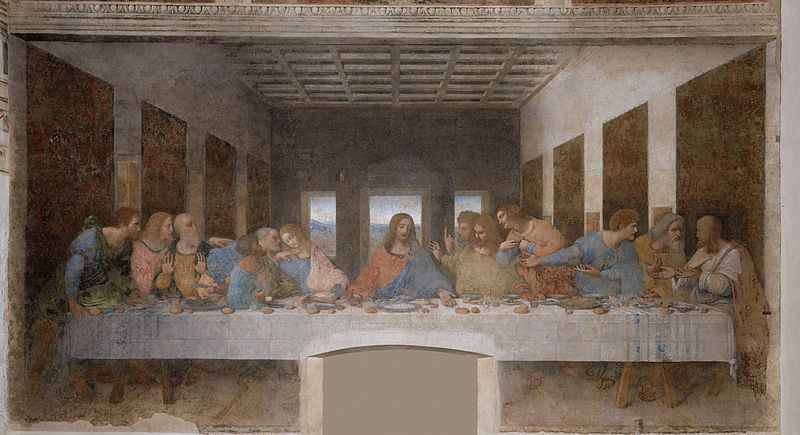
The Last Supper, Leonardo Da Vinci

The Last Supper, Leonardo Da Vinci

In my last post, I asked, “What separates Protestants from Catholics on the matter of the arts? Why have Protestants done so poorly compared with Catholics?” I hinted that the answer lies in a certain aspect of the medieval heritage – which rightly belongs to all Western Christians today, but which the Catholics have retained and Protestants largely discarded.
What, then, did the medieval church have, theologically, that the Reformation church seems to have lost? What was the bridge from the material to the spiritual world that avoided both Gnosticism and materialism—and fostered the arts as well?

This missing links turns out to be one of the most central theological ideas of the Middle Ages:  the idea of sacramentality. Sacramentality is the concept that the outward and visible can convey the inward and spiritual. Physical matters and actions can become transparent vehicles of divine activity and presence. In short, sacraments can be God’s love made visible.

Or to turn it around, sacramentality is the belief that transcendent spiritual reality manifests itself in and through created material reality, that all creation is in some sense a reflection of the creator, that God is present in and through the world. A correlative of this is that religion is not separated from, or compartmentalized from, the rest of life. It’s not something left for Sunday morning. God can and does manifest himself in and through the creation that he’s made. Continue reading

How the Incarnation and God’s sacramental presence in all creation put our everyday work in a new light


English: Icon of Jesus Christ

Icon of Jesus Christ (Photo credit: Wikipedia)

What follows are two short theological-historical reflections on our daily work that ended up on the cutting-room floor when I handed in 6,000 words for a 3,500 feature on Christian thought about vocation that will appear in next month’s Leadership Journal. Since I still like these, I’m posting them here. The first is on what the Incarnation means to our work, with special reference to vocations in the arts. The second is on how God is present and communicating to us in every part of the created world in a way analagous to, though not the same as, his real presence in the sacraments.

Resources on work in early and medieval Christian thought

The Incarnation

Luther and other Reformers certainly did advance Christian reflection on work and calling. But if we turn again to the early and medieval church and look beyond the clerical and monastic usurpation of the term “vocation,” we will find some important theological resources for thinking about ordinary work—resources that Protestants today are in danger of losing entirely.

The appearance of Christ on the scene as a human being, with all the physical needs, skills, and temptations we all share, inserts a crucial principle into our thinking about work. The Incarnation meant that the church could not fall into the error of the Gnostics, calling the material world evil and thus leaving God out of consideration when we interact with the material world. In the second century such pastor-teachers as Irenaeus led the charge against this error, leading the church to reject Gnosticism as heresy.

Today we are in danger, not of viewing the material world as evil (most Western folk are little tempted to that error!), but of marginalizing our time-bound material existence as “non-spiritual.” Continue reading

Behold: an evangelical theologian who wishes to medievalize evangelicalism–as I do!


A fascinating evangelical proposal to return to a medieval "sacramental ontology"

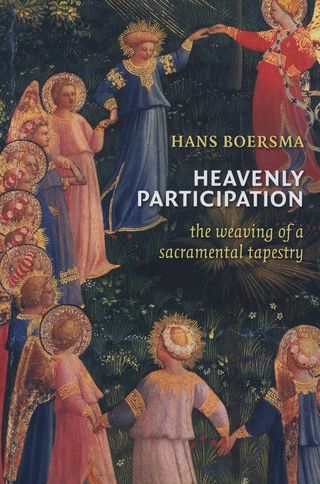
A week or so ago, I stumbled fortuitously on a book review in the pages of Books and Culture. Or to be more precise, on the glowing screen of B&C‘s website. This was a review by a Wheaton art historian of a book by the J. I. Packer Professor of Theology at Regent College, Vancouver, BC. This is an exciting book for me, as it handles with great historical and theological sophistication the themes of earthiness and embodiment, Creation and Incarnation, that have floated to the surface of my own attempt to write about a “usable medieval past.”

The book is Hans Boersma’s Heavenly Participation: The Weaving of a Sacramental Tapestry (2011). I find it rich enough that I would like to blog on it here in the coming weeks. What did Wheaton art prof Matthew Milliner say about it? Here’s a sample: Continue reading

Sacramentality: You can’t “get” the Middle Ages if you don’t get this


Rogier van der Weyden. Seven Sacraments Altarpiece. Baptism, Confirmation, and Penance. Detail of the left wing. c.1445-1450. Oil on panel. Koninklijk Museum voor Schone Kunsten, Antwerp, Belgium

In a lecture I’m giving today in the humanities program of Bethel University, I’ll be talking about the ideas of “sacramentality” and “sacraments” in the medieval period. Here’s what I’ll be saying:

Some definitions and facets of “sacrament”

Now we turn the page to a key preoccupation of “those who prayed”—one of the most central theological ideas of the medieval period—the idea of sacramentality.

Sacramentality is the concept that the outward and visible can convey the inward and spiritual. Physical matters and actions can become transparent vehicles of divine activity and presence. In short, sacraments can be God’s love made visible. Continue reading