Category Archives: Resources for Radical Living

Reflections on living the compassionate life, the prophetic life, the penitential life, the devotional life, and the communal life

Religion of the heart – part III


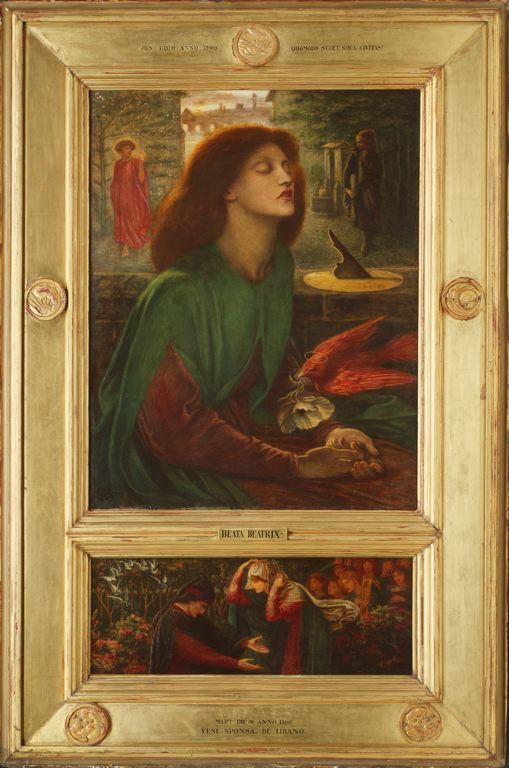
"Beata Beatrix," by the pre-Raphaelite painter Dante Gabriel Rossetti

This is the third part of a four-part post; see links the end for the first two parts.

Dante and the flame of love

One more pre-Reformation example of the religion of the heart. In recent years, I have fallen in love—I don’t know what else to call it—with perhaps the greatest western poem, the three-part Comedy of Dante Alighieri. As Wilken reminds us, at one point in Dante’s poem the pilgrim character, who is Dante himself, asks his beloved Beatrice why God would choose to redeem us by coming to us in the Incarnation. Beatrice, who has already died and gone to heaven and is talking to Dante with the certainty of one who has seen the face of God, responds “that what she is about to explain to him ‘is buried from the eyes of everyone whose intellect has not matured within the flame of love.’” In other words, says Wilken, “Unless we invest ourselves in the object of our love, [the Incarnate God, Jesus Christ] we remain voyeurs and spectators, curiosity seekers, incapable of receiving because we are unwilling to give. . . . Only when we turn our deepest self to God can we enter the mystery of God’s life and penetrate the truth of things. If love is absent, our minds remain childish and immature, trying out one thing then another, unable to hold fast to the truth.” Continue reading

Religion of the heart – part II


Saint Augustine of Hippo, a seminal thinker on...

Augustine: a pioneer of heart religion

This is continued from Religion of the heart – part I:

Heart religion is also rooted deeply in almost every stream of historical Christianity

Now by starting from today in this brief talk, and then moving quickly back to the 17th and 18th centuries, I don’t want to overlook another important fact: critics of heart religion are, let’s say, “historically outnumbered” in the church. In other words, heart religion is rooted deeply in historical Christianity. Let’s consider for a moment the early church:

Wilken: history of Christian thought cannot be told without the history of Christian love.

We often teach the early history of our faith as if nothing but the intellectual development of doctrine mattered. It’s nothing but a litany of heresies, apologists, and church councils. And while these things are important, they are in some respects only the surface of the story. People don’t get upset about heresies and arguments unless these are about something that matters to their lives. And so I was delighted a few years ago to read the wonderful book by the University of Virginia’s Robert Louis Wilken called The Spirit of Early Christian Thought. This is the history of Christian thought done right—done with a full awareness of the heart of the matter, if you’ll excuse the expression. So, here’s Wilken, introducing his book by talking about what the early Christians were doing when they had all of those theological debates I mentioned: Continue reading

Religion of the heart – part I


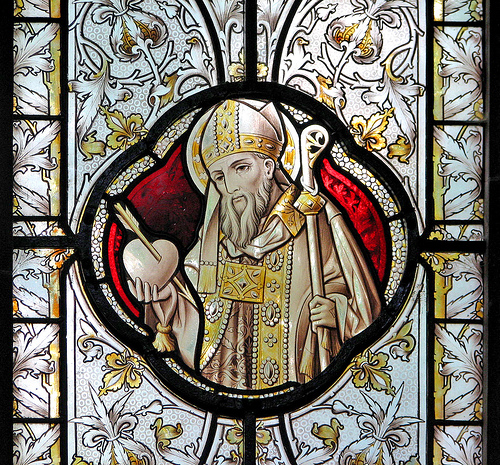
Augustine and his symbol of a heart, in a Victorian stained glass window

What is “the religion of the heart”? Where did it come from among Christians? And why have there been Christians of this sort ever since the earliest days of the church? 

I had the pleasure this past weekend of talking about this topic with a group of senior saints who are committed to the history of the Swedish Baptist Pietists; this is the denomination of my seminary, Bethel, in St. Paul, Minnesota. If you’re interested in the role of emotion in spirituality or have wondered about this pre-evangelical movement of “Pietists” that began during the period of the Enlightenment, then you may enjoy these remarks. Here’s part I:

Some remarks on Pietism and Heart Religion, in a historical key

The modern critique of heart religion

The first thing to say, perhaps, about heart religion, is that just as it got a bad rap in the 1600s, when Pietism was born, it still does today. Now, decades after the heyday of the charismatic movement brought heart religion to Main Street, the vaguely disreputable aura of an emotionally expressive religion lingers. Emotional commitment to, and expression of, one’s religion still seems, even to many evangelicals, somewhat uneducated and ‘un-necessary.’ Continue reading

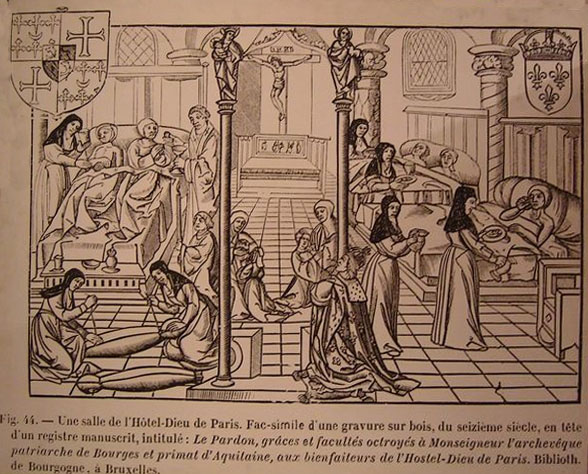
The Hospitals Issue of Christian History is almost here! A taste . . .


The Hotel-Dieu, a Paris hospital founded by the church in the Middle Ages

Well, I’ve been a ghost on my own blog, but it’s been for a good cause: Christian History Issue #101, on Healthcare and Hospitals in the Mission of the Church, is headed to the printer this Friday, Sept. 30. (To see it when it goes online in the coming weeks, watch this space.)

A small taste of the issue, my editor’s note:

Christian History’s founder, the late Dr. Kenneth Curtis, thought and wrote a lot about what our faith has to say to those who suffer illness and those who care for them. As the magazine returned to the red barn in Pennsyl­vania in 2010, Ken made several lists of topics he hoped the revived Christian History could address in future ­issues. At the very top was this one: the church’s role in the history of healthcare. I resonated with this topic from the start, but I did wonder, What kind of story is there to tell here? As it turns out, quite a powerful one.

As I began studying the topic I discovered two unexpected things: first, the church was much more influential in the history of healthcare than I had expected; and second, the modern hospital can be traced directly back to ancient and medieval Christian institutions. Continue reading

Martin Luther’s Anfechtungen–his own dark nights of the soul, and how they affected his teaching and ministry


Martin Luther 2

Image via Wikipedia

Well, it seems that each of the three sections of my forthcoming article for Leadership Journal has ballooned to the projected size of the whole piece: 2,500 words. So if I am to share in full what I have learned about Martin Luther’s teachings about spiritual depression (Luther is the third of three figures in the article, along with C. S. Lewis and Mother Teresa of Calcutta), it will need to be here:

Perhaps just as surprising as the story of Mother Teresa is that of the sixteenth-century Protestant Reformer Martin Luther. Well known is the story of how, as a young monk, Martin struggled mightily with a sense of his own sinfulness and inability to please God. This struggle culminated in the revelation that triggered the Reformation: righteousness is not within our ability to achieve; God himself freely gives it. Surely such a truth would free a man like Luther from all spiritual darkness. And yet it did not. Again and again throughout his life he descended into severe spiritual anxiety and emotional struggle, starting with a particularly long and intense depression that begin a scant few years after the Reformation, in 1527. During that period, he heard a haunting inner voice that asked him again and again, “Du bist allein Klug?” “You alone know everything?” That is, what if you are leading thousands of people into damning error and breaking the church? At this, said one Luther scholar, “self-reproach plummeted him into the utter depths of despair.”

Historian David Steinmetz describes the terror which Luther experienced at these times as a fear that “God had turned his back on him once and for all,” abandoning him “to suffer the pains of hell.” Feeling “alone in the universe,” Luther “doubted his own faith, his own mission, and the goodness of God—doubts which, because they verged on blasphemy, drove him deeper and deeper” into despair. His prayers met a “wall of indifferent silence.” He experienced heart palpitations, crying spells and profuse sweating. He was convinced that he would die soon and go straight to hell. “For more than a week I was close to the gates of death and hell. I trembled in all my members. Christ was wholly lost. I was shaken by desperation and blasphemy of God.’” His faith was as if it had never been. He “despised himself and murmured against God.” Indeed, his friend Philip Melanchthon said that the terrors afflicting Luther became so severe that he almost died. The term “spiritual warfare” seems apt. Continue reading

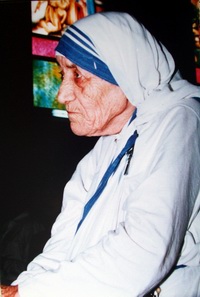
Mother Teresa’s long dark night


Until a 2007 book, only a handful of people knew Mother Teresa's secret darkness

I’ve been working on an article for Leadership Journal on three people who experienced and thought carefully about something like the classic “dark night of the soul”: C S Lewis, Mother Teresa, and Martin Luther. But the whole article must fit into 2,500 words, and the section on Mother Teresa has gotten out of hand, clocking even now, in a fairly refined form, the whole 2,500. So I am posting it here before cutting it down:

Almost every Christian thinker who has commented on the experience of divine absence and spiritual desolation called by John of the Cross “the Dark Night of the Soul” has concluded that the experience must have some spiritual usefulness. That’s one of the things that shocked the world when, in 2007, we discovered through a posthumously published book that Mother Teresa of Calcutta had undergone a severe, intense dark night that persisted through almost her entire ministry life, right up until her death.

It didn’t seem to make sense. Here was a person who, if anyone could merit the title during her lifetime, was thought of by almost everyone who knew of her as an exemplary saint. With our theology of a relational God, we would expect Him to smile benevolently down on such a person, even previewing some of his “Well done, good and faithful servant” in His behavior toward her in this life. And yet here it was, this agonizing decades-long Absence that darkened her whole life and left her only briefly, on one occasion.

What on earth sort of usefulness could such dereliction have for a person such as Mother Teresa? The editor of her letters makes it clear that it was not a “thorn” to rescue her from some sort of overweening pride—she had begun the ministry of the Missionaries of Charity based on a youthful vow that she would do everything God asked, submitting herself absolutely to His will. She was little inclined to pride, as all around her testified. Continue reading

Wine to grape juice: Why? And what else was involved in that decision?


David Ligare, Still Life with Grape Juice and ...

David Ligare, Still Life with Grape Juice and Sandwiches (Xenia), 1989

OK folks, here’s my review of (the first half of) my friend Jennifer Woodruff Tait’s University of Alabama Press book, The Poisoned Chalice: Eucharistic Grape Juice and Common-Sense Realism in Victorian Methodism (2011). Dr. Woodruff Tait  is (I say it frequently) the best writer I know, hands-down. She has 18th-century clarity and 19th-century passion for her topic.

True confession: This blog tour has hit me at an extraordinarily busy time. I did read Jenn’s dissertation all the way through several years ago—and not just because she cited my dissertation several times in her first chapter. I was fascinated by the story she tells. I can say that this time around, I read 69 of her 129 pages, and I remembered why I appreciate her historical scholarship so much, and why I hope she will research and write again, to our edification.

Without further ado, then: Continue reading

Supper at Acton with Metropolitan Jonah


Metropolitan Jonah in the Valaam monastery. It...

Metropolitan Jonah

Folks,

One of the great things about Acton University is the variety of people you get to meet and talk with over dinner. For me, the first night it was key figures in that hive of workplace theology activity, Seattle’s Bakke Graduate University, including the engaging Dr. Gwendolyn J. Dewey. Second night: that ubiquitous evangelical ecumenist, Act 3‘s John Armstrong. And tonight, Metropolitan Jonah of the Orthodox Church in America.

I had the pleasure and benefit of sitting at dinner tonight with a couple of the Orthodox Church in America’s priests and their Metropolitan Jonah, who was the dinnertime speaker last night.

Metropolitan Jonah is clearly a man dedicated both to the church and to Christ. A pleasure to hear last night, and a pleasure to converse with tonight. We talked about Evagrius of Pontus, the materialism of modern America, and the importance of the doctrines of Creation and Incarnation in a society bouncing between rank materialism (the secularists) and dangerous gnosticism (some evangelicals).

Of the division of the church that so scars the American Christian landscape, he had only two words: “Jesus weeps.” Of the occasional non-Orthodox 20-something who comes to his monastery on the West Coast: “They are searching for a personal encounter with God.” And a fair number of them find Him, and get baptized there at the monastery. Of Creation: it shimmers with God’s presence. May God bless you, Metropolitan Jonah.

What does Wall Street have to do with the Gospel? An Acton University reflection on economics in the New Testament


Cover of "Rediscovering the Natural Law i...

Cover via Amazon

Greetings from Acton University 2011. The Acton Institute is an ecumenical think-tank dedicated to the study of free-market economics informed by religious faith and moral absolutes. This is my second summer attending their “Acton University” seminars in Grand Rapids, MI.

One of my favorite presenters last year was Dr. Stephen Grabill, director of programs and research scholar in theology at the Acton Institute. A careful scholar with a Reformed background and a unique knowledge of both economics and theology, Grabill edited the NIV Stewardship Study Bible (2009) and authored Rediscovering the Natural Law in Reformed Theological Ethics and edited the Sourcebook of Late Scholastic Monetary Theory. Here are my notes on his excellent, if basic, presentation on the social and economic context of the New Testament:

Tertullian famously asked “What does Athens have to do with Jerusalem?” Meaning, what does the thought world of the Greek philosophers have to do with the Gospel? Why should Christians bother with the culture of the empire when they should be living according to their Scriptures?

We could ask: What does Wall Street have to do with Jerusalem; or economic practice with the seemingly unrelated world of the New Testament? Continue reading

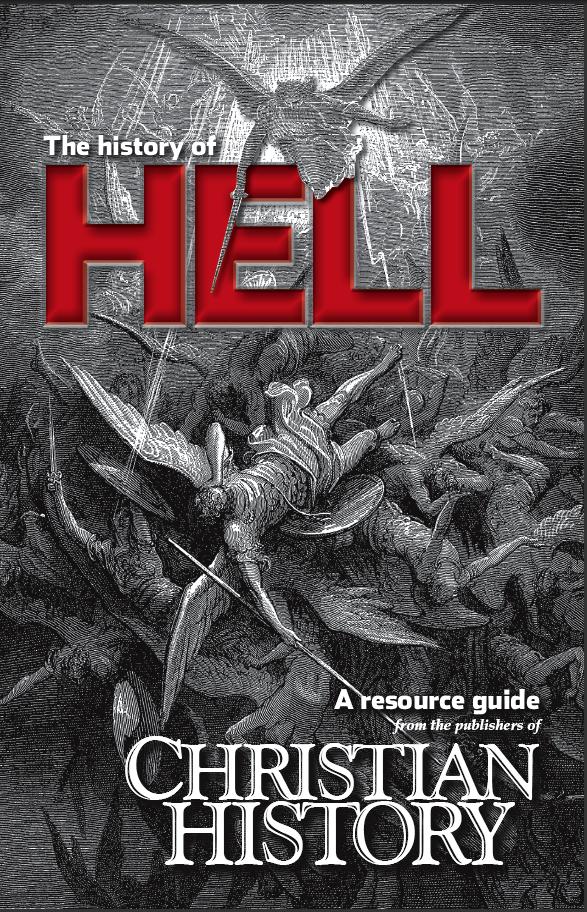
Hell handbook cover – sneak preview


This is not final, but a sneak preview of one possible way the forthcoming (July 2011) “resource guide” to Christian thought on hell might look.