Tag Archives: embodiedness

Reclaiming the physical in Christian worship


holy-wounds-devotionHere’s the last bit of the “affective devotion” chapter draft for Getting Medieval with C S Lewis:
Reclaiming the physical

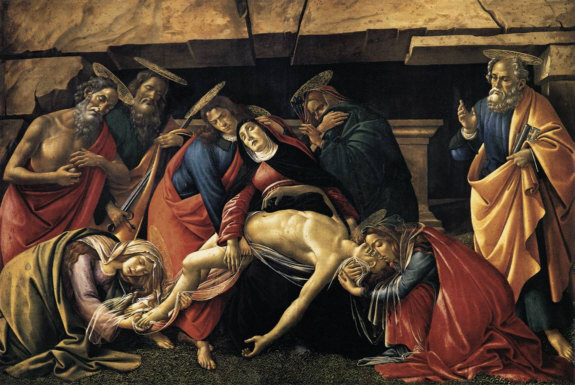
Finally, among the varied aspects of our human nature, our emotions seem especially closely tied with our physical bodies. We use the same words, “feeling” or “being touched,” for the physical senses and for emotional experiences. But reading Margery Kempe’s Book makes me ask: Where has the sense of the spiritual importance of touch or physicality gone in today’s culture? Are these human senses now allowed to communicate anything true or spiritual to us? We have plenty of the visual in our TV- and movie-soaked culture, and even in our churches. But how often do we experience anything spiritually significant through touch? The most intense, ecstatic touch-experiences, those of our sexuality, have been devalued and dehumanized through obsessive attention and being made into the commodities of the impersonal marketplace. I think that like Mel Gibson’s The Passion of the Christ, Margery’s life of devotion and the whole English mystical tradition can help to draw today’s Christians back to the sort of visible, physical devotion epitomized in the medieval pilgrimage.

In the mid-90s I was giving a lecture on Pentecostalism at an evangelical seminary in New England. I was describing the huge influxes of eager believers, every day, by the busload, to the Azusa Street Revival that launched Pentecostalism in 1906, and again to the modern Toronto Airport Vineyard revival and the Brownsville/Pensacola revivals One student put up his hand and asked, with skepticism in his voice: “Why do Pentecostals and charismatics feel that it’s so important to actually go to the place where a revival is supposedly happening, to ‘bring back’ that revival to their home churches?” Continue reading

Seeing His humanity and worshiping with all of ours – hearts and bodies included


Worshipping guyThe last post looked at the “heart of late medieval heart religion”: devotion to the Passion of Christ. This post asks: How would getting a stronger sense of the humanity of Christ, today, affect the way we worship? This is almost the end of the “affective devotion” chapter of Getting Medieval with C S Lewis:

The desire for a tangible experience of God’s love has not dissipated with the discovery of the atom or the invention of the automobile. Modern Protestantism has given relatively little attention to our imaginative and emotional lives, yet the century just passed saw a dramatic upsurge of charismatic spirituality.

With its devotion to the person of Jesus, its impassioned worship, and its physical experiences of God’s intimate presence (tongues and “slaying in the Spirit”), this movement first sprung at the turn of the 20th century in a poor, multiethnic Los Angeles neighborhood, from a root in Wesleyanism’s continuation of the longstanding Christian “heart religion” tradition. Then at mid-century it reemerged in mainstream Christianity—springing first from the Anglican and Roman Catholic confessions, with their sacramental and historical emphases.

But you don’t have to be a charismatic to awaken your imagination and your senses in devotion to Christ. Continue reading

Have you ever thought of what a truck driver goes through to get your Amazon package (etc.) to you?


DRIVER_IN_THE_CAB_OF_A_LARGE_CATTLE_TRUCK_IN_COTTONWOOD_FALLS,_KANSAS,_NEAR_EMPORIA._SUCH_VEHICLES_AND_HORSES_ARE_THE..._-_NARA_-_557044.tifI’d like to share part of a fascinating article (thanks to Drew Cleveland of the Kern Family Foundation for bringing this to my attention) on the special “body knowledge” and skills required of the long-haul truck driver. It’s called “Dignity and the Professionalized Body: Truck Driving in the Age of Instant Gratification” and is by Benjamin H. Snyder. I find it eye-opening, compelling, even moving. It is an excellent specimen of the journalistic species of the “creative nonfiction” genus.

The article sure made me stop and think of the ease with which I hit that “order” button in Amazon.com. I sure don’t think about what the truck driver will quite possibly go through to get that package to me, or indeed the indignities he will suffer as he does so. Here’s a taste of the article, which is from UVA‘s Hedgehog Review. For the whole thing, go here.

3:32 a.m. Over the last hour and a half, we have stopped at three more truck stops and one rest area. They have all been completely full. We pull into another truck stop—a fifth attempt at parking tonight. Yet again, it is full. Alvaro tries to remain optimistic. He turns to me with a wry smile and says, “looks like we’re going to Little Rock, man!” Continue reading

C. S. Lewis and medieval Christians knew our bodies (and sex!) matter theologically – how ’bout us?


Christ ennobled and raised up all of humanity by becoming one of us. The truest things about ourselves are all areas where we reflect the image of our Creator.

Our embodiedness is important to our life with God both here on earth and at the resurrection (of the body): we receive all we know about God through our bodies, our senses, our experiences. Analogy is more than analogy: it is sacrament; to use a word Lewis used to title a key essay, it is “Transposition.”

To try to abstract mind from body, spirit from matter is to commit the gnostic error and destroy (be false to) what we truly are as human beings.

To speak in quasi-scientific sociological generalities and remove traditional understandings of what human beings are (including our embodied experience), and thereby to destroy traditional morality, is to, in fact, “abolish humanity”–to unmake us as creatures of God, and thus prevent us from reaching God as well (Abolition of Man). Continue reading