Tag Archives: monasticism

C S Lewis’s dawning asceticism: “Depth under depth of self-love and self-admiration”


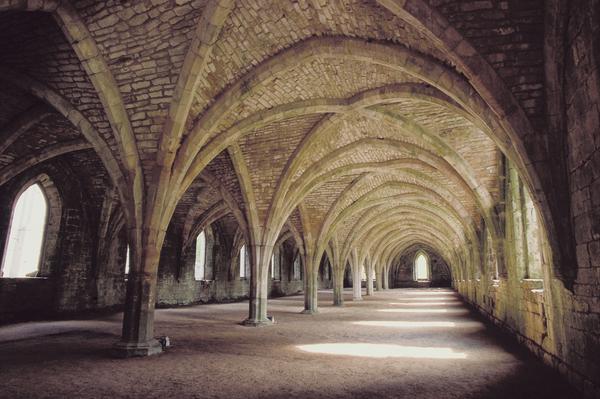
monastic arches

In the last post, as I began to unpack monasticism and asceticism with C S Lewis’s help, I took a passage from his science fiction novel That Hideous Strength as a window into the way that war, by shaking all our self-interests and focusing us on a higher goal, can give us a new vision and focus for life. I concluded, drawing from a phrase of Lewis’ in that book: “‘The immense weight of obedience’ involved in asceticism, too, can attune us more finely to our relationships, relativize our petty anxieties and cares, and help us live our earthly, human lives with more zest and appreciation.” Now, to continue:

Why monasticism?

This focusing function may be a helpful general principle about asceticism. But we may fairly ask: “What makes us think the particular ascetic modes of monasticism have any answers on our modern problems? They’re so . . . medieval! Stone cloisters, hard beds, celibacy, rising at ungodly hours to chant Psalms in Latin? Really? This is the balm for our ills?”

Lewis plumbs the depths of self

Lewis, in the year leading up to his conversion, struggled mightily with his “flesh” – and even more with spiritual pride, a sin the monastic fathers unanimously agreed was among the worst, and especially tending to beset those making efforts in their lives to achieve spiritual progress.

From early on, as he struggled toward conversion, Lewis also appreciated the asceticism of the Middle Ages. Continue reading

Christian asceticism (spiritual disciplines, self-denial): What’s up with that?


So . . . many . . . temptations . . .

So . . . many . . . temptations . . .

In this second post from the monasticism chapter of my forthcoming Medieval Wisdom: An Exploration with C S Lewis, we come to the “inner logic” of asceticism. What is it about our experience as human beings that requires us to engage in “askesis,” which means “training,” in order to live well with and for God?

In the last post I reminded us of what we already know–that the desires and goods of our embodied lives are also so darn distracting. They so easily lure us in with the siren song that, after all, our real fulfillment lies in them and not in God.

Now I want to add that this fact about us explains the behavioral strictures that modern American holiness and fundamentalist believers have insisted upon: no dancing, drinking, movies, and so forth. These have been misunderstood by critics as “legalism,” a term with Lutheran roots that means the attempt to earn God’s favor through rule-following (the sort of thing that Jesus scorned in the Pharisees). Rather, they have a singular purpose: Continue reading

Do our bodies lead us to God or keep us from God? Yes.


monks thwacking selves with boards - Monty PythonToday I begin posting bits of the “Monasticism and asceticism” chapter of my forthcoming Medieval Wisdom: An Exploration with C S Lewis. 

Why this is the hardest topic in this book for me, and maybe the most important one for American Christians today

There is no chapter in this book where I am “preaching to myself” more than this one. I fear that living in a place as comfortably materialistic and hedonistic as America makes our need for some form of ascetic discipline even more urgent than it has been in other ages and places. I feel the force of Neil Postman’s book title (if not the book itself), Amusing Ourselves to Death. How easy it is just to sit in front of the glowing screen, sipping the extra-large high-fructose corn syrup beverage, after the manner of the bloated inmates of the Buy ‘n’ Large corporation’s starliner Axiom in the movie Wall-E.

I have struggled to really “own” my faith, and part of that has been that I have had little clear sense of how the faith should be changing the way I work, do leisure, raise my family, and so forth. But mine is not just a failure of knowledge. It is a failure of commitment and discipline. So, honestly, I don’t want monasticism to hold any truth for me. I want it to be wrong. And I suspect this is true of many moderns who dismiss medieval monasticism without examining it—going no further than the Monty Python caricature of monks filing through the streets, intoning the missal passage Pie Jesu Domine, dona eis requiem and thwacking themselves on the forehead with boards.[1] Continue reading

Monks, illness, demons, and sin


Monastic hospitalFitting right into the modern Monty Python stereotype of medieval people as backward, ignorant, and superstitious is the assumption that especially the monks of the Middle Ages sought only supernatural explanations for things. Understanding that up to the 12th century, healthcare took place almost exclusively in the monasteries, we jump to the logical conclusion: such care couldn’t possibly have attended to the physical causes of illness. Didn’t those monks just believe that illness was caused either by demons or by the sins of the sick person? There’s a germ of truth here (pun intended), but the reality was quite different. That’s the subject of the next section of the hospitals chapter in my Getting Medieval with C S Lewis.

Monastic phase

The distinctly monastic flavor of healthcare during the Middle Ages – even when it was provided by lay orders like the Hospitallers – deserves a bit more probing. From the beginning, monasteries in the West took Benedict’s cue and made caring not only for ill monks but also for needy travelers one of their primary tasks. The “stranger” was always an object of monastic charity. This “rather broad category,” says medical historian Gunter Risse, included “jobless wanderers or drifters as well as errant knights, devout pilgrims, traveling scholars, and merchants. . . .”[1] Monastic care for the stranger and the ill was formalized in the 800s during Charlemagne’s reforms, as assemblies of abbots (leaders of monasteries) gathered to reform and standardize that aspect of monastic life. At that time many of the scattered church-sponsored hostels (xenodocheia) across the Holy Roman Empire were given “regula”—quasi-monastic rules, and “monasteries . . . assumed the greater role in dispensing welfare.”

Organized, ubiquitous, stable, pious: the monasteries of the West became sites of care and of medical learning. “Benedict’s original rule ordered that ‘for these sick brethren let there be assigned a special room and an attendant who is God-fearing, diligent, and solicitous.’ This monk or nun attending the sick—the infirmarius was usually selected because of personality and practical healing skills. The latter were acquired informally through experience, as well as through consultation of texts, medical manuscripts, and herbals available in the monastery’s library or elsewhere. . . . The infirmarius usually talked with patients and asked questions, checked on the food, compounded medicinal herbs, and comforted those in need. . . .”[2]

“A rudimentary practice of surgery (‘touching and cutting’) at the monastic infirmary was usually linked to the management of trauma, including lacerations, dislocations, and fractures. Although these were daily occurrences, the infirmarius may not have always been comfortable practicing surgery on his brothers, for it was always a source of considerable pain, bleeding, and infection. Complicated wounds or injuries may have forced some monks to request the services of more experienced local bonesetters or even barber surgeons. . . .”[3] Risse notes other popular healing practices of the Middle Ages that were integrated into the monastic medical routine, including herbology, bathing (not otherwise common!), preventive bloodletting, and diagnostic examination of pulse, urine, stool, and blood.

The mention of some of these “backward” medieval medical practices may raise another stereotype many have in their heads about the Middle Ages. Just as some still believe the fabrication that medieval people believed in a flat earth, some assume that medievals did not know, and were not interested in, the physical causes of illness. Instead, the story goes, they assumed all illness came from devilish or demonic sources, or, a variant, from some hidden sin in the sick person. Continue reading

What the medieval birth of science tells us about medieval attitudes toward creation


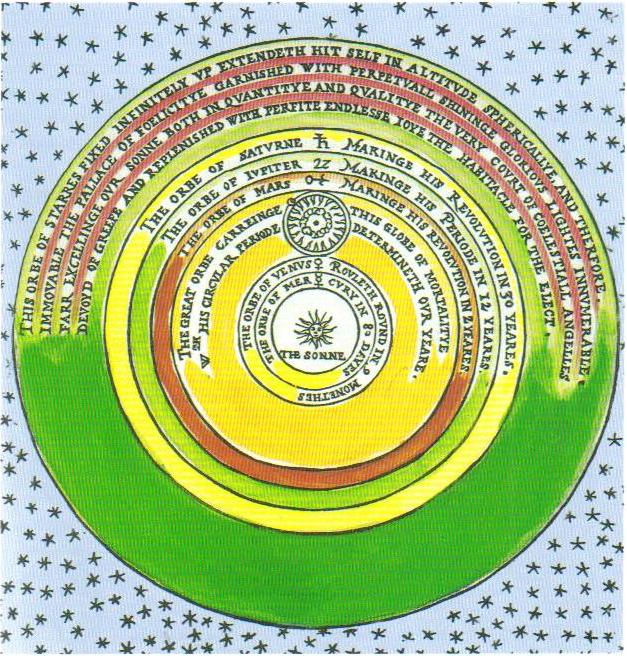
Celestial SpheresFinishing up the “creation chapter” in Getting Medieval with C S Lewis, I am looking by turns at medieval science and the world of medieval arts, to see what they reveal about that era’s attitudes toward the natural world. Here is the bit on science. Next, the bit on the arts.

Religion and science: the Aristotelian impact on scholastic theology

Despite Gregory’s much more physical approach, the underlying platonic suspicion of the bodily did continue to hamper a fully world-affirming spirituality and theology. That would await the time of Anselm and Francis, and the flourishing of some seeds planted by Augustine – seeds of trust in the human gift of reason (as we saw in the “Passion for theology” chapter).

As we have seen in the theology chapter, what happened in the 12th and 13th centuries was that a recovery of Aristotelian science helped bring the powerful and useful discourse of science to bear in the deliberations of theology, both revolutionizing theology and laying the groundwork for the scientific revolution of the 16th– 18th centuries. Continue reading

Faith VS. reason: A too-convenient modern story about medieval monks vs. scholars


council at sens at which Bernard accused Abelard

Council of Sens, 1140, at which Bernard of Clairvaux had Peter Abelard’s doctrine condemned

One more snippet on theology from  my forthcoming Getting Medieval with C S Lewis. Here’s a cardinal truth about reading history: just because you hear a story again and again doesn’t mean it’s true. In fact, it may indicate that a legend has taken on the aura of truth and is no longer being examined. That’s something like what I think has happened in the common “monasticism vs scholasticism” narrative you will often see in textbooks and hear in classrooms:

The “warfare thesis” projected backward

Now there is a modern scholarly narrative about scholasticism that you may have run across – it still seems quite popular. That narrative takes the politicized struggle between two strong personalities—Bernard of Clairvaux and Peter Abelard—and derives from it a thesis about the relationship between monastic and scholastic thinking: that the world of medieval theology was divided into obscurantist, fideist monastics who were afraid of using reason and dialectic and wanted to protect mystery, and intelligent, rational scholastics who didn’t care which sacred cows they slaughtered en route to a more “systematic” theology. In this story, Bernard of Clairvaux leads the charge against logic as the arch-monastic, and Abelard stands as the champion of logic and systematization. Continue reading

The Hospitals Issue of Christian History is almost here! A taste . . .


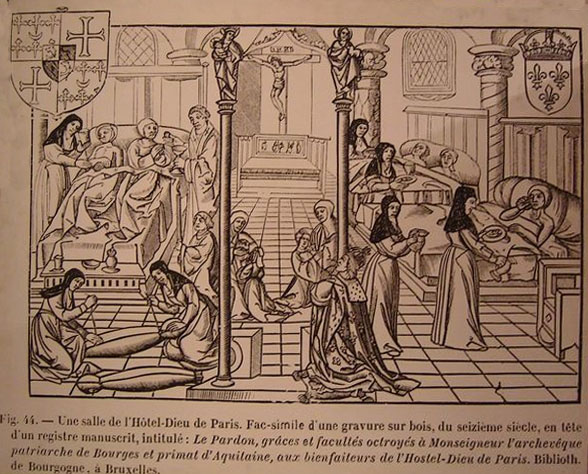
The Hotel-Dieu, a Paris hospital founded by the church in the Middle Ages

Well, I’ve been a ghost on my own blog, but it’s been for a good cause: Christian History Issue #101, on Healthcare and Hospitals in the Mission of the Church, is headed to the printer this Friday, Sept. 30. (To see it when it goes online in the coming weeks, watch this space.)

A small taste of the issue, my editor’s note:

Christian History’s founder, the late Dr. Kenneth Curtis, thought and wrote a lot about what our faith has to say to those who suffer illness and those who care for them. As the magazine returned to the red barn in Pennsyl­vania in 2010, Ken made several lists of topics he hoped the revived Christian History could address in future ­issues. At the very top was this one: the church’s role in the history of healthcare. I resonated with this topic from the start, but I did wonder, What kind of story is there to tell here? As it turns out, quite a powerful one.

As I began studying the topic I discovered two unexpected things: first, the church was much more influential in the history of healthcare than I had expected; and second, the modern hospital can be traced directly back to ancient and medieval Christian institutions. Continue reading

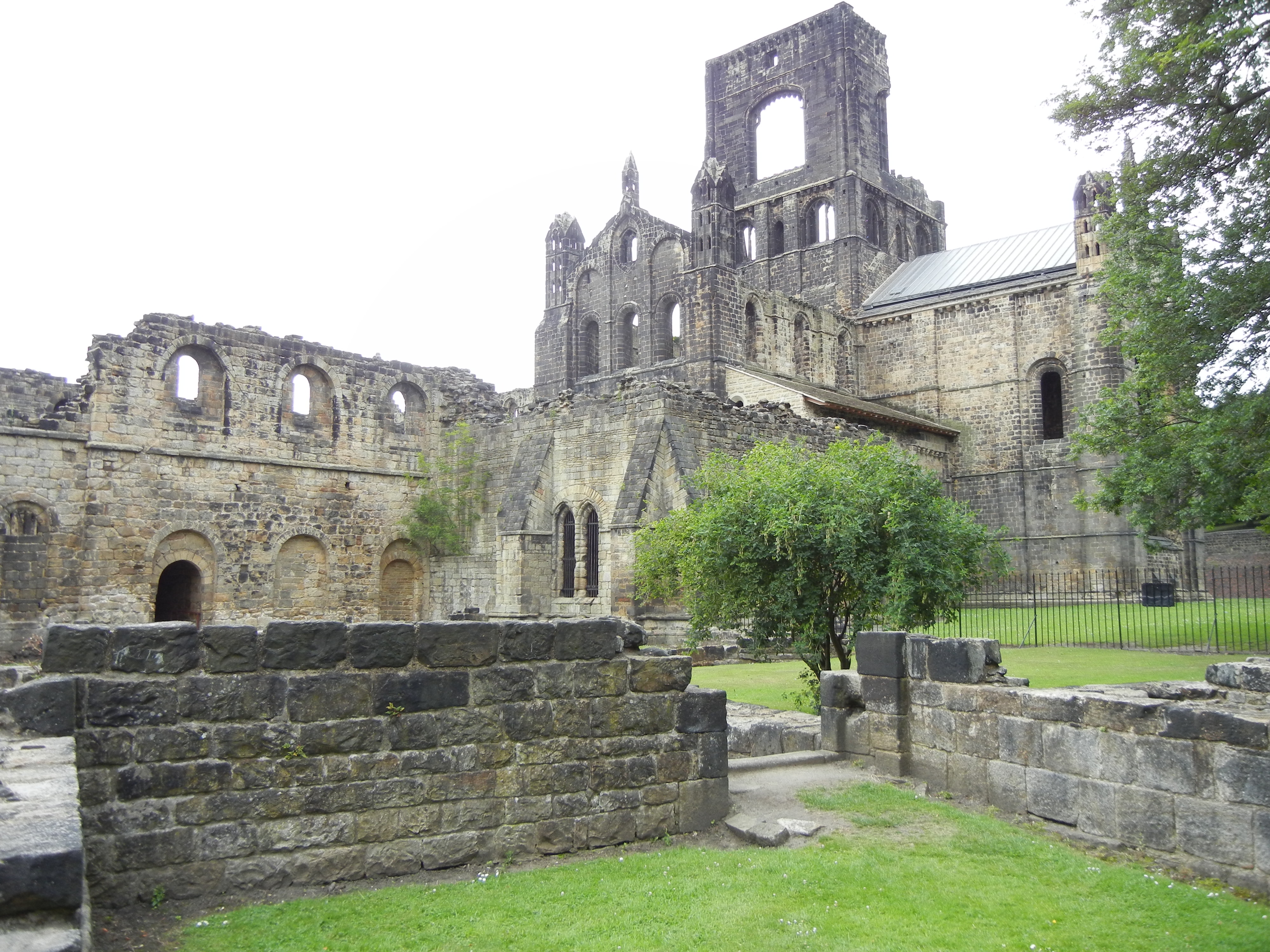
Cistercian architecture a joy to behold: Kirkstall Abbey, Leeds


Folks, I have been a bad, bad, blogger: not posting much lately, I know.

I offer in my defense the following proof that I have been using my time wisely and productively, on a two-week visit to England that my wife Sharon and I are now halfway through.

Yesterday, we had the pleasure of visiting an old and surprisingly mostly intact Cistercian Abbey here in Leeds (where I have been attending sessions at the International Medieval Congress and Sharon has been taking day trips to Thirsk–home base of the late lamented James Herriott–and medieval York).

The Abbey is called Kirkstall, founded in 1152, and you can get a small taste of how amazing it is from the following images. They reveal buildings largely unchanged from their first construction in the 1150s, though some sections are “late” (i.e. later 12th or 13th c.) and there are minor Victorian and later restorations of a few sections damaged in the vicissitudes of subsequent centuries.You’ll get a sense of why the 19th-century romantics flipped over this place, painting it repeatedly (sez Wikipedia: “The picturesque ruins have been drawn and painted by artists such as J.M.W. Turner, Thomas Girtin and John Sell Cotman.”)

Here are a few more of the 150+ pix I took while there: Continue reading

Wisdom on our work and vocations, both secular and spiritual


Cover of "Leading Lives That Matter: What...

Almost every seminary president and board chair in North America receives the magazine InTrust, from InTrust, an organization dedicated to helping seminaries provide excellent theological education. For the magazine, which is edited by my friend from Duke days Jay Blossom, I reviewed two anthologies of wisdom on work and vocation from a Christian perspective:

Wise words: Voices from the church on vocation and calling
Chris R. Armstrong
In modern North America, the question “What am I supposed to do with my life and why?” is both focal and vexed. Our pragmatic society focuses on work and career so much that our first question on meeting a new friend is “What do you do?” Given this national obsession, it would be reasonable (but wrong) to expect North Americans to drink deeply from centuries of reflections about this thing called “work.” Continue reading

Monastic habits for non-monastics–Glimpses from Dennis Okholm


Cover of "Monk Habits for Everyday People...

A fascinating modern exploration of Benedictine ways

The following are brief excerpts and quotations I marked while reading Dennis Okholm’s Monk Habits for Ordinary People (Grand Rapids: Brazos Press, 2007). Along with works by Kathleen Norris, Phyllis Tickle, Leighton Ford, Karen E. Sloan, Tony Jones, and a growing group of other Protestant authors, Okholm’s book explores medieval monasticism–especially the Benedictine tradition. The forward is by Kathleen Norris.

As with the David Bell and Jaroslav Pelikan “glimpses” and the glimpses of Benedict and Francis by Columba Stewart, William Short, G. K. Chesterton, and Mark Galli, I thank my t.a., Shane Moe, who transcribed these and inserted  brief contextual tags where helpful. Page numbers are at the beginning of each excerpt. The designation “Q” means I wanted to save the text as a quotation, for use in teaching and writing. D means the definition of a term. “U” means I want to use an idea or statement in my teaching:

Q, 9 (from Kathleen Norris’s forward to the book, on Ockholm’s discussion of Protestants being attracted to monasteries): “He demonstrates that it is not just another case of Americans shopping around for their spirituality, but a genuine reclaiming of the taproot of Christianity, a reconnecting with a religious tradition and way of life that predates all of the schisms in Christendom.” Continue reading