Category Archives: Medieval Wisdom for Modern Protestants

CS Lewis, GK Chesterton, JRR Tolkien, and Dorothy Sayers thought medieval faith provides antidotes to modern malaises. So do I.

Spirituality and economic work in the Middle Ages: Complementarity, not enmity? Part III


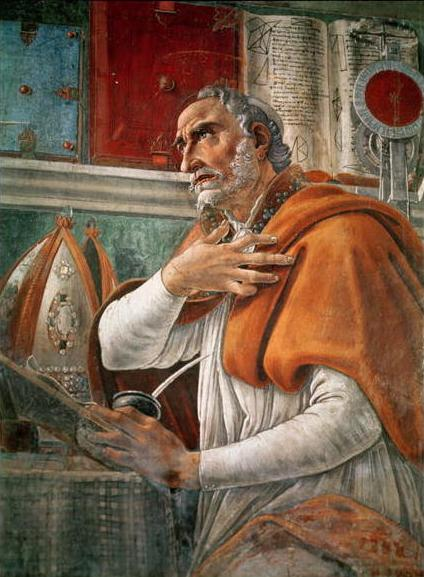
Augustine, portrait by Sandro Botticelli; wikimedia commons, public domain

Continued from part II

First, then, the “busyness thesis,” as read by such thinkers as Augustine of Hippo and Gregory the Great.

Augustine of Hippo described two kinds of life: the active life and the contemplative life. His reflections on the relationship between these set the theological tone for the entire era of the Middle Ages on this aspect of the relationship between spiritual and economic work—though as we’ll see later, we already find some monastic pioneers a generation or two before Augustine who were concerned with the potential for a busy life with lots of human responsibilities to crowd out the quest for personal holiness.

From his writings on this matter, it is clear that he sees both kinds of life as necessary and that the active life comprises most of our experience here on earth. Second, it is also clear that the contemplative life is above all desirable, unites us to our true God, and comprises tastes of heaven for us – thus the descriptions of the contemplative life in the long list of dyads in his most famous passage on the subject, below, is a kind of travel brochure or gift catalogue for the contemplative life, designed to stir up our desire for it. One may see such language as a clue to why so many entered an ascetic, and so many more a fully cloistered monastic, life in the time between Augustine and Luther: only strong desire could so move them:

Continue reading
Spirituality and economic work in the Middle Ages: Complementarity, not enmity? Part II


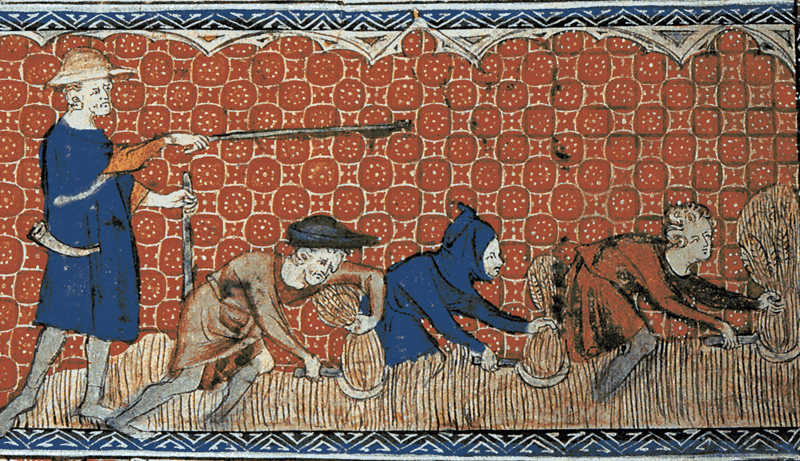
Medieval illustration of men harvesting wheat with reaping-hooks, on a calendar page for August. Queen Mary’s Psalter. Wikimedia commons, public domain

Continued from part I

In the first part of this essay, I offer three potential medieval objections to the compatibility of spiritual and economic work–the “busyness thesis,” the “mammon thesis,” and the “worldliness thesis”; then I continue:

Of course, one thing we can say to these three theses is “Yes, at some points in some places in the vast and complex thousand-year landscape of medieval Europe, all three of them have been argued by Christians.”

But, I suggest two further responses to this observation:

First, remember that what we are trying to do is not to prove that these theories were absent everywhere and always in the Middle Ages. It is rather to select countervailing historical instances that challenge the oft-encountered modern scholarly assumption that medievals always or as a rule found economic and spiritual work incompatible – thus either explicitly proscribing economic activity for the spiritually serious (whether monastic or lay), or judging those serious folks who do engage in economic work as derelict in their self-sworn spiritual duties and principles.

Second, we will attend to the very significant social and economic changes in the so-called “high medieval period” in the West (roughly 1050 – 1300) that began to broaden the spiritual life – the via apostolica – from the monastic cloister to the marketplace. This was a period of “increasing population, land reclamation, urban growth, expansion of education opportunities, new trade routes, [and] an emerging merchant class.”[i] So we will be recognizing, if not much geographical variation, at least temporal variation.

However, we should be careful – these social changes do not mean (as some have interpreted) that monasticism and its disciplines was either (1) fully retrenched and retracted into itself, as might be assumed from looking at the austere reforms of the Cistercians and of monastically trained Gregory VII or (2) discarded as a model for the spiritual life of the laity, as one might assume toward the end of the era. Even in the expansion of lay spirituality from the high through the late medieval period – that is, the 500 years before Luther – monasticism continues to be a central character in the story of the relationship between economic and spiritual work.

Continue reading

Spirituality and economic work in the Middle Ages: Complementarity, not enmity? Part I


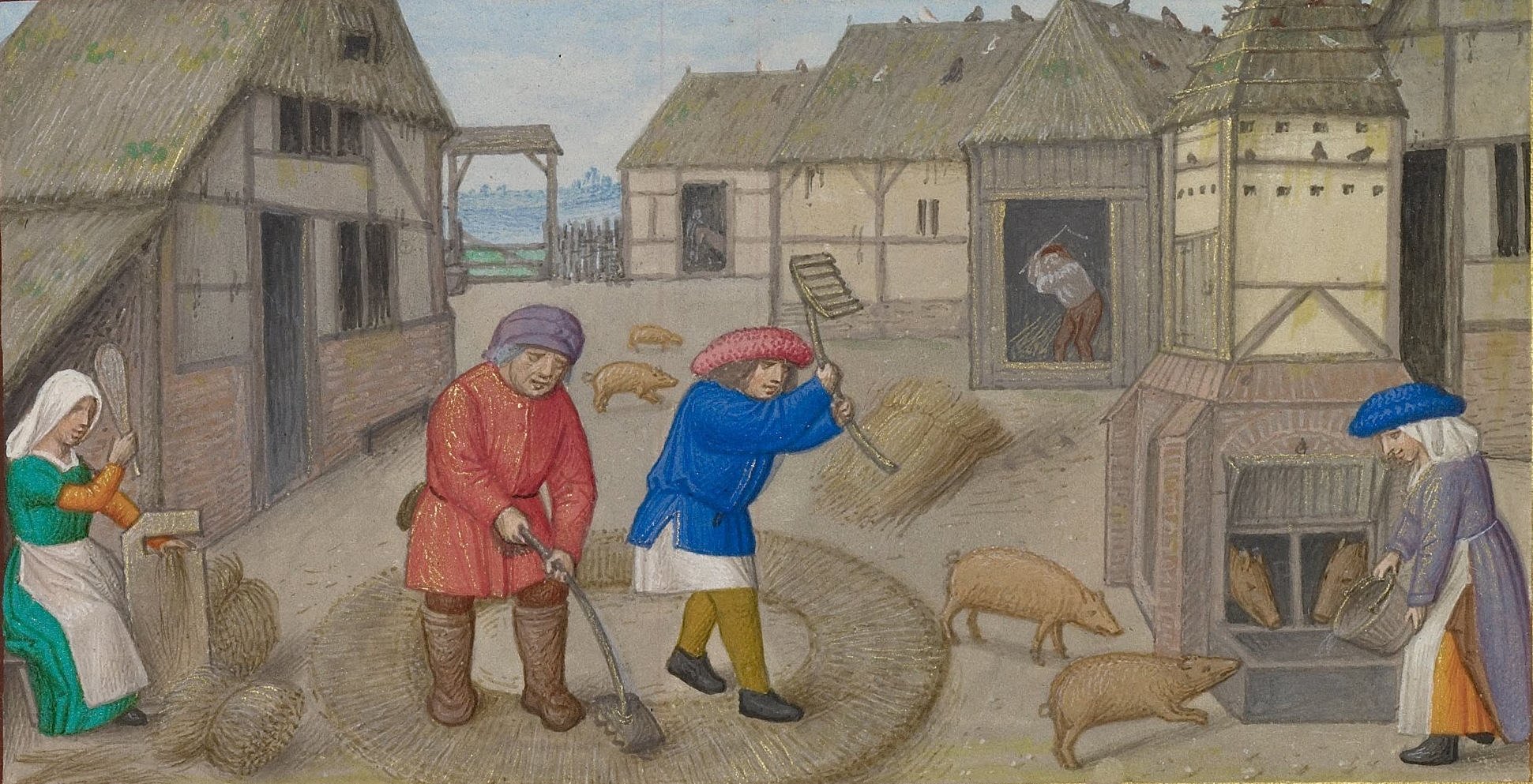
Threshing and pig feeding from a book of hours from the Workshop of the Master of James IV of Scotland (Flemish, c. 1541), Wikipedia (public domain)

A few years ago I was invited to present a paper at a colloquium of scholars gathered to discuss topics related to the intersection of faith and economic work in the history of the church. What I presented was a first stab at a research agenda: 2/3 of a larger idea about a certain theme in medieval Christianity. Since the paper was never published, I intend to blog it here in sections. So, to begin:

*************

The question of this paper is this: Was there, in the Middle Ages, an understanding of economic labor as inherently inimical to the spiritual life – especially as modeled by monasticism?

It is certainly true, as the great medievalist R. W. Southern says, that through its 1,200+ late ancient and medieval years of activity, monasticism was often involved in and compromised by the world. R. W. Southern talks about this complexity:

“Everywhere in the history of the religious Orders we find that associations which were founded as a protest against the world and all its ways had their destinies shaped for them by the society in which they had their being. There were many forces which shaped them, even against their will: their property, their family connexions, their secular functions, and the opportunity which they offered their members for advancement to the highest places in the social order. The ‘worldliness’ of medieval religious communities has often been remarked and generally criticized, and it is true that anyone who looks at these communities for a pure expression of the aims of their founders must very often be disappointed. The states of mind and aspirations expressed in the Rules and Foundation deeds of the various Orders were not realized in any large measure. The driving forces in their development were quite different from those of the original founders.”[i]

But the question is, would medievals themselves share the underlying assumption of this analysis: the supposed “fact” that economic work must, by its very nature, hamper spiritual formation?

Continue reading

The Christian Story of the University


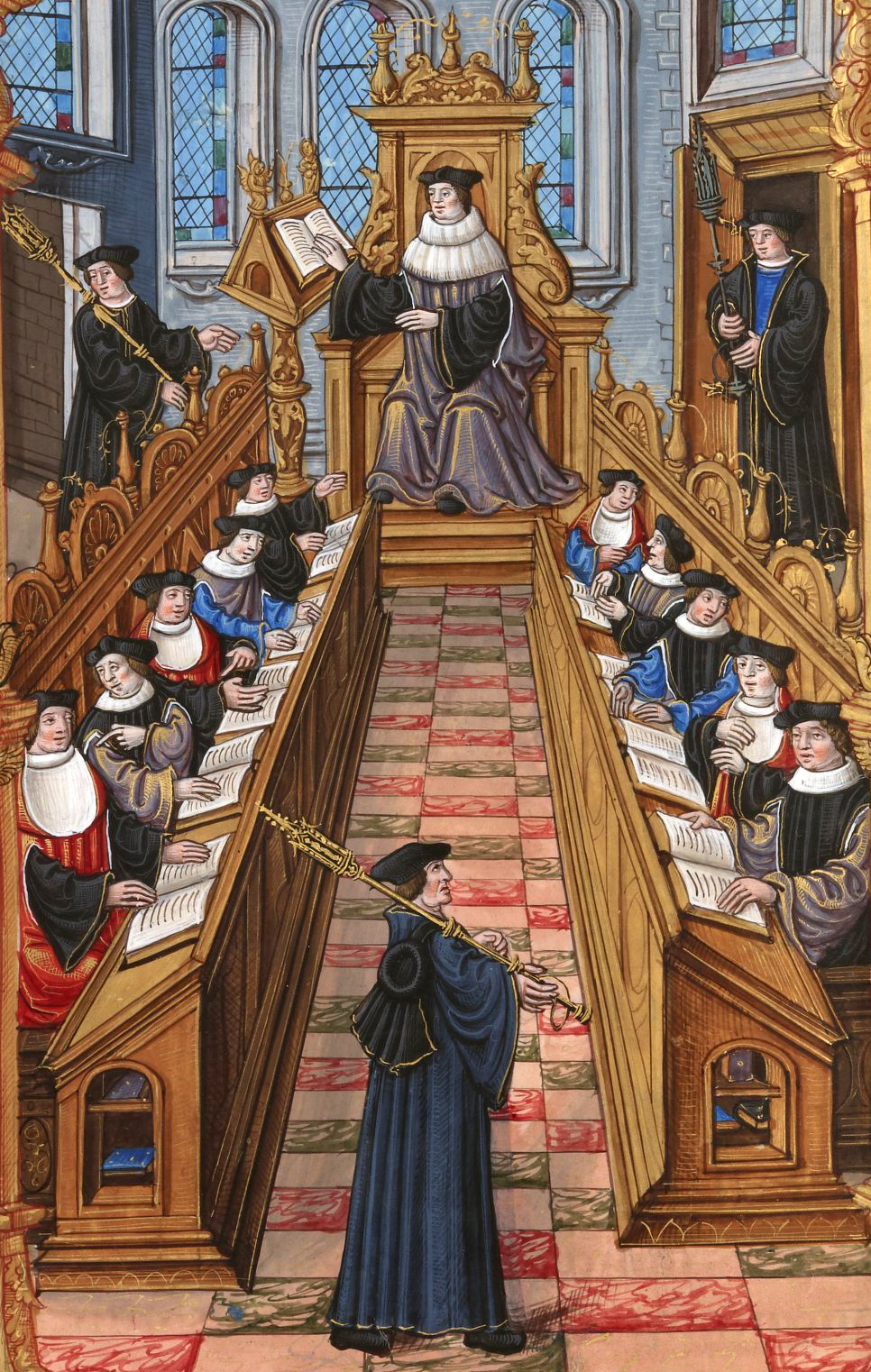
Illustration from a 16th-century manuscript showing a meeting of doctors at the University of Paris; wikipedia, public domain

Continuing this emerging series of posts on the vocation of the (Christian) faculty member–and this will surprise none of my regular readers–I want to take a moment to brag on a recent issue of Christian History magazine, which delves into the Christian (and, here’s a surprise, medieval) history of the university.

The issue is called “Hallowed Halls: The Christian Story of the University,” and is available both in full color and downloadable individual articles at the preceding link. As always, an impressive roster of (that rare bird) scholars-who-can-write-for-ordinary-folks lined up to write about this topic for our indefatigable managing editor, Jennifer Woodruff Tait (yes, you absolutely should read her Intervarsity Press book Church History in Seven Sentences, her even-more-recent co-edited The Cambridge Companion to American Protestantism, and her prize-winning published dissertation The Poisoned Chalice: Eucharistic Grape Juice and Common-Sense Realism in Victorian Methodism). Among the stellar authors in the issue: George Marsden, Jens Zimmermann, Thomas Albert Howard, and Gillian Evans.

And when Marsden was responding to a symposium convened to discuss the new edition of his Soul of the American University, and reflecting in that response on the original, Christian humanist purposes of the university, which motivated its medieval founders, he was moved to refer to the author of the lead article, Regent College scholar of Christian humanism Jens Zimmermann, and to recommend the issue as a whole:

Continue reading

A few more accessible, fully illustrated, scholar-written resources on faith and science!


Issue 134, 2020

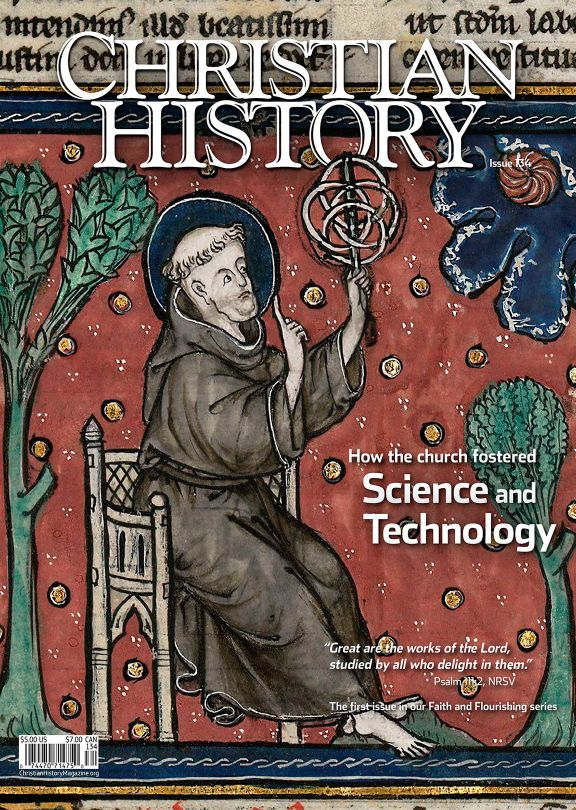
For those who enjoyed my faith & science history series over the past couple of weeks, there’s a treasure trove awaiting: The recent Christian History issue(s) on the same topic. You can browse the issue in full color and download pdfs of individual articles here.

Which reminds me to say . . .

. . . if I had a nickel for every time someone has said they didn’t know that Christian History had re-started after its then 26-year run ended in the fateful year 2008 . . . well, I’d be able to buy a fancy coffee or two. And little did anyone know – leastwise the magazine’s editors and parent (non-profit) organization – that in 2022 we’d be cruising into CH’s 40th anniversary year (special anniversary issue coming – keep an eye out at this link!).

But since 2011, the magazine has indeed lived again – and what a run it’s been, under the indefatigable editorial leadership of scholar/editor/writer/priest extraordinaire Jennifer Woodruff Tait. Among the topics we’ve covered just in the past few years: America’s love affair with the Bible; CS Lewis’s friends & family and their influence on him; Christian support for the common good in science, healthcare, higher education, the public square, and the marketplace; Christianity and Judaism; plagues and epidemics; Latin American Christianity; the women of the Reformation; the Quakers . . .

And for those interested in topics churchly/scientific, check out the following issues:

Hard to believe that last one, my very first issue as (short-lived) managing editor, came out a full 20 years ago! And I’m still proud of it . . .

Thanks y’all for reading my blog. I hope you enjoy these resources!

Christian foundations of science and technology innovation, part VII (final)


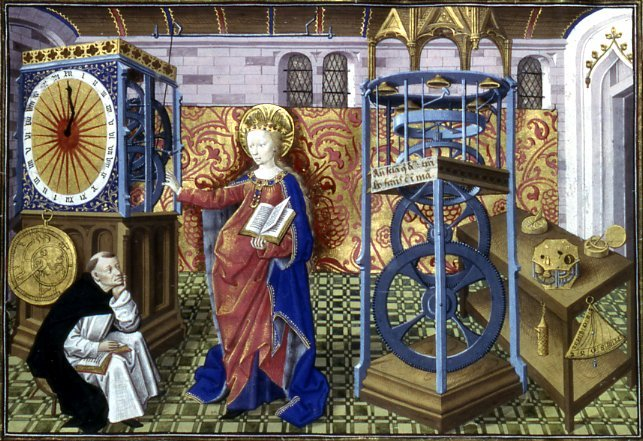
Miniature from 1450 taken from a copy of “Horologium Sapientiae” written around 1330 by Constance Henrich Seuse, Bibliothèque Royale Albert 1er, Bruxelles

. . . continued (and completed) from part VI

But though intellectual curiosity or the expectation of a lawfulness in nature mirroring the rationality of God did help drive the rise of science, it was not the only factor. Another, more practical consideration also contributed, and this brings us to Fact #9. That is, that medieval Christians also saw their rational study of creation as helping fulfil the cultural mandate of Genesis by developing new tools for better living.

In other words, the pursuit of scientific knowledge was already, even among the medieval scholastics, a matter not just for speculative or devotional interest, but also a way of contributing to human flourishing. The scholastics understood that God wants us to live in full enjoyment of his creation as well as his fellowship. God will not allow this full enjoyment and flourishing to be completely destroyed by the disobedience of humans in the fall, and so he works with and through human reason to improve every area of human life through new technologies, advances in medicine, and every other field of material culture.

Thus medieval theological education fostered every science and art—the quadrivium of the maths and sciences (arithmetic, geometry, music, astronomy) as well as the trivium of the humanities (grammar, logic, rhetoric). Though theology remained the “queen of the sciences,” every medieval university student, in order to earn a bachelor’s degree, had to study arithmetic, geometry, and astronomy as well.

Continue reading

Christian foundations of science and technology innovation, part VI


William Blake, The Ancient of Days setting a Compass to the Earth, frontispiece to copy K of the artist’s Europe a Prophecy

. . . continued from part V

As they sorted and tidied, the university-based natural philosophers began discovering that nature often contained its own causal explanations, which could be identified through observation and experiment. In the heyday of the scholastics, Thomas Aquinas’s teacher Albertus Magnus, for example, wrote two scientific treatises that helped to found empiricism and the scientific method—one on botany and one on zoology—and sought empirical knowledge everywhere he went through observation and experiment. “[Albert] used his journeys through the Western world to further this interest, and was forever asking questions of fishermen, hunters, beekeepers, and bird-catchers.”

Such thinkers certainly did not intend to deny God’s creative, providential activity—just to highlight the more and more evident fact that nature operates according to its own mechanisms, which are describable in naturalistic terms.

By the early 14th century, those terms were becoming increasingly mathematical. Scholars of that day such as Thomas Bradwardine at Oxford (later to become Archbishop of Canterbury) used mathematical theory to challenge and update old, incorrect scientific beliefs inherited from Aristotle. The new and more accurate groundwork they provided on a variety of scientific questions prepared the way for the work of Sir Isaac Newton (1642-1717) and other stars of the scientific revolution.

Lest we think, though, that as math entered, faith exited (as some have interpreted Newton’s work!), it is important to see how our eighth fact, the harmonization of scientific and theological understandings, was already emerging in the time of the scholastics.

Continue reading

Christian foundations of science and technology innovation, part V


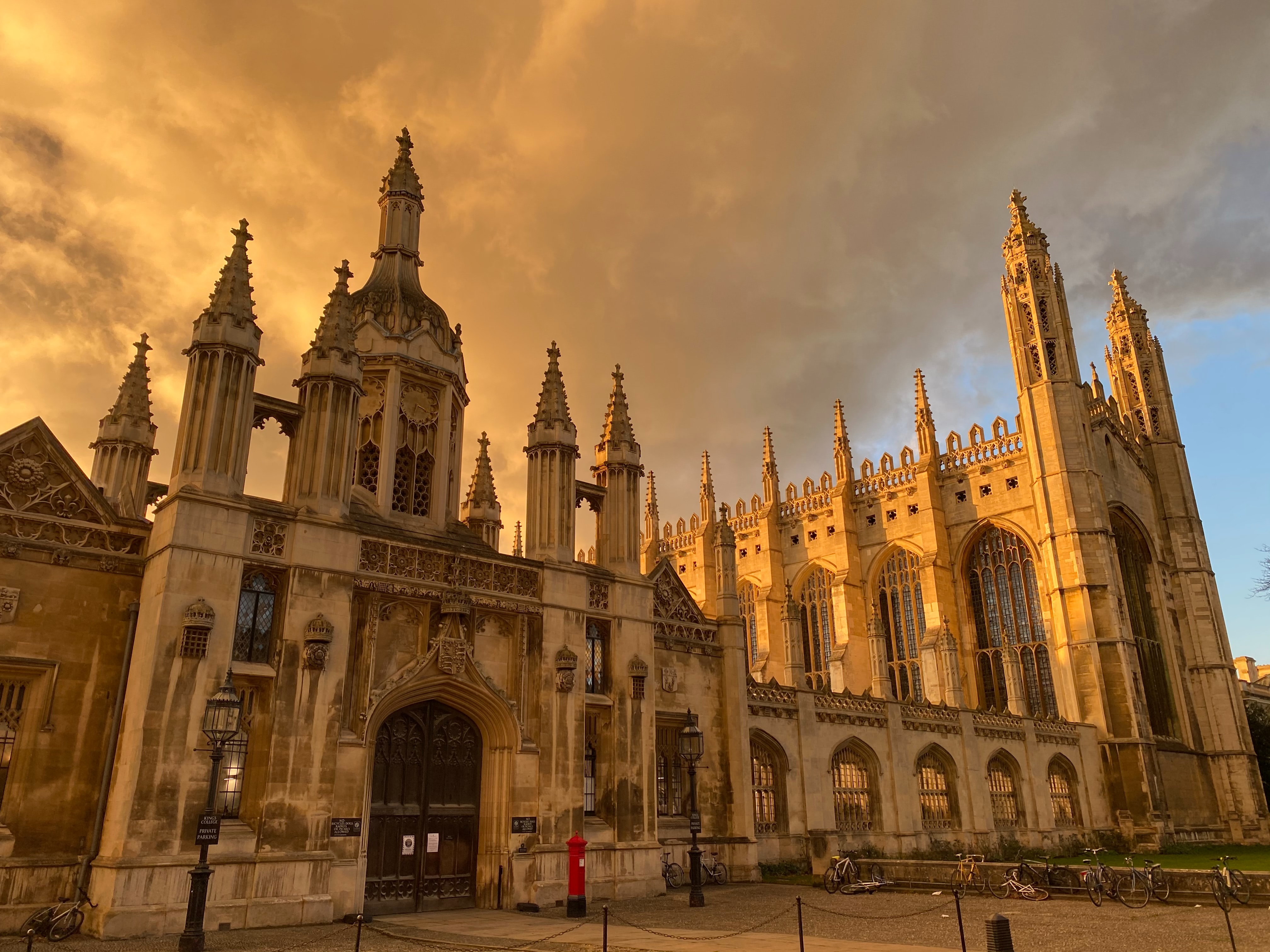
Gatehouse and chapel of King’s College, University of Cambridge; Photo by Tim Alex on Unsplash

. . . continued from part IV

Sacramentalism provided the seedbed for the pursuit of scientific knowledge, especially in the high-medieval period of the birth of the universities (from the 11th to the 14th centuries). In part, it did this by birthing – and this is our fifth fact – a truly devotional, awe-filled approach to that pursuit.

Think about it: when we may look at the natural world not only as the arena of God’s work but as a physical reality that reflects his divine glory, then how else would we approach it but with awe and wonder? And since medieval and early modern followers of Christ indeed believed this, they approached their study of the world not only out of a duty to apply the gift of reason, but also out of a sense of awe that the world is a conduit to God’s presence and glory. Should it surprise us, then, that the natural philosophers of that age spent hours and days and years of their lives in meticulous proto-scientific experimentation and hypothesizing?

Continue reading

Christian foundations of science and technology innovation, part IV


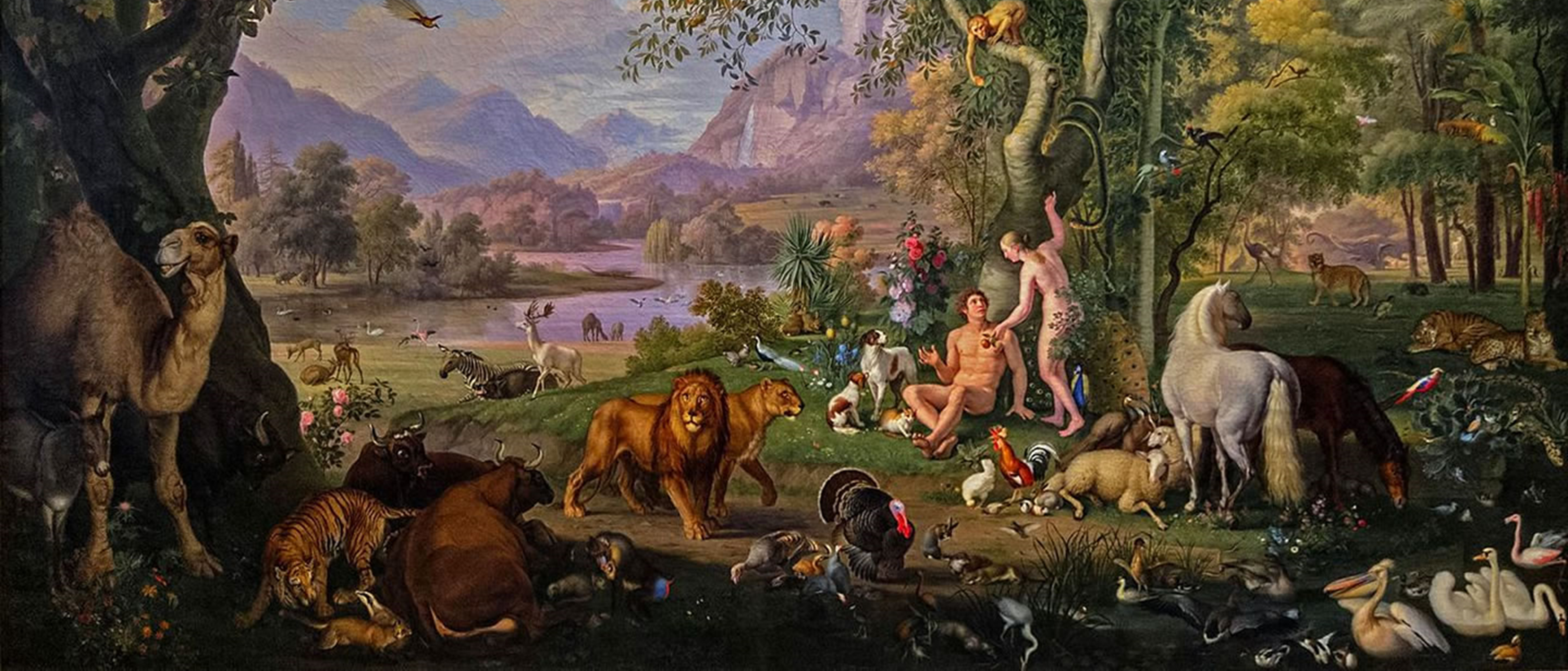
Johann Wenzel Peter (1745-1829), Adam and Eve in the earthly paradise, Wikimedia Commons

. . . continued from part III

But there is more: A third foundational fact in the Christian development of science and technologies was that the early and medieval Christians understood that God intended they apply the gift of reason to understanding and ordering the gift of Creation—for our flourishing. They saw this important role of reason in the cultural mandate already in Genesis—for example, in the task assigned to Adam and Eve of naming the animals, or God’s charge to them to cultivate and keep the garden.

That the medieval church was not afraid to exercise this mandate of applying reason to the world is illustrated in the story of the man who became pope just before the turn of the millennium – in 999 AD. Of humble origins, Gerbert of Aurillac – who was perhaps relieved to be able take the papal name Sylvester – had developed through talent and education into Christendom’s foremost mathematician. A teacher of arithmetic, astronomy, and harmonics, Gerbert’s knowledge in these fields was admittedly hampered by his inability to read Greek—and therefore to read the best of the ancient pioneers of those fields. But his career showed that even in those so-called “dark ages,” the study of natural philosophy (what we have called “science” only since 1834) was no impediment to a highly successful career in the church. And why should it be? For early and medieval Christians adapted that field of study, “natural philosophy,” from the Greek philosophers, only now understanding it as the study of God’s wisdom as reflected in his creation.

In fact, a couple of hundred years after Gerbert, another Christian scholar, Hugh of St. Victor, described the natural world as a book written by God’s finger – and therefore just as appropriate for Christians to study as the Bible.

For medieval natural philosophy to develop into science as we know it today, however, it needed two more understandings.

Continue reading

Christian foundations of science and technology innovation, part III


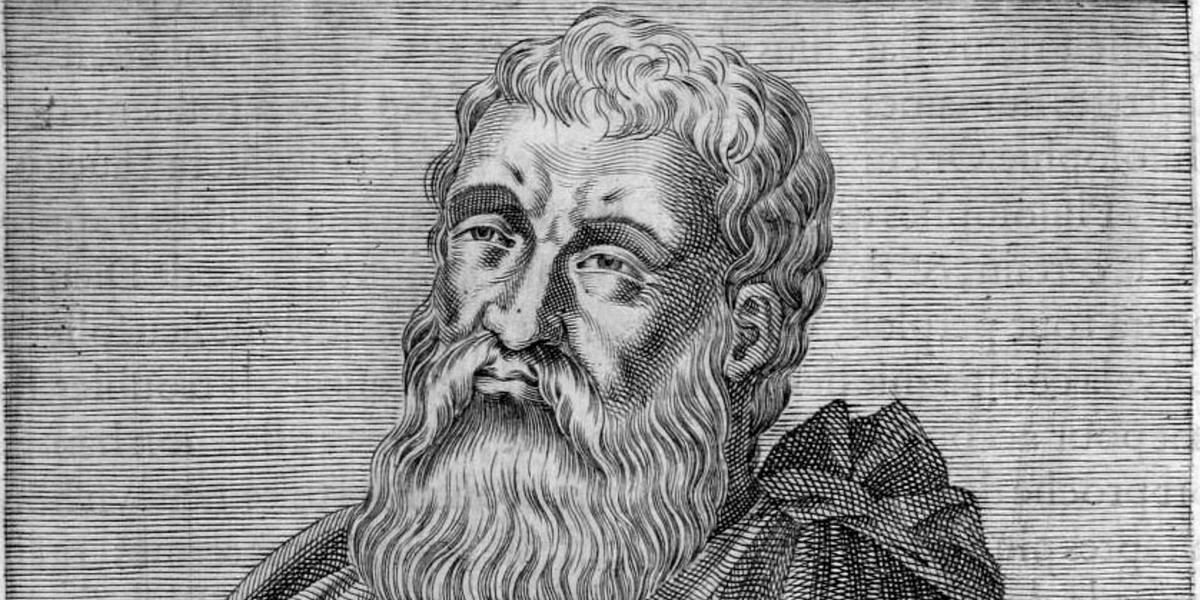
Justin Martyr (Wikipedia)

. . . continued from part II

2.   Reason is a gift too, and an important part of God’s image in us

A second important fact for the historical Christian engagement in scientific and technological pursuits is that from the earliest years, Christians have understood human reason as a second gift, along with creation. This positive understanding of reason flourished, again, from the earliest years of the church. As historian Jaroslav Pelikan puts it, “When the Christian gospel came into the world, it succeeded in converting the most rational of men, the Greek philosophers, to its message; this was proof that the gospel was not to be dismissed as irrationality and ‘insanity.’”

Among those converted philosophers were such key early Christian leaders as Athenagoras of Athens, Justin Martyr, and Clement and Origen of Alexandria. Such thinkers continued to function as philosophical teachers, and in that role, they forged systematic Christian understandings of God, humanity, and the world – a tradition of Christian thought that has continued to today.

Now you may suspect that when I say this tradition of careful Christian thought about things “continued to today,” I’m passing too lightly over the medieval Church critiqued by Condorcet. Wasn’t that Enlightenment skeptic right? Weren’t medieval people ignorant haters of knowledge who were sitting around waiting for the Enlightenment to happen so they could finally crawl out of the darkness and into the clear light of reason? That is what we so often hear.

Continue reading