Tag Archives: C S Lewis

The Incarnation and the importance of the embodied life in C S Lewis’s That Hideous Strength


Cover of "That Hideous Strength"

In this post from my forthcoming Medieval Wisdom: An Exploration with C S Lewis, we look at the important lesson from Christ’s Incarnation that Lewis draws for us in his science fiction novel That Hideous Strength.

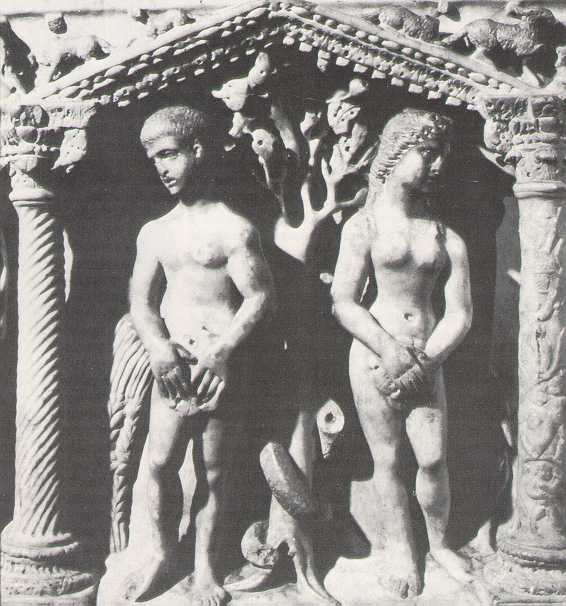
Another facet of the Incarnation that captivates Lewis is the way that it ennobles our humanity – even our very materiality. To try to abstract mind from body, spirit from matter is to commit the gnostic error and destroy (be false to) what we truly are as human beings. That Hideous Strength shows us in imaginative form how modern technocrats (the National Institute of Coordinated Experiments or N.I.C.E.) might try to eliminate that crucial materiality in a Gnostic quest for pure spirit. N.I.C.E.’s agents, in the attempt to eliminate the bodily—in fact, all biological life on earth—and retain only mind, lose their morality and their very selves. A sample of the dialogue gives a sense of the chilling vision at work here:

“And what is the first practical step?” [asks Mark Studdock to Feverstone, whom he is trying to impress in his effort to be counted one of the “inner circle”].

“Yes, that’s the real question. As I said, the interplanetary problem must be left on one side for the moment. The second problem is our rivals on this planet. I don’t mean only insects and bacteria. There’s far too much life of every kind about, animal and vegetable. We haven’t really cleared the place yet. First we couldn’t; and then we had aesthetic and humanitarian scruples; and we still haven’t short-circuited the question of the balance of nature. All that is to be gone into. The third problem is Man himself.”

“Go on. This interests me very much.” Continue reading
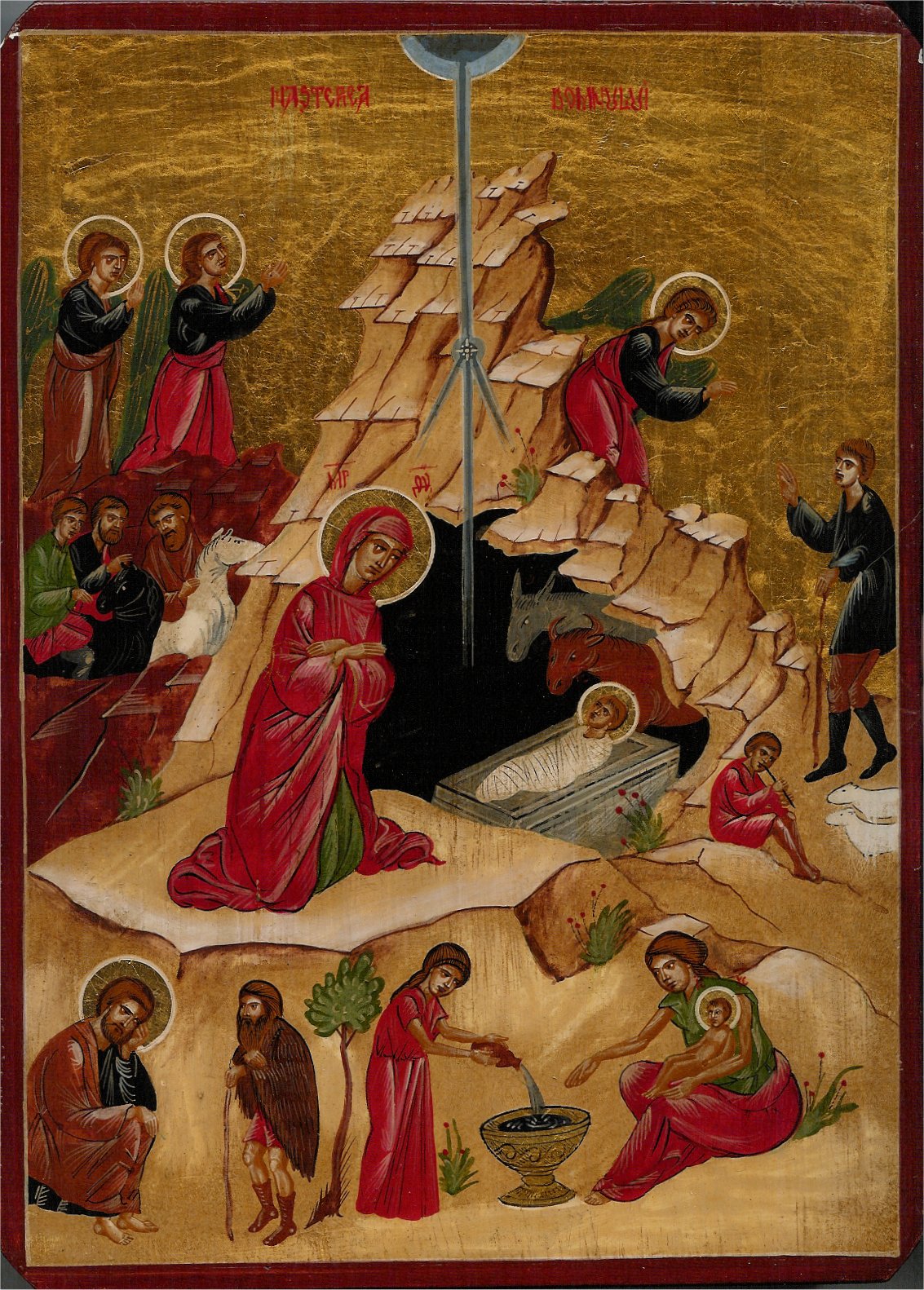
C S Lewis on the Incarnation: Theosis, “coming down and drawing up,” the Great Dance, and statues coming to life


Iconnativity

In this third post from the final chapter of my Medieval Wisdom: An Exploration with C S Lewis, I delve deeper into Lewis’s Incarnational theology and spirituality:

The Incarnation ennobles us, draws us up into God, and thus makes us our “best selves”

As well as pointing up our moral nature and demanding that we choose well, the Incarnation, for Lewis, performs an astounding work of drawing us up into the divine presence. Lewis launches into his key apologetic work Mere Christianity with this observation: “At the beginning I said there were Personalities in God. Well, I’ll go further now. There are no real personalities anywhere else. Until you have given up your self to Him you will not have a real self.”[1] This is a version of the classical Christian teaching of theosis, formulated by Athanasius, who said that “God became man so that we can become gods.” That startling language does not mean that we become what God is in his essence, but rather that we are re-attached to the divine life, which overcomes the death at work in us because of the Fall. He came to earth, to flesh, in order to lift us back up with him.

“Lewis has a couple of unique ways of describing the Incarnation. In Letters to Malcolm, he suggests that the Incarnation can be described as Heaven drawing Earth up into it. He asserts that when God the Son took on the human body and soul of Jesus, he took on with it the whole environment of nature—locality, limitation, sleep, sweat, aching feet, frustration, pain, doubt and death. Continue reading

C S Lewis on the Incarnation and human choice


choice-roads2

In this brief series of posts, we are looking at C S Lewis on the centrality of the Incarnation. Among other things, Lewis understands the Incarnation as a lens through which to see the importance of our own human choices:

Importance of human choice and human culture

Part of understanding and affirming the wonder of who we are as human beings, affirmed by the fact of the Incarnation, is being clear about ourselves as creatures capable of choice, who are responsible for the choices we make. Free will is a crucial part of Lewis’s anthropology and his case for hewing to the morality of the Old Western (Christian) tradition. Our wills are as essential, ordinary, and marvelous as our bodies. The choices we make on earth have transcendent, cosmic, divine (or infernal) consequences. Lewis loved Dante’s Comedia and appreciated Sayers’s take on that great poem. Sayers called it “the drama of the soul’s choice.” Drama. Acted out by humans in all their earthy but exalted embodiedness. Full of color, life, substance.

It may be fair to say that Lewis was a “Christian humanist” in this respect: our arts, sciences, cultural activities, and personal choices all contribute to heaven or hell on earth, and to our own salvation; many are “preparatio evangelii”–they lead us to God’s doorstep. In his essay “Christianity and Culture,” Lewis reflected: “[C]ulture is a storehouse of the best (sub-Christian) values. These values are in themselves of the soul, not the spirit. But God created the soul. Its values may be expected, therefore, to contain some reflection or antepast of the spiritual values.” Continue reading

Why we need something like monasticism again today – part I


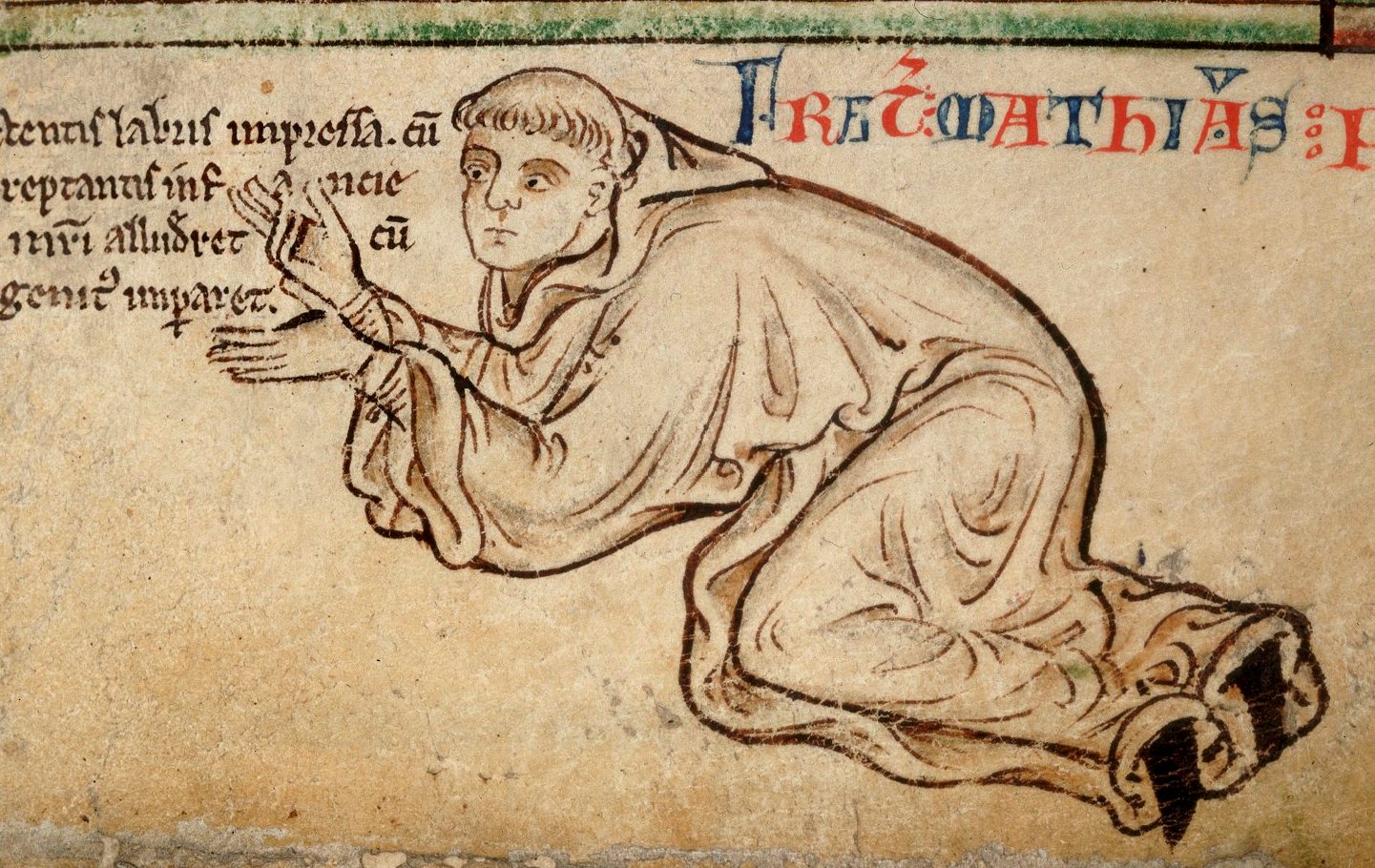
BritLibRoyal14CVIIFol006rMattParisSelfPort

Well, I have my computer back, fixed and ready to go again. So, as we cruise down the home stretch of the monasticism chapter from my forthcoming Medieval Wisdom: Explorations with C S Lewis, we come to a few reasons modern Christians would do well to learn from the medieval monastics:

We need something like monasticism because we are physical beings who need a holistic spiritual discipline

Against the stereotypes, Christian asceticism still holds the body to be a good thing – and Benedict’s Rule demonstrates this, for example, in its close attention to the needs of a sick monk, who should be given more food and more sleep, and of course its strong insistence on hospitality to the stranger and the guest.

We’re talking about spiritual dieting here. And diets that work still allow you to eat things you like, but in a more controlled manner. Christian asceticism is spiritual dieting, not spiritual anorexia. Anorexia is a complete construction of food as evil and disgusting, and an aversion to food. Monks did not believe that marriage and procreation (for example) were evil. They believed that by doing without them, they could train themselves toward a higher good. Continue reading

Paralyzed by grace? What we can learn from monastic discipline


discipline-of-prayer-the

We wonder today why we are spiritually anemic. This post from the monasticism chapter of my forthcoming Medieval Wisdom: An Exploration with C S Lewis moves on from the first of the “principles of mastery”–passion–to the third–discipline:

Holiness is not optional, and it requires effort

All this talk of passion may make us think that what is required it the single big, heroic action: casting ourselves into harm’s way for the sake of our loved one. But wise teachers of the spiritual life have reminded us of something we have sometimes forgotten: our lives as Christians are not all about single crisis experiences—single events that change our lives. The imagery of sawdust-trail conversions and emotional “altar calls” may sometimes lead us to think in that way, seeking a sudden, emotional experience as the solution to all our ills—but it just ain’t so.

John Wesley, to take just one example, reminded us that those powerful moments of repentance and coming to faith are just the “porch” or the “door” into the Christian life. The substance of the Christian life, which lasts as long as we live, is holiness. Wesley had a favorite phrase to explain holiness. Continue reading

Passion, tradition, and discipline: Medieval monks had all the tools necessary for spiritual mastery


girl playing violin_fullWe wonder today why we are spiritually anemic. We (Protestants in particular) acknowledge that the Catholic legacy of spiritual teaching is a strong and useful one (at least, setting aside all that flagellation stuff, anyhow. That’s a joke. See the footnote in this post). In this post from the monasticism chapter of my forthcoming Medieval Wisdom: An Exploration with C S Lewis, I begin to look at where that strength and usefulness came from:

Spiritual mastery requires passion, tradition, and discipline

It may help us to answer the question “Why monasticism?” if we consider ascetic self-denial as one species of a larger phenomenon: the drive to achieve mastery in any human enterprise. How do you master any skill? First, you need to have passionate commitment to the goal of mastery. Second, you need to study and learn practical knowledge handed down in a tradition. Third, you need to practice discipline—both in the sense of dedicating hours and hours to repetitive practice, and in the sense of implementing an often extended list of discrete “disciplines”—the particular repeated actions required by the craft.

Think of the progress of a young girl toward becoming a skilled violinist. First comes the passion: one day she hears a piece of music, and it pierces her heart with pure joy. At the beginning, she just wants to hear it again and again; then, to know how to make those beautiful sounds herself. And so she begins years of lessons and practice, giving herself to those two complementary means to mastery: studying a tradition (here, of musical knowledge) and practicing an askesis—a training or discipline. Continue reading

C S Lewis’s dawning asceticism: “Depth under depth of self-love and self-admiration”


monastic arches

In the last post, as I began to unpack monasticism and asceticism with C S Lewis’s help, I took a passage from his science fiction novel That Hideous Strength as a window into the way that war, by shaking all our self-interests and focusing us on a higher goal, can give us a new vision and focus for life. I concluded, drawing from a phrase of Lewis’ in that book: “‘The immense weight of obedience’ involved in asceticism, too, can attune us more finely to our relationships, relativize our petty anxieties and cares, and help us live our earthly, human lives with more zest and appreciation.” Now, to continue:

Why monasticism?

This focusing function may be a helpful general principle about asceticism. But we may fairly ask: “What makes us think the particular ascetic modes of monasticism have any answers on our modern problems? They’re so . . . medieval! Stone cloisters, hard beds, celibacy, rising at ungodly hours to chant Psalms in Latin? Really? This is the balm for our ills?”

Lewis plumbs the depths of self

Lewis, in the year leading up to his conversion, struggled mightily with his “flesh” – and even more with spiritual pride, a sin the monastic fathers unanimously agreed was among the worst, and especially tending to beset those making efforts in their lives to achieve spiritual progress.

From early on, as he struggled toward conversion, Lewis also appreciated the asceticism of the Middle Ages. Continue reading

Why asceticism? “Everyone who competes in the games goes into strict training . . .”


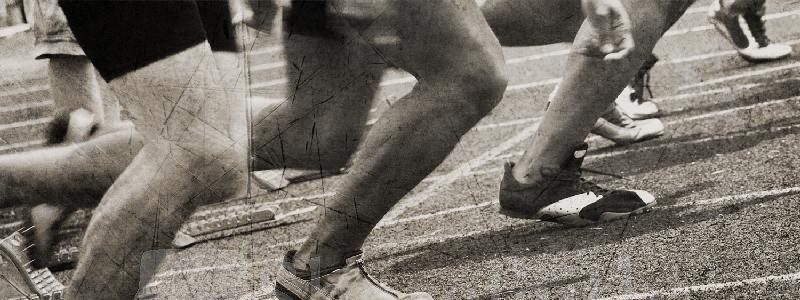
running the race beating the body

Another bit from the monasticism chapter of the forthcoming Medieval Wisdom: An Exploration with C S Lewis:

The concept of askesis came from the pagan philosophers, but it is thoroughly supported in Scripture. It is like the discipline of an athlete who, in the words of the Apostle Paul, must “beat his body”—endure some pain and deprivation—if he is to use that body to excel. Following from the phrase in the title of this post: I Cor 9:26-27 “Everyone who competes in the games goes into strict training. They do it to get a crown that will not last, but we do it to get a crown that will last forever.” Therefore I do not run like a man running aimlessly; I do not fight like a man beating the air. No, I beat my body and make it my slave so that after I have preached to others, I myself will not be disqualified for the prize.”

If we are to excel spiritually, the church has always known, we must practice certain disciplines that keep our physical, emotional, and intellectual lives in check; some of these disciplines actually involve denying ourselves some of the good, God-given pleasures we might otherwise enjoy in those realms. Christians through the centuries have practiced such self-denial not as an end in itself, but in the interest of that higher goal of union with God.

Continue reading

Christian asceticism (spiritual disciplines, self-denial): What’s up with that?


So . . . many . . . temptations . . .

So . . . many . . . temptations . . .

In this second post from the monasticism chapter of my forthcoming Medieval Wisdom: An Exploration with C S Lewis, we come to the “inner logic” of asceticism. What is it about our experience as human beings that requires us to engage in “askesis,” which means “training,” in order to live well with and for God?

In the last post I reminded us of what we already know–that the desires and goods of our embodied lives are also so darn distracting. They so easily lure us in with the siren song that, after all, our real fulfillment lies in them and not in God.

Now I want to add that this fact about us explains the behavioral strictures that modern American holiness and fundamentalist believers have insisted upon: no dancing, drinking, movies, and so forth. These have been misunderstood by critics as “legalism,” a term with Lutheran roots that means the attempt to earn God’s favor through rule-following (the sort of thing that Jesus scorned in the Pharisees). Rather, they have a singular purpose: Continue reading

Do our bodies lead us to God or keep us from God? Yes.


monks thwacking selves with boards - Monty PythonToday I begin posting bits of the “Monasticism and asceticism” chapter of my forthcoming Medieval Wisdom: An Exploration with C S Lewis. 

Why this is the hardest topic in this book for me, and maybe the most important one for American Christians today

There is no chapter in this book where I am “preaching to myself” more than this one. I fear that living in a place as comfortably materialistic and hedonistic as America makes our need for some form of ascetic discipline even more urgent than it has been in other ages and places. I feel the force of Neil Postman’s book title (if not the book itself), Amusing Ourselves to Death. How easy it is just to sit in front of the glowing screen, sipping the extra-large high-fructose corn syrup beverage, after the manner of the bloated inmates of the Buy ‘n’ Large corporation’s starliner Axiom in the movie Wall-E.

I have struggled to really “own” my faith, and part of that has been that I have had little clear sense of how the faith should be changing the way I work, do leisure, raise my family, and so forth. But mine is not just a failure of knowledge. It is a failure of commitment and discipline. So, honestly, I don’t want monasticism to hold any truth for me. I want it to be wrong. And I suspect this is true of many moderns who dismiss medieval monasticism without examining it—going no further than the Monty Python caricature of monks filing through the streets, intoning the missal passage Pie Jesu Domine, dona eis requiem and thwacking themselves on the forehead with boards.[1] Continue reading