Tag Archives: evangelicalism

The deepest values of early American evangelicals, revealed in what Methodists said about their dead; part I


The Methodist Mission in the Willamette Valley...

The Methodist Mission in the Willamette Valley of Oregon, United States, as it appeared in 1834.

While at Duke in the late 1990s, I enjoyed a seminar led by historian of American Methodism Dr. Russell Richey. Each week we read stacks of old Methodist documents: letters, histories, reports of annual conferences, newspapers, and – the genre I remember best and enjoyed most – obituaries and memorials of departed ministers (and in a few cases, laypeople). Continue reading

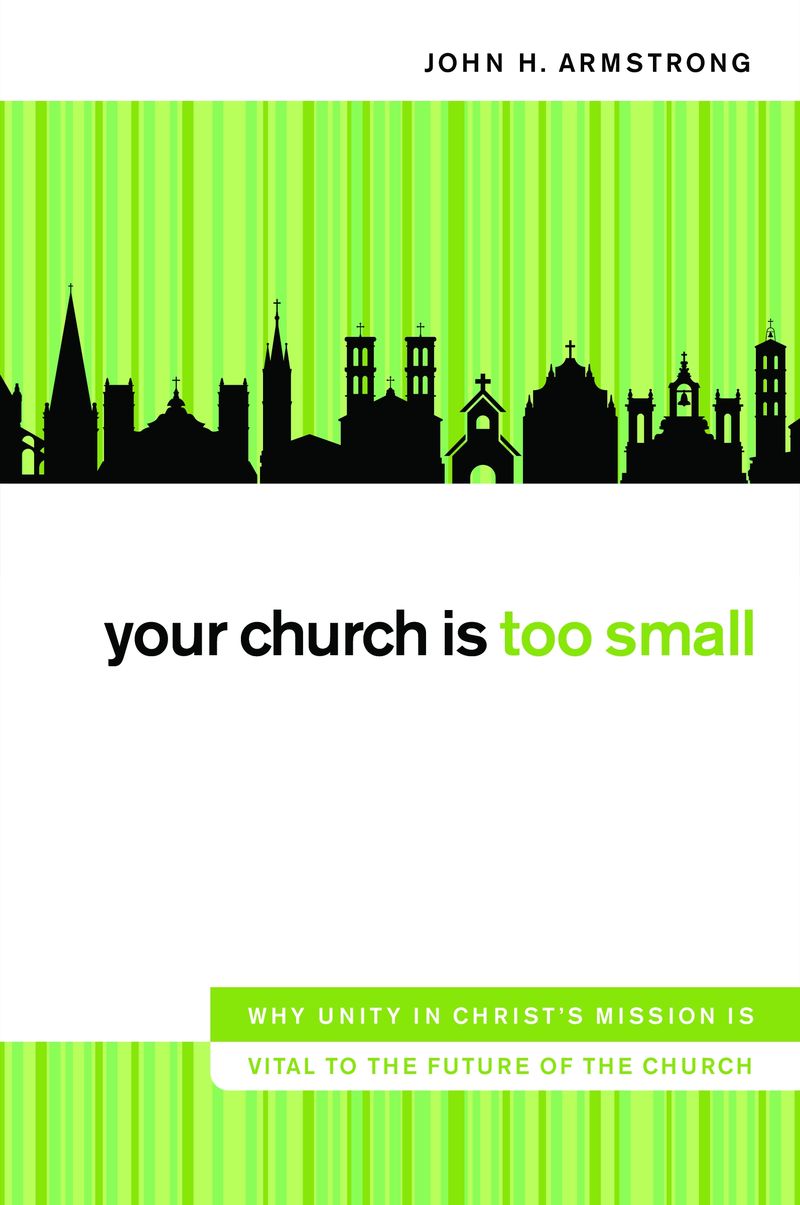
John H. Armstrong says Your Church Is Too Small—a blog review


I’ve been browsing the Deep Creek Anglican Church Blog‘s chapter-by-chapter review of John H. Armstrong’s new book, Your Church Is Too Small: Why Unity in Christ’s Mission Is Vital to the Future of the Church.

I was unfamiliar with John’s [no relation, as far as I know!] ministry until now. But having skimmed the review at the above blog, I think I find in him a kindred spirit. Sectarianism based on epistemological modernism is indeed a scourge of the church today. A balanced, critical ecumenism rooted in a heightened appreciation for tradition is indeed a much-needed balm. What I see here makes me want to know more about Armstrong’s ministry. Continue reading

America’s teens don’t know the radical message of the Gospel–and we parents are to blame


Two adolescent couples at the 2009 Western Ida...

Yup, “Christian” teenagers in America are more likely than not to believe “moralistic therapeutic deism.” That was sociologist Christian Smith’s coinage, and although he’s not mentioned in the following CNN.com article, the diagnosis remains the same: American Christians are not teaching their young people enough Christianity to get arrested for. Maybe they should check out Mark Van Steenwyk’s and my “Resources for Radical Living” course (coming someday to a bookstore near you).

(CNN) — If you’re the parent of a Christian teenager, Kenda Creasy Dean has this warning:

Your child is following a “mutant” form of Christianity, and you may be responsible. Continue reading

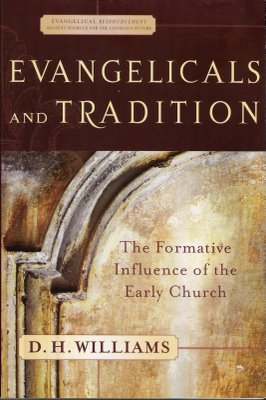
Evangelicals and Tradition: iMonk review


Since I have mentioned D. H. Williams’s book Evangelicals and Tradition several times on this blog, I figure it’s time to provide a bit more information. Here is a reflection and review of the book by the late “internet monk,” Michael Spencer:

My list of must-read books for post-evangelicals is short. Newly added at the top of the list: Evangelicals and Tradition: The Formative Influence of the Early Church (Evangelical Ressourcement: Ancient Sources for the Church’s Future) by Baylor University professor of patristics and Baptist minister D. H. Williams (Ph.d, University of Toronto.).

Reviews of D.H. Williams’ work on the need for evangelicals and free churchers to recover the catholic tradition are everywhere on the web. (By both Roman Catholics and by leading Evangelicals.) Continue reading

Is contemplative prayer a legitimate Christian practice?


Cover of

Over at Internet Monk, an excellent review of a book on classic Christian spirituality, Gary Thomas’s Sacred Pathways, has stirred up a heck of a hornet’s nest. A couple of critics are insisting at some length that contemplative prayer of the sort Thomas, Foster, Willard, and others recommend is “syncretistic” and thus dangerous.

Here is an excerpt from the review:

If you’ve read anything else by Gary Thomas or checked out his website, you know that unlike some evangelicals he believes that the Holy Spirit has been active throughout Christian history, not just since 1517. Continue reading

Stanley Hauerwas on evangelical immediatism and the need for tradition


I have written here before on evangelical immediatism (the assumption that we meet God in an unmediated way) as a toxic solvent that destroys the good we could gain by submitting ourselves to various aspects of Christian tradition.

For all that Stanley Hauerwas annoys me on a number of fronts, he sums up this issue pithily in the course of an interview about his recent memoir Hannah’s Child, with Wunderkammer Magazine: Continue reading

Fundamentalism since the 1970s: An in-depth article


The following is a narrative and analysis of fundamentalism since the 1970s. I wrote it for Charles Lippy and Peter Williams’s Encyclopedia of Religion in America, just published last month.

The basic argument of what follows is this: Fundamentalism in America changed after the 1970s–perhaps so much that the word “fundamentalism” is no longer appropriate for what it became. In that decade, the movement began a tectonic shift from protecting theological truths in infra-denominational fights to guarding “Christian morality” in a nation specially chosen by God.

To be sure, “correct” views of the person of Christ and his atoning work, along with vividly detailed end-time scenarios, have continued to occupy an important place in the movement, but these things are not what the “new fundamentalists” are most centrally about. No, they have seen America locked in a battle with a secularizing juggernaut, and they have rushed to take up the “arms” of pragmatic political measures and boundary-breaking religious alliances in order to gain the upper hand.

From the year 1980 on, the majority of those who took upon themselves the mantle of historic fundamentalism have sought to shore up family values, sexual mores, and biblical views of creation rather than orthodox doctrines and denominational power. And although this may look like a completely new direction compared with the emphases of fundamentalism’s formative decades (the 1920s – 1950s), I argue that it is, rather, a natural development from the earlier movement’s characteristic concerns.

These are not your mom and dad’s fundamentalists.

This is their story:

FUNDAMENTALISM: CONTEMPORARY

Chris R. Armstrong

As the decade of the 1980s opened, friends could rejoice, and opponents warn, that in the words of the historian Martin Marty, fundamentalism was now “back with a vengeance.” This time, however, the opponent was not theological liberals within the denominations, but secularizing forces within the nation. Continue reading

The evangelical patient awaits a medieval transfusion


The Summer of Research has given way to the Summer of Writing, issuing in the first halting words of Medieval Wisdom for Modern Protestants (Baker Books, forthcoming). Here are some initial, gut-level thoughts–rough and unrevised:

I write this book not as an expert but as a pilgrim. The subject is medieval faith, but academically I am an Americanist. I write for the American evangelical Protestant church(es) in a time of intense pain and confusion. Battered by modernity, we have tried in turn rational apologetic, pragmatic ecclesiology, charismatic experience, and postmodern experimentation. None of these has proved lasting.

The rationalism of modern apologetics has collapsed as the questions of the unchurched have turned away from doctrine and the agonies of the churched have centered on spirituality and practice rather than belief.

The pragmatism of the church growth specialists has dissolved, as it always has, as its shallow spirituality has become evident.[1]

The experientialism of the charismatic movement seems often to have failed to build lasting, faithful, discipled churches as worshippers have bounced from one high to the next.

The postmodernisms of some emerging Christians seem already to be veering into heresy.[2] Continue reading

Does evangelical “immediatism,” or direct access to God in Jesus, mean we cannot learn from tradition? No.


One may say: well, if evangelical mysticism/immediatism (direct access to God in Jesus) has stunted our ecclesiology by making everything between the individual and God negotiable according to a sort of pragmatics of piety (see my previous post), then it must also militate against tradition in all senses of that term.

In other words, our tendency to emphasize direct experience of God must be the enemy of a full-orbed understanding and appropriation of the church fathers and other rich theological and spiritual sources from the shared Christian heritage. Yes?

But surprisingly, no. Or at least, not necessarily. And this suggests a program for evangelical renewal today, as I suggest in another section of my paper “Evangelicals and Tradition,” given at the 2007 meeting of the Evangelical-Roman Catholic Dialogue in St. Paul:

Lest we think that the Augustinian-Platonic focus on direct inward experience of the divine works only against tradition, however, we need only remember the Reformers’ own deep engagement in the thought of the church fathers. The Reformation was precisely the story of a group of people who saw unacceptable (they would have said, “modern”!) innovations in their church and worked to reform and renew it by reengaging with . . . yes, the Bible; yes, the New Testament church; but also and very significantly, the church fathers. When the late Robert Webber talked about the “ancient-future church,” he was saying only what the Reformers themselves were saying. Continue reading

Yes, there is such a thing as evangelical mysticism


These days all you have to say, in order to be blacklisted from the rolls of evangelical Christianity by certain self-appointed watchdogs, is that you are a fan of “contemplation” or “mysticism.” Voila! you are apostate: probably sliding into Eastern mysticism, and certainly a dangerous person for right-thinking evangelicals to hang around.

A colleague of mine at Bethel San Diego, the theologian Glen Scorgie, has lately been spelunking the little-studied area of “evangelical mysticism.” Among a select group of 19th- and 20th-century evangelical spiritual writers such as A. W. Tozer and Andrew Murray, the Catholic mystical writers were not at all off-limits for evangelical study and praxis.

I’d go further. If you define mysticism as Bernard McGinn does, as  a direct, intimate relationship with God in Jesus, accessed through certain disciplines, then I would argue that mysticism has been present in evangelicalism from its beginnings in the 18th century, and indeed from its immediate roots in the 17th. Here’s a clip from the beginning of a paper I gave in 2007 to the Evangelical-Roman Catholic Dialogue here in St. Paul. I use the term “immediatism” here, but I mean by it mysticism, in the sense defined above:

“Immediatism” in evangelicalism’s DNA

American Evangelicals have mysticism, or what I would call immediatism—the belief that the average layperson has direct, individual access to God, with no other mediator beside Christ—in the bloodstream. We find this at the very roots of American evangelicalism, among the first Puritans. As we were first taught in 1939 by the grand revisionist and revivifier of the Puritans, Perry Miller, this was “an emotionally vibrant and spiritually vigorous group in the tradition of Platonic idealism and Augustinian piety; their zeal came from an insatiable quest for the spiritual ideal of union with God despite their human imperfections.”[1] Continue reading