Tag Archives: Medieval

Ancient and medieval memory techniques described in a new book: Moonwalking with Einstein


My wife Sharon and I have been interested for some time in the techniques medieval folks used to memorize huge amounts of information. These revolve around the use of imagined space–“the memory palace.”

Here’s just another instance of how ancient and medieval people in fact knew stuff–practical, scientific stuff–that we don’t. It’s just one more way we can learn from those who have gone before. If you don’t believe me, then check out the brief video on this Amazon book page. And then perhaps check out the book. I’ll be doing that myself.

Ancient and medieval historical theology: Ur doin it wrong?


The subhead above should have read: “A group dedicated to doing it right.” But then I couldn’t have used this lolcat picture. And I have a weakness for lolcats.

Once in a while a bright seminary student will come to me and tell me that they want to “go on” and study historical theology, in the service of the church. What theology doctoral program should they enter?

I think of Duke and UVA, and then I’m flummoxed. Now, I know there are other good programs out there. I’m not the best-connected academic. So I suggest that the student email their question to one of the prominent senior historical theologians–UVA’s Robert Wilken is one–who are in fact pursuing their field in the explicit service of the church (may Jaroslav Pelikan rest in peace).

But it has seemed to me that the field has never quite recovered from the mid-twentieth-century assimilation of theology to the “religious studies departments” of the major universities, nor from the academy’s quite proper dismissiveness of the squabbling “my dogma is better than your dogma” confessionalism that marked the field in the decades leading up to that assimilation. Certainly, as theology still languishes far from her erstwhile status as “queen of the sciences,” historical theology as the queen’s handmaiden has also fallen on hard times.

Now I discover that a group of historical theologians at Boston College have, for the past few years, been dedicating themselves to leading their field of historical theology back to the pursuit of (this will shock you) the history of theology–instead of defense of dogma, study of philosophy, or other things only tangentially related to the health of the church. Continue reading

ANNOUNCEMENT: New Twin Cities medieval study group


Well, I know not everyone reading this blog is in the Twin Cities. However, a bunch of you are, so I’d like to use this forum to announce a new venture: a church-oriented “medieval retrieval” study group. Here’s the skinny:


I am organizing a Twin Cities medieval study group. This will be a small group of Christian academics along with (perhaps) clergy and other lay leaders. The group’s organizing question will be “How can the church today learn from medieval faith?” Its goal will be to learn and clarify aspects of medieval faith that can inform and enrich the life of churches. Continue reading

The intuitive medievalism of C S Lewis–a paper proposal for Kalamazoo 2011


Just submitted a paper proposal to the International Congress on Medieval Studies, Kalamazoo, MI, 2011, for a session sponsored by the Purdue C S Lewis Society. Whether or not it includes me, this session will be a historic event: as long as I or the convener can remember, Kzoo has done without even a single C S Lewis paper.

This is quite odd, given that, in the words of Norman Cantor, “Of all the medievalists of the twentieth century, Lewis and Tolkien have gained incomparably the greatest audience.” I’ve seen lots of Tolkien sessions at Kzoo, but nary a Lewis session.

Wish me luck . . .

ABSTRACT: The Intuitive Medievalism of C S Lewis

Lewis did not set out to be a medievalist, but from early in his life—before his conversion—medieval thinking and values drew him inexorably, eventually forming his deepest commitments. Continue reading

Monastic habits for non-monastics–Glimpses from Dennis Okholm


Cover of "Monk Habits for Everyday People...

A fascinating modern exploration of Benedictine ways

The following are brief excerpts and quotations I marked while reading Dennis Okholm’s Monk Habits for Ordinary People (Grand Rapids: Brazos Press, 2007). Along with works by Kathleen Norris, Phyllis Tickle, Leighton Ford, Karen E. Sloan, Tony Jones, and a growing group of other Protestant authors, Okholm’s book explores medieval monasticism–especially the Benedictine tradition. The forward is by Kathleen Norris.

As with the David Bell and Jaroslav Pelikan “glimpses” and the glimpses of Benedict and Francis by Columba Stewart, William Short, G. K. Chesterton, and Mark Galli, I thank my t.a., Shane Moe, who transcribed these and inserted  brief contextual tags where helpful. Page numbers are at the beginning of each excerpt. The designation “Q” means I wanted to save the text as a quotation, for use in teaching and writing. D means the definition of a term. “U” means I want to use an idea or statement in my teaching:

Q, 9 (from Kathleen Norris’s forward to the book, on Ockholm’s discussion of Protestants being attracted to monasteries): “He demonstrates that it is not just another case of Americans shopping around for their spirituality, but a genuine reclaiming of the taproot of Christianity, a reconnecting with a religious tradition and way of life that predates all of the schisms in Christendom.” Continue reading

Jerusalem’s Hospital of St. John: A model medieval hospital


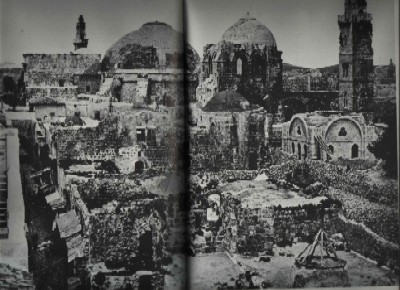
Guenter Risse has provided, in his Mending Bodies, Saving Souls, a fascinating account of the Hospital of St. John in Jerusalem during the crusader years.

The Hospital reflected and elaborated on the values found in the earlier monastic history of Christian hospitals. Here are some glimpses, prefaced by a brief timeline of Jerusalem’s history: Continue reading

G K Chesterton: Glimpses of Francis of Assisi


St. Francis of Assisi (circa 1182-1220)

These are brief excerpts and quotations I marked while reading G. K. Chesterton’s Saint Francis of Assisi (New York: Doubleday, 2001; orig. pub. George H. Doran Company, 1924).

Chesterton’s book is full of quirky and penetrating insights on Francis, the culture of his time, and the movement he started.Though Chesterton was no academic, he saw deeply into his subject, as he did into Thomas Aquinas, the subject of his other famous short biography–which the great student of medieval philosophy Etienne Gilson described as “without possible comparison the best book ever written on St. Thomas.” Continue reading

Glimpses into Benedict, his Rule, and Benedictine monasticism, from Columba Stewart


These are brief excerpts and quotations I marked while reading Columba Stewart, OSB, Prayer and Community: The Benedictine Tradition (Maryknoll, NY: Orbis, 1998)

The whole Orbis Traditions series of which this book is a part is outstanding–short, affordable paperbacks that are meaty, wise, and quotable. And Stewart’s is the best of the series out of the 4 or 5 I’ve read so far. You will find here (1) a nutshell biography, (2) a lively exegesis of various sections of the Rule, and (3) succinct and penetrating observations on the distinctives of the Benedictine way: the lectio divina, the “work of God” (liturgy), silence, personal prayer, humility, obedience, and much else that I, at least, found illuminating. Continue reading

Chastened modernism or principled postmodernism–comments inspired by C S Lewis on medieval morality


It occurred to me that this comment and my response, spurred by the post “C S Lewis and ‘medieval morality'” may be worth its own post, as an invitation to others to join the conversation: Continue reading

Jaroslav Pelikan: Glimpses into medieval theology


These are brief excerpts and quotations I marked while reading Jaroslav Pelikan’s The Growth of Medieval Theology (600-1300), Vol. 3. in his series The Christian Tradition: A History of the Development of Doctrine (Chicago: The University of Chicago Press, 1978).

As with the David Bell “glimpses” posted yesterday, I thank my t.a., Shane Moe, who transcribed these and inserted  brief contextual tags where helpful. Page numbers are at the beginning of each excerpt. The designation “Q” means I wanted to save the text as a quotation, for use in teaching and writing. “D” means a definition of a term. “Use” means I want to use an idea or statement in my teaching:

Q, 3: “The Middle Ages may be seen as the period when the primary focus of Christian thought about Christ shifted from what he was to what he did, from the person of Christ to the work of Christ.” Continue reading