Tag Archives: Roman Catholicism

Saints and Mary: What Lutherans and Roman Catholics agree on about them


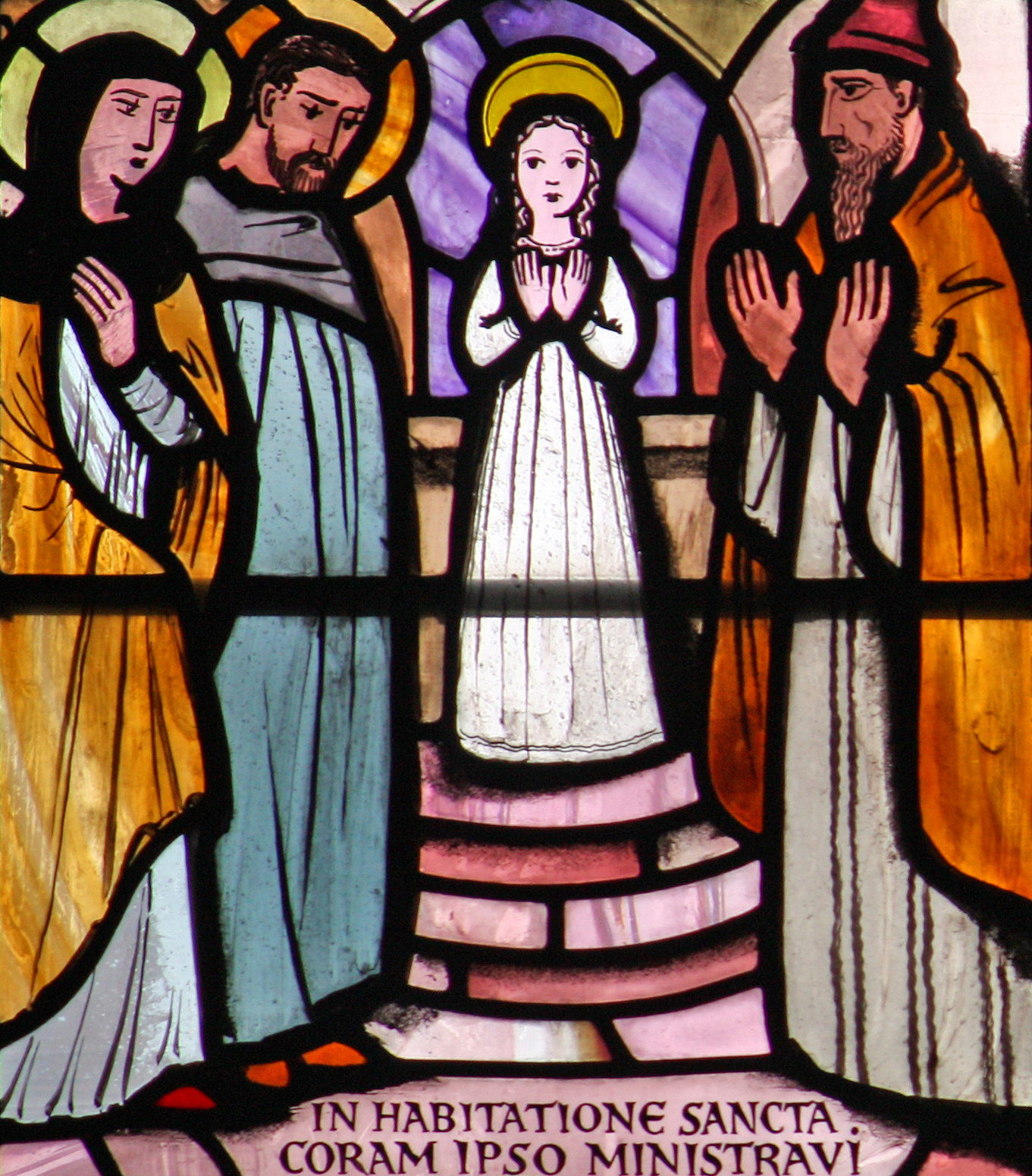
If you’re wondering what Lutherans AND Roman Catholics can affirm about saints, here’s what the Lutheran-Roman Catholic dia­logue’s joint document, The One Medi­a­tor, the Saints, and Mary, has to say about it. Again, h/t to the folks at “Here I Walk.”
The document states some “church-uniting con­ver­gences” :

“1. We reit­er­ate the basic affir­ma­tion that ‘our entire hope of jus­ti­fi­ca­tion and sal­va­tion rests on Christ Jesus and the gospel whereby the good news of God’s mer­ci­ful action in Christ is made known; we do not place our trust in any­thing other than God’s promise and sav­ing work in Christ.’ (§103)

“2. We now fur­ther assert together that Jesus Christ is the sole Medi­a­tor in God’s plan of sal­va­tion (I Tim. 2:5). Christ’s sav­ing work and role in God’s design thus deter­mine not only the con­tent of the gospel and its com­mu­ni­ca­tion but also all Chris­t­ian life, includ­ing our own and that of Mary and the saints who are now in heaven… Continue reading

ANNOUNCEMENT: New Twin Cities medieval study group


Well, I know not everyone reading this blog is in the Twin Cities. However, a bunch of you are, so I’d like to use this forum to announce a new venture: a church-oriented “medieval retrieval” study group. Here’s the skinny:


I am organizing a Twin Cities medieval study group. This will be a small group of Christian academics along with (perhaps) clergy and other lay leaders. The group’s organizing question will be “How can the church today learn from medieval faith?” Its goal will be to learn and clarify aspects of medieval faith that can inform and enrich the life of churches. Continue reading

Beyond C S Lewis: Glimpses of 20th-century British literary Christians from biographer Joseph Pearce


Cover of "Literary Converts: Spiritual In...

A Christian literary feast

One of the more fascinating books I’ve read in the last 10 years is a sort of group biography by the prolific Catholic writer Joseph Pearce. Called Literary Converts (San Francisco: Ignatius, 2000), this sprawling account leads us through a surprisingly large and varied network of 20th-century British literary Christians. Here are G. K. Chesterton, Hilaire Belloc, Evelyn Waugh, C. S. Lewis, J. R. R. Tolkien, Ronald Knox, T. S. Eliot, Dorothy L. Sayers, and many more. They all play their part in the spread of Christianity in English literary culture after the spiritual doldrums of the 1910s and 20s.

Pearce weaves themes and connections that will grip any fan of those writers who shares their faith. His keen eye for the telling detail, the revealing vignette, and the colorful anecdote make this book both a rich resource and a pleasure to read, if you can forgive the Roman Catholic triumphalism that emerges here and there along the way. Continue reading

On Roman Catholicism’s mixed record during the holocaust


In the Boston Globe yesterday was a good brief article touching on official Catholic guilt and individual Catholic heroism during the holocaust.

Has the Christian church really been historically pacifist?


As Mark van Steenwyk and I have prepared to teach both a Masters and a DMin version of our “Resources for Radical Living” course this coming winter, we have reconfigured the course significantly. Among the changes will be the figures and movements we deal with under the heading of “the prophetic life.” There we hope to deal with two public issues that continue to challenge Christians today: the problem of the poor and the problem of war.

Thus it is with interest that I read today George Weigel insisting that for some time now, following the late great Luther scholar Roland Bainton, we have been “Getting History Wrong on Just War”. Continue reading

C S Lewis’s spiritual formation: confession, purgatory, Mary, and other Catholic dimensions


Cover of

Cover via Amazon

I’ve long thought Protestantism has been hasty (as Luther himself was not) to eliminate the practice of confession to a priest–among other Roman Catholic (or the larger category: “catholic”) practices and beliefs. Once one clears away the typical Protestant misunderstandings (that the priest is a mediator who somehow offers absolution by his own authority, that he imposes penances as a way to “earn salvation,” etc.), this seems to me a healthy Christian discipline. Particularly it seems it would be helpful if the person to which one confessed were also one’s spiritual director, in the old tradition.

What follows are some notes taken at the Marion Wade Center, from a couple of sources by Lyle Dorsett. The first is an article peering into C S Lewis’s own practice of confession. The second is a group of excerpts from Dorsett’s book on Lewis’s spiritual development, and talks again about Lewis’s practice of confession, then also about his views on purgatory, Mary, and the Protestant-Roman Catholic divide.

Summarizing: Lewis shared some broadly “catholic” beliefs and practices with both the Roman Catholics and the Anglo-Catholics within his own Church. But he was far from teetering on the edge of conversion to Roman Catholicism, as Joseph Pearce has incorrectly (in my opinion) argued. Nonetheless, Lewis makes a good study in appropriating long-standing catholic practices while remaining Protestant in conviction and worship:

[Note: as you’ll see, my inclusion of Mary in the title of this blog post is a bit of a red herring: Lewis was averse to Marian devotion.]

Dorsett, Lyle W. “C.S. Lewis and the Cowley Fathers.” Cowley 32 n.1 (Winter 2006): cover, 11-12.

In this article Dorsett writes especially about CSL’s Anglo-Catholic confessor and “director,” Father Walter Adams. Lewis began to see Adams in late October 1940, saying after his first confession to Father Adams “that the experience was like a tonic to his soul.” (11) Continue reading

Galileo as secularist hero . . . and Catholic saint


A museum in Florence, Italy is now displaying two fingers and a tooth from Galileo Galilei as “secular relics.” The relics, disinterred in the 18th century and until recently lost from public view, resurfaced recently and are now on display at Florence’s Galileo Museum.

What’s odd about this (typical) spin on Galileo as a secularist hero is that he was a devout Catholic whose motives, early research, and behavior during the ecclesiastical trial all stemmed from his deep faith. For a thorough Christian-historical account of the “Galileo Affair,” check out this article by Virginia Stem Owens. Here’s a taste:

Say the name Galileo, and most people picture the astronomer standing before scowling Inquisition judges, forced to recant his claim that the earth revolves about the sun.

To secular scholars, Galileo Galilei (1564-1642) was a martyr to religious bigotry, demonstrating how pious superstition can shackle human knowledge. To Protestant historians, Galileo’s fate is a sharp contrast to the freedom other Enlightenment luminaries, like Robert Boyle, Isaac Newton, and Johannes Kepler, enjoyed in Reformation regions.

But there’s more to Galileo’s story. Continue reading

A Catholic journalist on the Emerging Church


National Catholic Reporter writer Tom Roberts has been doing an extended series (23 articles and counting) called “In Search of the Emerging Church.” Articles touch on Shane Claiborne and the new monasticism, Eucharistic communities, Franciscan Fr. Richard Rohr and the Center for Action and Contemplation and Action in Albuquerque, NM, and much more.

A conversation with Dallas Willard, Richard Foster, Eugene Peterson, and James Houston on the “ressourcement” movement in evangelical spirituality


Reader Alex Tang posted to my “Ask Dr. Church History” page: “What is your current assessment of the ressourcement or spiritual formation movement? I believe you have written earlier that you think it is ‘stalled.'” The assessment Alex mentions is not mine–or to be exact, it is mine, but I take it from conversations I had with Dallas Willard, Richard Foster, Eugene Peterson, and James Houston.

I had those conversations while preparing the following article, “The Rise, Frustration, and Revival of Evangelical Spiritual Ressourcement” for the Journal of Spiritual Formation & Soul Care 2009, Vol. 2, No. 1, 113–121:

The Rise, Frustration, and Revival of Evangelical Spiritual Ressourcement

Chris Armstrong, Bethel Seminary (St. Paul, MN)

It started in the 1950s and 1960s. It “broke out” in 1978, with the publication of Richard Foster’s Celebration of Discipline. But today, evangelicalism’s recovery of spiritual traditions from past centuries—led by such popularizers as Richard Foster, Dallas Willard, Eugene Peterson, and James Houston—seems to have reached an impasse. What opened evangelicals to the riches of spiritual tradition? Why has this movement seemingly stalled out? Are there grounds for hope that it will soon move forward again?

There is no denying that by the time Foster’s Celebration hit bookstores in 1978, the conciliatory, culture-engaging “new evangelicals” (represented by the National Association of Evangelicals [NAE], Christianity Today, and Fuller and Gordon-Conwell) had already begun to initiate themselves into the world of traditional Christian spirituality. They were using contemplative prayer techniques, attending retreats, sitting under spiritual directors, and reading Catholic and Orthodox books.

This new openness emerged out of two decades of radical change and barrier-crossing within evangelicalism. The Age of Aquarius saw evangelicals hungering for genuine spiritual experience. If this meant breaking out from the narrow biblicism and constrictive intellectual boundaries of their fundamentalist roots, then so be it. They sought a deeper Christian wisdom both about what makes disciples truly Christ-like and, simply, about what makes people tick. Continue reading

Department of oxymorons: Ten “hot issues” in Christian history today


Another re-post from Christianity Today’s history blog:

Department of Oxymorons: Ten “Hot Issues” in Christian History Today

by Chris Armstrong

Davidlettermannavy.jpg

We moderns (and even we postmoderns) love top-ten lists. David Letterman has even managed to prop up a wilting career by providing one daily.

This list reaches fearlessly into the land of the oxymoron – you know, those lovely self-contradictory statements: “jumbo shrimp,” “airline food,” “Microsoft Works™.” The oxymoron for today: “Hot issues in history.”

That was the topic put to me a couple of years ago when my seminary’s sister undergraduate institution, Bethel College, was looking to spiff up the Christian history content of its Western Civ curriculum. Would I come talk to the course’s cadre of professors about what’s “new and exciting” in this field of history? So I took my best shot.

I can’t say my colleagues in the guild of Christian historians are staying awake nights wrestling with any of the following 10 issues. But these are all matters that I’ve recently seen discussed – some of them with some heat – by historically conscious evangelicals. If there is a theme to the list, it is this: How does our history define us, and how should it?

So here goes: Continue reading