Category Archives: Medieval Wisdom for Modern Protestants

CS Lewis, GK Chesterton, JRR Tolkien, and Dorothy Sayers thought medieval faith provides antidotes to modern malaises. So do I.

Christian foundations of science and technology innovation, part I


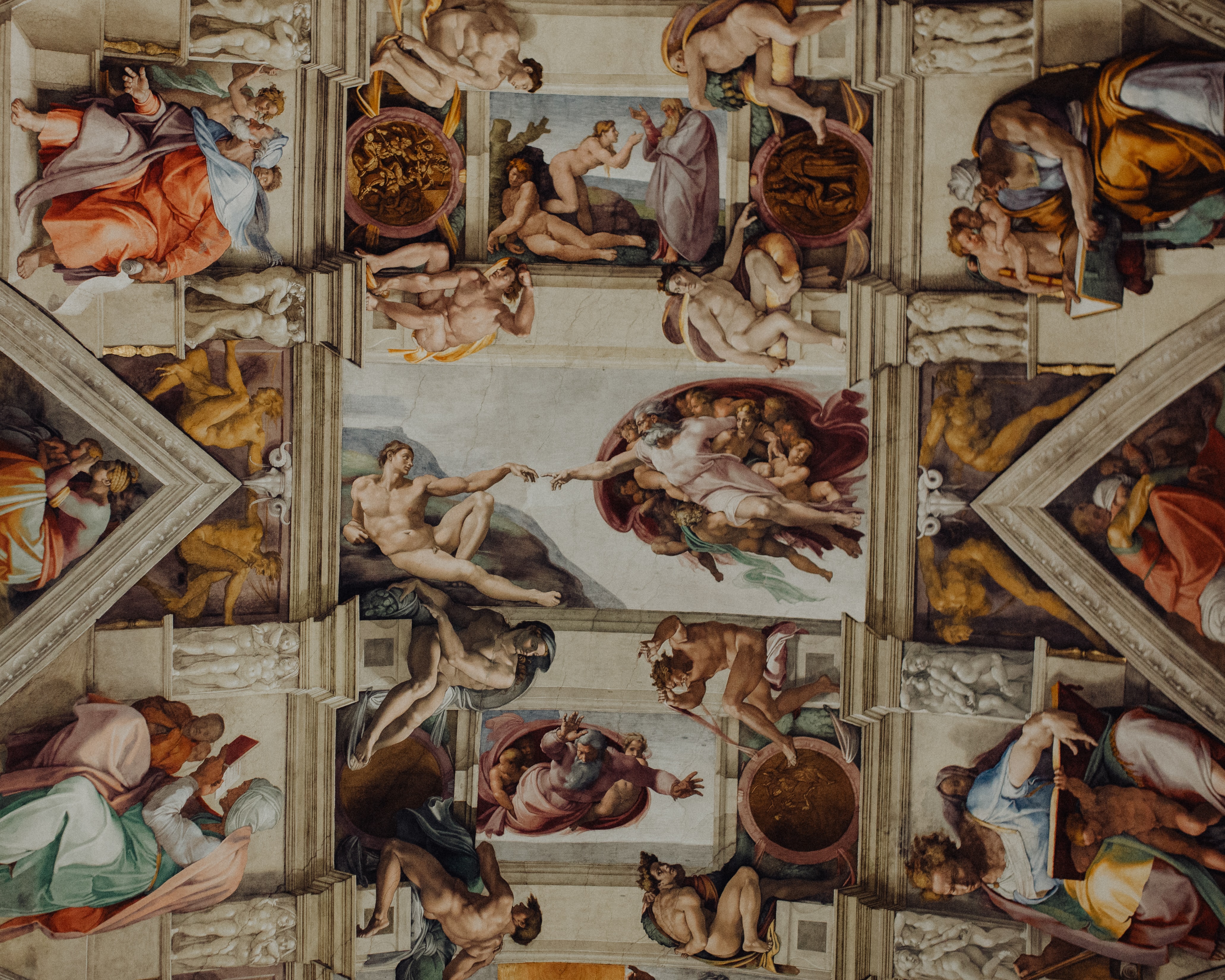
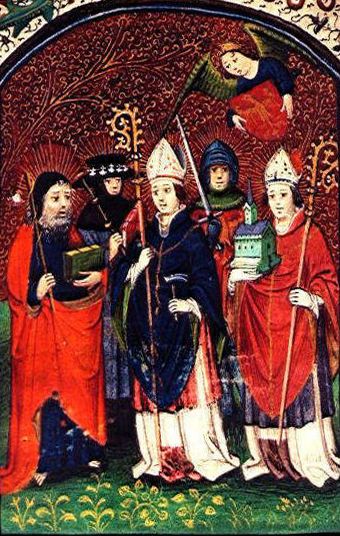
Illustration from C Armstrong, “The Pursuit of Science for God and Neighbor,” Common Good magazine issue #3, pp. 48-53

For many years I’ve attended – and sometimes spoken at – the Acton Institute’s annual four-day June meeting, “Acton University.” The 2022 meeting will happen June 20-23 both in-person in Grand Rapids and online. I’ll be giving a talk there titled “Christian foundations of science & technology innovation: A story in ten facts.” Here it is:

I’d like to start our reflection together with a question about finding Christian vocation in this tremendously important sector of modern work: science and technology.

Christians today are often told that we must bridge the so-called “sacred-secular divide” by finding divine purpose and mission in our daily work. And that sounds good in theory. It certainly has good support in both Scripture and tradition—from the Apostle Paul to Gregory the Great to Martin Luther and beyond. But where it often runs aground is in our actual experience.

Because, truthfully, our modern work contexts, and even the nature of the work we do in those contexts, seems to many of us—for many reasons—about as secular as can be.

So here’s the vocation question: How can we discover Christian vocation in fields of work that Luther could not have even imagined—let alone the Apostle Paul? In particular, how can modern people of faith experience work in the scientific laboratory or the high-tech firm as Christian mission?

Continue reading

Our earthly jobs, in light of the doctrines of creation and incarnation, pt. IV (conclusion)


. . . continued from part III

I find in C S Lewis a modern person who, throughout his life, lived and worked according to this medieval-inflected, sacramental, incarnational way of seeing and being. So it may be worth looking at a few ways he did that. We can start, again, with his imaginative writings. One is reminded, for example, of the wonderful image of a loving and materially comfortable domesticity in the beaver family portrayed in Lewis’ The Lion, The Witch, and the Wardrobe — which in turn was so like the similarly convivial, rustic life of his friend Tolkien’s hobbits in the Shire with their love of pipes and parties and meals together. Or his novel That Hideous Strength, which is from one end to the other a defense of the real holiness of ordinary virtues of embodied life — work, married sexuality, household life, and all — against the gnostic technocrats who would strip away all material mediations of sacred meanings and virtues in our ordinary lives.

In his letters, too, you can often find Lewis celebrating the sacred in the materiality of our ordinary life and work, even as he recommended to his correspondents that they read medieval writers for the good of their souls. He liked to sign his letters with that very embodied moniker Saint Francis of Assisi had used for himself: “Brother Ass.” And in one of those letters to a sick friend, he said of his own aging and increasingly malfunctioning body: “I have a kindly feeling for the old rattle-trap. Through it God showed me that whole side of His beauty which is embodied in colour, sound, smell and size.”

Continue reading

Things Medieval – a podcast conversation with Dr. Grace Hamman


Photo by Chris Lawton on Unsplash

Dr. Grace Hamman invited me to join her on her podcast, Old Books with Grace, and we had an enjoyable and wide-ranging conversation–largely about Things Medieval and why they still matter today. Boethius, Anselm, Margery Kempe, and Christian humanism all made appearances, among other people and topics. Thank you, Grace! You can find her podcast on all major platforms; for convenience, here’s a link to this new episode on one of those.

Our earthly jobs, in light of the doctrines of creation and incarnation, pt. III


Photo by Calvin Craig on Unsplash

. . . continued from part II

The theological term for this vibrant medieval understanding of the material world, as Lewis well knew, is sacramentalism. This is a linked set of beliefs, first, that the outward and visible can convey the inward and spiritual; second, that all creation is in some sense a reflection of the creator; and third, that God is present in and through every square inch of his world. While these beliefs are linked with the more limited, liturgical sense of the word “sacrament,” they amount to an understanding of the whole material world.

The world-sacramentalism of medieval Christians was rooted in a lively engagement with the doctrine of Creation — through an even livelier engagement with the doctrine of the incarnation. The incarnation was the central preoccupation of medieval Christians. Art, theology, church life, and private devotion all focused on the incarnation. The Gospel accounts of Jesus’ bodily life and death became the medieval “canon within the canon”; the puzzle of why he had to come and die was the great theological obsession.

And in the midst of it all came the insight that, as Christ raised humanity by taking on humanity, he also in some mysterious sense, by taking on created form in his own creation, also raised up the whole world toward its new-creation destiny — such that even the rocks cry out and creation groans as it awaits that fulfilment.

In light of that cosmic redemption, and quite contrary to modern stereotypes of barbarism and otherworldliness, medieval Christians affirmed the material and social dimensions of our created human lives (our eating, drinking, working, marrying, getting sick, being healed, and eventually dying) as transcendentally important.

Continue reading

Our earthly jobs, in light of the doctrines of creation and incarnation, pt. II


Photo by Greg Rakozy on Unsplash

. . . continued from part I

Ironically, this detachment sometimes looks like worldliness or materialism: the typical modern Western mode of effectively living for material pleasures and material accumulation. Though Christians are unlikely to profess that wry modern creed, “He who dies with the most toys wins,” we are quite capable of sacrificing a great deal to the idols of career success, in order to ensure that our families have all the comforts of middle-class life, all the latest iDevices, regular vacations, and good schools and future good salaries for our kids. And these habits, too, separate the material world of jobs and careers from the spiritual world of the church. Because, as Saint Augustine taught, when we treat material goods as ends in themselves, we decouple or disconnect them from their true value and meaning in God.

A generation after Augustine, believers of the Middle Ages, unlike our contemporary Western moment, did indeed find ways to keep the spiritual and the material together. And at least one very prominent modern Christian thinker followed that age’s integrative lead. So let’s enter that age through that modern figure.

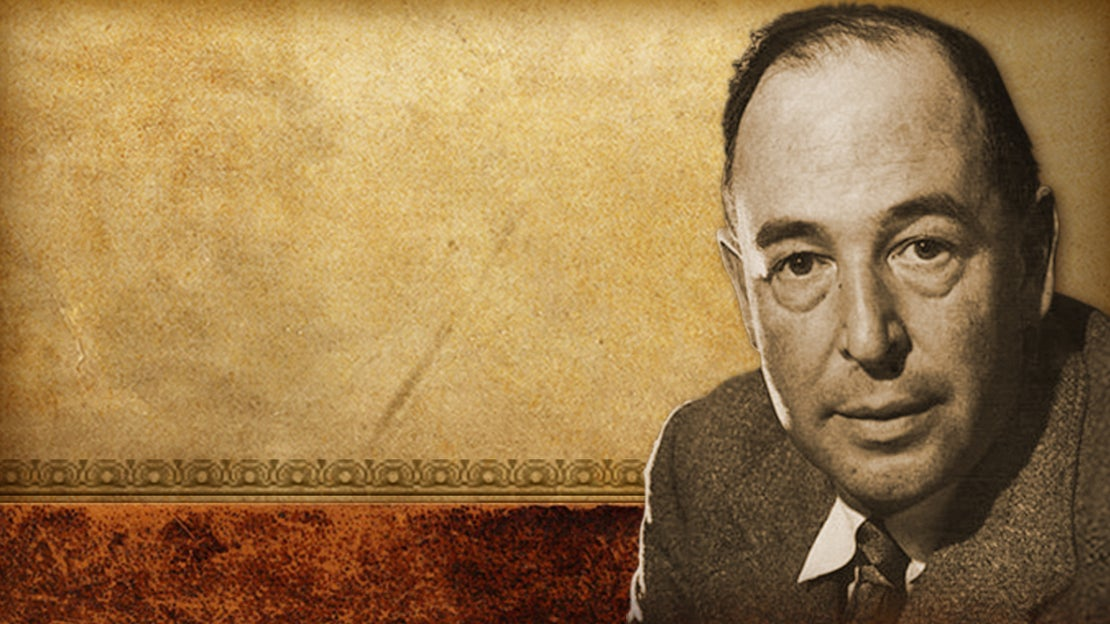
Born in 1898 in Belfast, the son of a lawyer and a cultured, linguistically gifted mother who died when he was nine, this man read voraciously and omnivorously from his earliest years. By the age of eight, he was writing stories about “dressed animals” with his brother. In his teen years, learning classics under an Irish schoolmaster, he learned to appreciate the quest for truth not as an idle intellectual exercise, but rather as a search for the truth about what is real and true in the world — and for the wisdom necessary to live the good life. And that quest led him first to a lifelong concern for moral philosophy, and then, eventually, to a vocation as a professor of medieval literature.

Continue reading

Christian humanism as foundation for the faith and work conversation, part III


Saint James as a Pilgrim with a Purse and Staff (detail), Workshop of the Bedford Master, Paris, about 1440-50, Book of Hours (text in Latin). The J. Paul Getty Museum, Ms. Ludwig IX 6, fol. 203v

This article continues from part II.

Scholastic humanism

Skipping ahead, from the 11th through the 13th century, a new phase of Christian humanism arose – in the thought and work of “scholasticism” – a movement in Christian thought that is understood by historians to have its intellectual foundations in Augustine, its early formulation in the work of Anselm of Canterbury in the 11th century, and its pinnacle in the grand system of Thomas Aquinas in the 13th.

The medieval scholastics continued and intensified the high humanist evaluation of human reason. As historian of science Edward Grant has comprehensively shown, no line can be drawn between the Middle Ages as a supposed “age of faith” and the 17th and 18th century “age of reason,” for both ages shared “the profound conviction that their beliefs could be reasonably demonstrated” and “medieval university scholars and teachers . . . placed a heavy reliance on reason,” and in fact, “in the history of civilization, they were the first to do so self-consciously on a grand scale.” Building on over a millennium of Christian thought about the Genesis portrayal of the imago dei, passed on from patristic thinkers such as Justin Martyr and Augustine of Hippo, the scholastics argued like this:

Continue reading

On how, and why, whole sectors of modern work were birthed from the heart and mind of the Christian church


Been very busy over the past few years, and a bad blogger – not posting much at all.

Among other pieces I’ve posted elsewhere but forgotten to link here at the Grateful To the Dead blog is this one, featured at The Public Discourse blog – run by the Witherspoon Institute at Princeton. The piece is a fairly brief meditation on what the Incarnation has meant in Western culture. It contains some ideas that I first published in the Medieval Wisdom book, and that I’m looking forward to extending in my next book. That book will most likely explore how entire sectors of human work that foster and support the material and social dimensions of human flourishing emerged ex corde ecclesia – from the heart of the church (and informed by the mind of the church!):

Christianity is so much more solid, and real, and human, than the “spiritual, but not religious” imitations of today. Christian faith touches every aspect of our lives—material, social, cultural. It does so because our God was born as a human baby in a stable and nurtured by a teenaged girl named Mary.

. . .

Out of a desire to imitate Christ’s compassion for those suffering from bodily illness, they poured the work of their hearts into a new institution called the hospital, succored (especially) the poor sick, and so birthed not only modern medicine but also our whole non-profit sector.

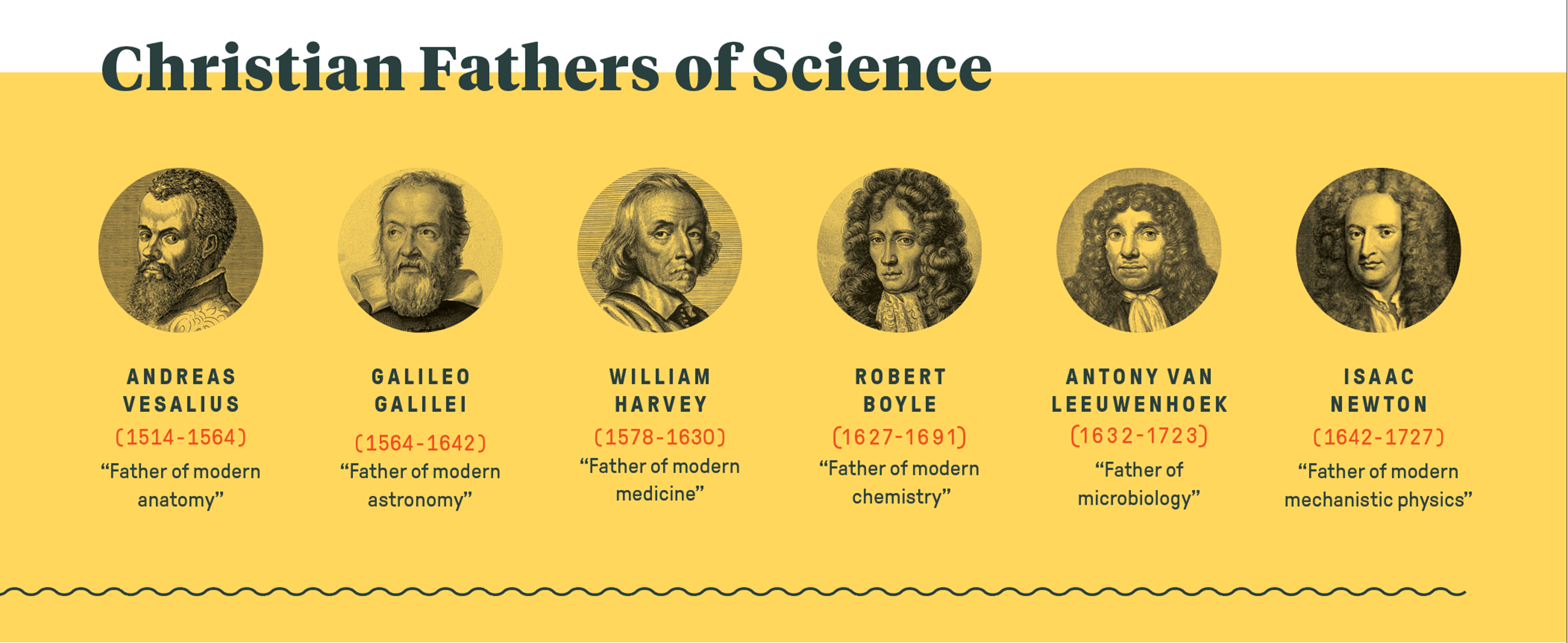
Out of fidelity to Christ’s command to “love God with their minds,” they poured the work of their minds into a new institution called the university, and so laid the foundation for the scientific revolution.

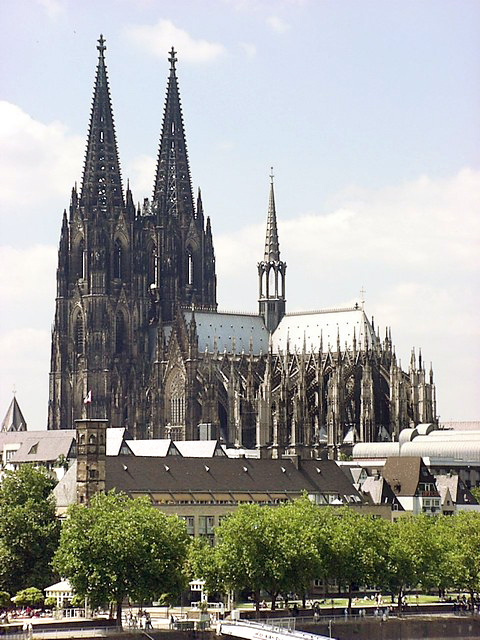
And out of aching devotion to the beauty of God’s holiness, imaged forth in Christ, they poured their imaginations and craft and labor into the glorious, soaring beauty of the Gothic cathedrals, and so nurtured and fostered artists in all media from then to now.

Healthcare. Education. Culture. To us, who labor in every kind and corner of modern human work, medieval incarnational faith speaks a “word in season.” It tells us:

Our bodies matter.

Our minds matter.

Our relationships matter.

Our work matters.

In which, identity politics poisons yet another community once ruled by love (of their subject): the guild of medievalists.


A New York Times article can’t resist the obvious and amusing verb as it describes an ugly scuffle within the guild of those who study the Middle Ages: “Medieval Scholars Joust With White Nationalists. And One Another.”

The article chronicles an unedifying tale of buffoonish clashes between the grievance-identity guerillas and the tone-deaf Old Scholars Club. My first reaction was to dismiss the whole donnybrook as yet another illustration of Sayre’s Law (https://en.wikipedia.org/wiki/Sayre%27s_law).

But then I realized that the humor here is only surface-deep: I have attended the International Medieval Congress in Kalamazoo for the past seven years as a fascinated scholarly outsider (my field is the history of Christianity in the nineteenth century). In that time, I have found medievalists to be, more than the scholars in any other field I know, “amateurs” in the best sense of that term. That is, even the best credentialed and most published among them tend to study what they study out of pure fascination – love (the root amare, from which “amateur” is derived) is not too strong a word. This political posturing is a distraction and a blight in the midst of a Guild of Extraordinary Geeks who study what they study out of no other agenda than coming to a deeper acquaintance with fellow humans long dead–whose lives, cultures, and ideas compel them to long, late nights of study, and all the accompanying sacrifices of the academic life.

This vitriolic battle among the lovers of medieval knowledge is also sad because while courtesy, circumspection, humility, wisdom, and so many other (intellectual) virtues all fall among the first casualties, at the same time careers are being made–and everyone knows it.

And this just shows how deep the infection of political posturing runs in academe as a whole, and how unlikely it is that it will heal itself anytime soon.

(Tangent-that’s-not-really-a-tangent: while I was at Duke University in the late ’90s, I heard a distinguished and celebrated Americanist call some figures from American history “fascists.” The parallel (though I don’t remember what group he was attacking) was simply ludicrous. This historian was clearly subsuming responsible scholarship and teaching to partisan attack. In that moment I lost all respect for him–and I started developing my “crap detector” for such unhelpful polemic. I hasten to add that, in the classes (at least) that took, that detector almost never went off around professors. Unfortunately, however, when it came time to start teaching undergraduates at that same university, I could barely hear myself think for the jangling of that detector’s alarm. The sport of elite undergraduate students appeared to be that most ugly and unpleasant game of heated, moralistic attack-dogging.)

A final word: this present climate constrains me to add: I find the poison on the left and the poison on the right here equally, well, poisonous. A pox – or (why not) a full-on medieval plague – on both their houses!

Let us learn from such “jousts” what we should certainly learn: to discern where our work may illegitimately and harmfully minimize past sins or silence present voices. But also, to discern where the agendas of a variety of “culture wars” have rendered us useless as scholars. Let us not allow an honest desire to redress scholarly wrongs to become yet another one of those currently ubiquitous self-righteous and self-aggrandizing crusades (yes, I used the word), waged from the saddle of that most ugly of animals: the Moral High Horse.

And then, having dismounted and recovered what may be the dim and fragmented light of truth from the smoking furnace of polemical heat, let us return to the field of the Passionate Intellect with a redoubled will. For honest scholarship that follows wherever the evidence leads is a balm in a time of turmoil.

New issue of Christian History fights back against the church’s modern amnesia


Let’s get medieval on the church today!

Image may contain: indoor
Seriously, it’s great to see this article, and this whole issue – which Joel Scandrett and I first envisioned many moons ago – come to fruition through the as-always-excellent work of Jennifer Woodruff TaitDawn Myers-MooreDoug Johnson, Dan Graves, Joeli Banks, Meg Goddard MossEdwin Woodruff Tait, Kaylena Radcliff, Deb Landis, and of course our redoubtable Executive Editor Bill Curtis. You can peruse every page in glorious color at https://christianhistoryinstitute.org/…/issue/modern-amnesia. And if you like it, don’t forget to subscribe! (It’s on a donation basis.)


Another testament to the “earthiness” of medieval culture


Now this is fascinating.

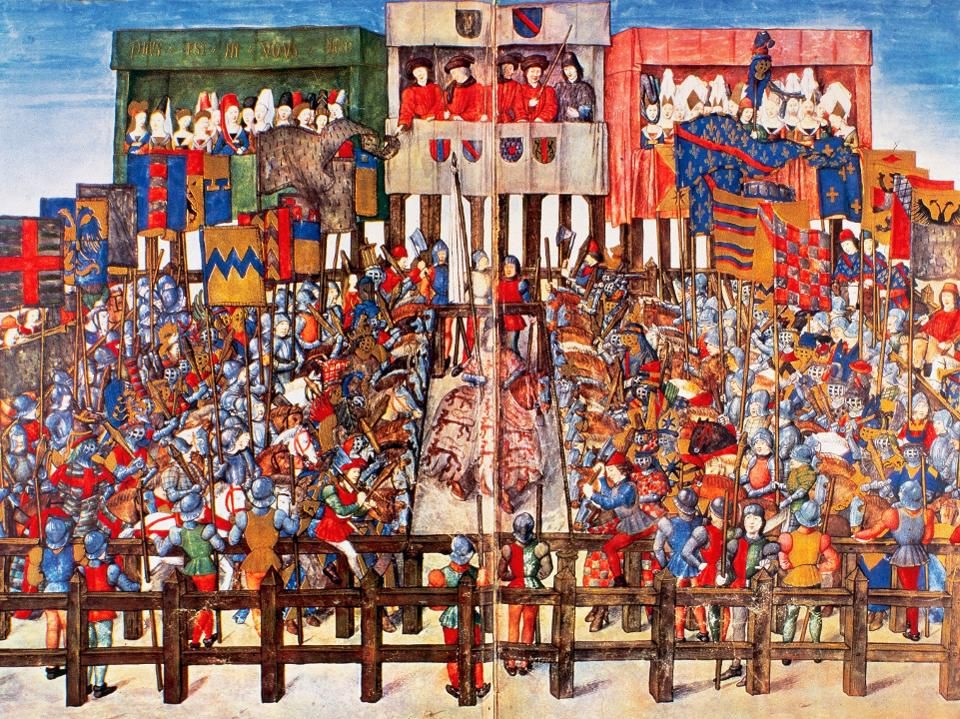
Medieval image for women-in-drag piece“Knighton may confirm some of our Game of Thrones-esque expectations about the European Middle Ages, one marked by God’s wrath and a conservative religiosity. But, despite his intentions, Knighton also undermines our expectations by showing us a vibrant Middle Ages filled with color, pageantry, laughter, and performance – one in which people don’t act like we think they’re “supposed to.” In other words, Knighton almost by accident shows us a slice of the real Middle Ages, populated by living, breathing human beings.”

Any thoughts on this out there in Friends-of-Grateful to the Dead-Land?