Tag Archives: Tradition

. . . in which C S Lewis’s Screwtape explains how “historicism” has rendered the past useless to modern scholars


C S Lewis's demon Screwtape, writing about how much he just LOVES "historicism"

C S Lewis’s demon Screwtape, writing about how much he just LOVES “historicism”

Today I begin posting from the “Tradition chapter” of Getting Medieval with C S Lewis – or as I’m now less flippantly inclined to call it: Medieval Wisdom: An exploration with C S Lewis.

Though this is not the opening of the chapter, I’d like to start with Lewis’s take on the “presenting problem” when the church begins talking about tradition in the 20th (and now 21st) century:

Lewis states the modern problem

The situation we find ourselves in, where we would even have to defend tradition as a good thing in the Christian church, dates back to Lewis’s day and beyond. In his famous lecture to the Cambridge University audience assembled to witness his installation as the Chair of Medieval and Renaissance Studies at that university, Lewis described his own mid-20th-century European setting as one of cultural darkness and amnesia, and himself as a kind of dinosaur—one of the few left in that dark age of wars and rumors of wars. He described himself as a specimen who still spoke the native language of the old Christian Western tradition as a native, and who could thus be a precious resource for a society and a culture that had drifted far from its moorings in the Great Tradition of Christianized Greek thought.

Lewis found this change diabolical, and he made this clear by putting it in the mouth of the senior demon in his Screwtape Letters: “Only the learned read old books and we have now so dealt with the learned that they are of all men the least likely to acquire wisdom by doing so.” The infernal realm had accomplished this, Screwtape continued, by making “the Historical Point of View” into a scholarly dogma. Continue reading


Gnostic or hedonist – it all amounts to devaluing Creation


beautiful-alley-bench-nature-spain

I think I’m well and truly into the Creation chapter of Getting Medieval with C S Lewis. Hoping to have it finished tonight or tomorrow. As with most of the other chapters, I’m starting with a framing of the modern problem(s) to which medieval faith suggests a solution. In this case, we’re looking at two sub-Christian attitudes to material stuff (including rocks, strawberries, gerbils, our human bodies, and all the ways we make culture in our social interactions). I don’t discuss the “medieval” solution yet – that will come in the next couple of posts.

Our issues: Gnosticism and materialism

Gnosticism

The early Christian Gnostics disavowed the spiritual significance and goodness of the material world: the world was created not by our God, who called his handiwork “good,” but rather by an inferior sub-god called a “demiurge.” Thus one must set aside the material world if one is to reach God. The world cannot be in any way a channel of Grace – it is rather an impediment to grace.

One online author who is convinced he sees Gnosticism all over the modern church suggests the following tests—a sort of “you might be a gnostic if . . .” The signs of gnostic thinking he identifies are (1) thinking Christianity is about “spiritual” things (only), (2) thinking of our destiny only in terms of our souls going off to heaven, (3) forgetting that “Christianity teaches the redemption of all creation (New Creation) and not evacuation from creation (‘the rapture’),” and (4) believing that God neither gives us material things as means of grace, nor indeed cares about the earth at all – and neither should we.

This syndrome of devaluing the material—sapping it of all spiritual significance—supports a number of modern Christian bad habits. One is the sort of “it’s all gonna burn” end-times scenario indulged in the Left Behind novels. Another is the excuse Baby Boomers (and others) make for the fact that their faith makes no difference in their daily life: “I’m ‘spiritual but not religious.’”[1] Continue reading

C S Lewis’s use of story to “train the heart,” per Paul Ford, in the latter’s delightful Companion to Narnia


The Pevensy children and the lamppost

This is me reflecting in my “Tradition chapter” draft (for the forthcoming Getting Medieval with C. S. Lewis) on Paul Ford’s understanding of how C S Lewis used story, in the Narnia Chronicles, to initiate readers into a traditional moral reality by drawing their desires into play. It supports and resonates with this post.

Paul Ford, Companion to Narnia, “Introduction” and “Story”

“Story, Stories” (pp. 412-13)

“The seven books of the Chronicles of Narnia are testament to the fact that Lewis valued stories and story-telling as the best way to transmit values down through the generations. The difference in quality between the New Narnians and the Old Narnians (as personified by Miraz and Prince Caspian) is faith. Miraz thinks fairy tales are for children and to be outgrown, while for Caspian the old stories are his salvation.” (412)

“Introduction,” sub-section “What Is a Story?

There is much wisdom here about story as moral education because it is a key way our emotions are trained. So too tradition: it is handed down as of immense value, it forms our culture’s “ways of seeing,” of “Enjoying” truths by indwelling them and using them to “see other things by”—like “looking along the beam” rather than “looking at the beam”—the latter being the analytical mode that Lewis calls Contemplating, rather than Enjoying.

The nature of the education that story gives us is described by Gilbert Meilaender, quoted at length in this section: “‘Moral education . . . does not look much like teaching. One cannot have classes in it. It involves the inculcation of proper emotional responses and is as much a ‘knowing how’ as a ‘knowing that.’ . . . The picture we get when we think of ‘knowing how’ is the apprentice working with the master. And the inculcation of right emotional responses [see “men without chests” image in Abolition of Man] will take place only if the youth has around him examples of men and women for whom such responses have become natural. . . . Lewis, like Aristotle, believes that moral principles are learned indirectly from others around us, who serve as exemplars Continue reading

Beyond labels: Alan Jacobs defends three “potentially conservative” ideas, not caring whether he is actually “a conservative”


Good brief article from Wheaton English professor and C S Lewis biographer Alan Jacobs over at the American Conservative website.

Here’s how he starts off:

Am I a conservative? Heck if I know. All I know for sure is that the good people here atThe American Conservative are interested enough in what I have to say to give me a platform on which to say it. For which I am genuinely grateful.

I am not and never have been a Republican. I feel roughly as alienated from that party as I do from the Democratic Party. I hold a number of political views that strong-minded Republicans typically find appalling: I think racism is one of the greatest problems in American society today; I am not convinced that austerity programs are helpful in addressing our economic condition; I am absolutely convinced that what many Republicans call free-market capitalism is in fact crony capitalism, calculated to favor the extremely wealthy and immensely powerful multinational corporations; I think that for all of the flaws of Obamacare, it was at least an attempt to solve a drastically unjust and often morally corrupt network of medical care in this country; I dislike military adventurism, and believe that our various attempts at nation-building over the past decade were miscalculated from the outset.

So is there any sense in which I might plausibly be called a conservative? I don’t really know; I’ll leave that to others to decide. It doesn’t really matter to me whether I fit into any pre-existing political or intellectual categories. I can only say this: that I do have three overarching political commitments (or beliefs, or convictions) that are more important to me than any others.

Jacobs goes on to articulate three stances that he holds that may be considered “conservative”: (1) a consistent pro-life position, (2) support for the principle of subsidiarity in political and social thought, and (3) need to interact with tradition/the past.

I have a great deal of sympathy with the positions Jacobs identifies here. I am especially delighted to see subsidiarity articulately described and defended. I am with Novak, Nisbet, Chesterton, Belloc, certain encyclicals, and others on the necessity of protecting folks from “the ravishments of the centralized political state” (Nisbet). I also find this a powerful statement of one of our most urgent current tasks: “A great deal of suffering in America today is caused by the evacuation of intermediary structures: the church, the family, voluntary organizations. These intermediary structures are in desperate need of renewal and that can only happen if there is a systematic shift of power, wealth, and influence from state and national governments to local units.”

Jazz, entrepreneurship, and tradition


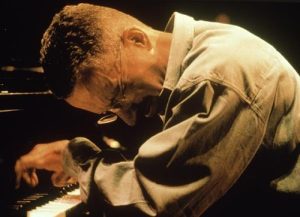
Keith Jarrett

As an enthusiastic jazz fan and an appreciator of business entrepreneurship, I enjoy watching folks make it up as they go along. Nothing affirms my sense of human beings as “co-creators” with God (a favored term of that great co-creator, J R R Tolkien) more than listening to the swooping, soaring melodic lines of a skilled jazz musician. Nothing hits me more powerfully with the great practical power of creative thinking than seeing an entrepreneur take the germ of an idea and spin it out into products, services, jobs that turn raw materials into something of value to the world.

But as a historian, I am reminded that when true jazz musicians hear an improviser who has not studied the traditions handed down through generations of jazz men and women . . . they shake their heads and turn away. And when veteran businesspeople see a young wannabe rushing out to potential consumers without proper understanding of their needs, or building financial castles without grounding in economic knowledge and financial principles . . . they wince, knowing the inevitable failure that will follow.

So why can’t the American church learn this lesson? Why do we keep rushing to and fro launching all our creative ministries, church growth strategies, and grand “missional” plans, unequipped with even a basic acquaintance of those giants whose shoulders we are standing on? What is it that, unlike any other craft or business on earth, leads us to think that we can ignore history and still succeed? Why do we think we can bypass 2,000 years of wise thinking (and lessons learned the hard way) about the Gospel, about what it is to Be The Church, and bring our fevered plans about how to “Do Church” to fruitful reality?

OK, flame off. As you were. I’m going to go think about New Years Resolutions . . . AND the Great Cloud of Witnesses.

And by the way: R.I.P. Dave Brubeck–one of the greats. And long live Keith Jarrett (pictured above), a living legend and influencer of a whole new generation of skilled, creative players.

How important was the closing of the NT canon to the early church?


St Athanasius at Clarence Gate

St Athanasius at Clarence Gate (Photo credit: Lawrence OP)

In a recent short paper on the topic of Scripture and tradition, a student of mine wrote the following:

“While combating the Arian heresy, Athanasius, the Egyptian bishop of Alexandria, was exiled under false pretenses.  In 367, just returning from exile, he wrote perhaps the most important document to the early church, the Festal Letter. In it was a list of Christian books he said were inspired of God. Christians had long debated which books should make up the New Testament, but Athanasius’s list of 27 writings marks the first time a church leader identified the very books Christians today called the New Testament. (Stephen M. Miller, “How we got our Bible A Gallery of Mavericks and Misfits,” http://www.christianitytoday.com/ch/1994/issue43/4318.html). The books, which were declared as ‘sacred scripture,’ “were confidently believed to be inspired writings, divinely dictated word by word.”[1]”

This insistence that the Festal Letter was the most important document of its age seemed to me a typically Protestant misemphasis. Not that the books of the New Testament were unimportant. They were central to the life and thinking of the early church–indeed, in ways that we can only palely imitate. However, I wrote in the margin:

“Note that many other documents, including proto-creeds, were considered more important to the church at the time than the Festal Letter, which was something of a “blip” on the early church’s radar. Canon formation was just not a major issue for Christians of the time; they felt comfortable that the bishops, the church itself, the Holy Spirit superintending, the “rule of faith” in the proto-creeds . . . all of these would guarantee apostolic truth. It wasn’t that important to them whether this or that book was declared “canonical.” They were all edifying. They all had a certain authority. Whether some were of the highest authority or not (canonical) was a matter open to discussion, but they didn’t feel this threatened the integrity of the faith.”

I based my response to the student on understandings gained from Baptist patristics scholar D. H. Williams (Baylor University). I don’t think I am overstating the case: tradition, including the rule of faith and the teaching role of the bishops, was simply the primary guarantor of apostolic truth in those early years. Canon had not yet taken on that role, as it does with Protestants today.

What do you think? Did I overstate my case in the response to this student? I am not a Patristics scholar–hence my reliance on Williams (and other things I have read). I am open to correction and constructive debate on this.


[1] Evans, G.R., Faith in the Medieval World. 49.


Hymns are hip


Other people try to be hip. Minnesota singer-songwriter-musician and now Nashota House seminarian Tyler Blanski IS hip–in the most Godly, positive possible meaning of the word. And when he says hymns are hip too, you can take his word for it. Here’s a sample of his post on the topic:

It does something to you. To stand and sing hymns in a chapel packed with men and women, all wearing their cassocks and surplices, all kneeling and crossing themselves profusely, all lifting their prayers to God changes you. You might think singing hymns is painfully awkward, banal, or for grandparents. But let me tell you, when you hear a chorus of voices booming and thundering, O Worship the King, all gorious above! O gratefully sing his power and his love! Our shield and defender, the Ancient of Days, pavilioned in splendor, and girded with praise!, and when you get to sing along with all your heart, you begin to see that our grandparents were actually badasses (in the “formidable, excellent” sense of the word). You can see the fear of God on your peer’s faces, or the joy of the Lord, or humility to the point of tears. Two days ago, while singing hymns, I could not maintain complete stoicism, and started crying before Christ.

I didn’t know it, but I love hymns. You think what you want is a U2 concert, but you don’t. Since I’m a folk-singer, guitar-hammering rocker, I cannot believe I’m saying this, but when sung by people who care, and when song boldly and with great joy, hymns make our contemporary lyrics and rock ballads sound like Junior High band practice (although, contemporary worship can sometimes also be amazingly beautiful and rich). Maybe it’s because “the lyrics” are so often genuine poetry. Or maybe it’s because the human voice remains the most beautiful instrument on earth. Because it is the only instrument made by God Himself, and not man, some medieval Christians forbade instruments of any kind in the sanctuary. Regardless of the reason, the singing of hymns here at Nashotah House has been for me a surprising form of spiritual formation.

Thy bountiful care what tongue can recite? It breathes in the air; it shines in the light; it streams from the hills, it descends to the plain, and sweetly distills in the dew and the rain!

Thanks, Tyler! Today you reminded me of one of the Good things in life.

New books: We’ve gotten both the Emperor Constantine and the whole Reformation wrong


Two books have just arrived (it’s good to be a blogger and get free books; now if only I had time to read and review them all), and I look forward to dipping into them.

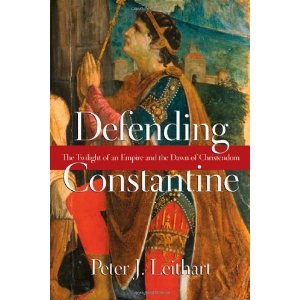
First, Peter Leithart of New St. Andrew’s College in Idaho has written a defense of Constantine–the “first Christian emperor,” whose name has become, especially thanks to the work of Yoder and Hauerwas, a curse-word on the lips of many Western Protestants. The book is titled Defending Constantine: The Twilight of an Empire and the Dawn of Christendom, and it has surprisingly shot up to a sales ranking of better than 5,000 on Amazon.com (pretty stunning for a history book), and the #11 position on the Amazon.com church history bestsellers list. Continue reading

Debunking the Protestant “T” word part V (conclusion): Learning to love tradition


This article is continued from “Debunking the Protestant ‘T’ word: An edifying tale, part I,“ “Debunking the Protestant ‘T’ Word part II: How to spot a heresy, “Debunking the Protestant ‘T’ Word part III: What was the beef at Nicea?“ and “Debunking the Protestant “T” word part IV: How sausage was made.”

So now in conclusion: Some of you may be inclined to say: “All I need is my Bible, and I know everything about God and Jesus and salvation that I need to know.” I hope you’ll see the moral of this story about the Council of Nicea. The doctrine of the Trinity—that is, the doctrine that the Father, Son, and Holy Spirit are all uncreated, all co-eternal, all equal in divinity—is, in one sense, all over the Bible. But in another, very literal sense, the Trinity is never mentioned even once in the Bible. Nor is the exact nature and relationship of the “two natures of Christ”—his divine nature and his human nature. Those were clarified at later councils. Nor will you find in the Bible every detail of the right way to run a church—including church government, baptism, the Lord’s Supper, and so much more. (That’s why there are so many denominations!) Nor, of course, does the Bible contain instructions about what job each of you should take, or who you should marry.

You can and should ask the Bible each of those kinds of questions. But it’s not a great idea to just ask the Bible. Continue reading

Debunking the Protestant “T” word part II: How to spot a heresy


Statue de Constantin Ier, Musée du Capitole, Rome

Constantine, looking imperial

This article is continued from “Debunking the Protestant ‘T’ word: An edifying tale, part I” and continues in “Debunking the Protestant ‘T’ word part III: What was the beef at Nicea?

But we’re getting ahead of ourselves. When the debate about Jesus’ divinity first hit the streets of Alexandria, the Emperor Constantine saw the handwriting on the wall (perhaps literally, if he came across some of that theological graffiti!). He said to himself, “This empire isn’t going to fall apart on my watch!” And so he called together a giant council of the church at his summer palace in Nicea (Nicea is now a town called Iznik, in Turkey—and sadly for us historians, there’s nothing left of that palace). Constantine was doing, on a larger scale, what the church had always done in its first three hundred years when a crucial matter like this came up. He called on the bishops—that is, the teaching pastors of key churches—to come together.

The point was not to have these top pastors get all creative and brilliant and make up some new doctrine that everyone would have to follow from then on. No, since the beginning, the bishops in the church had had only one main function, and everyone understood it. The job of each bishop—and especially of all the bishops together—was simple: they were expected to faithfully pass on the teachings of the Apostles. Continue reading