Tag Archives: faith and work

Spirituality and economic work in the Middle Ages: Complementarity, not enmity? Part I


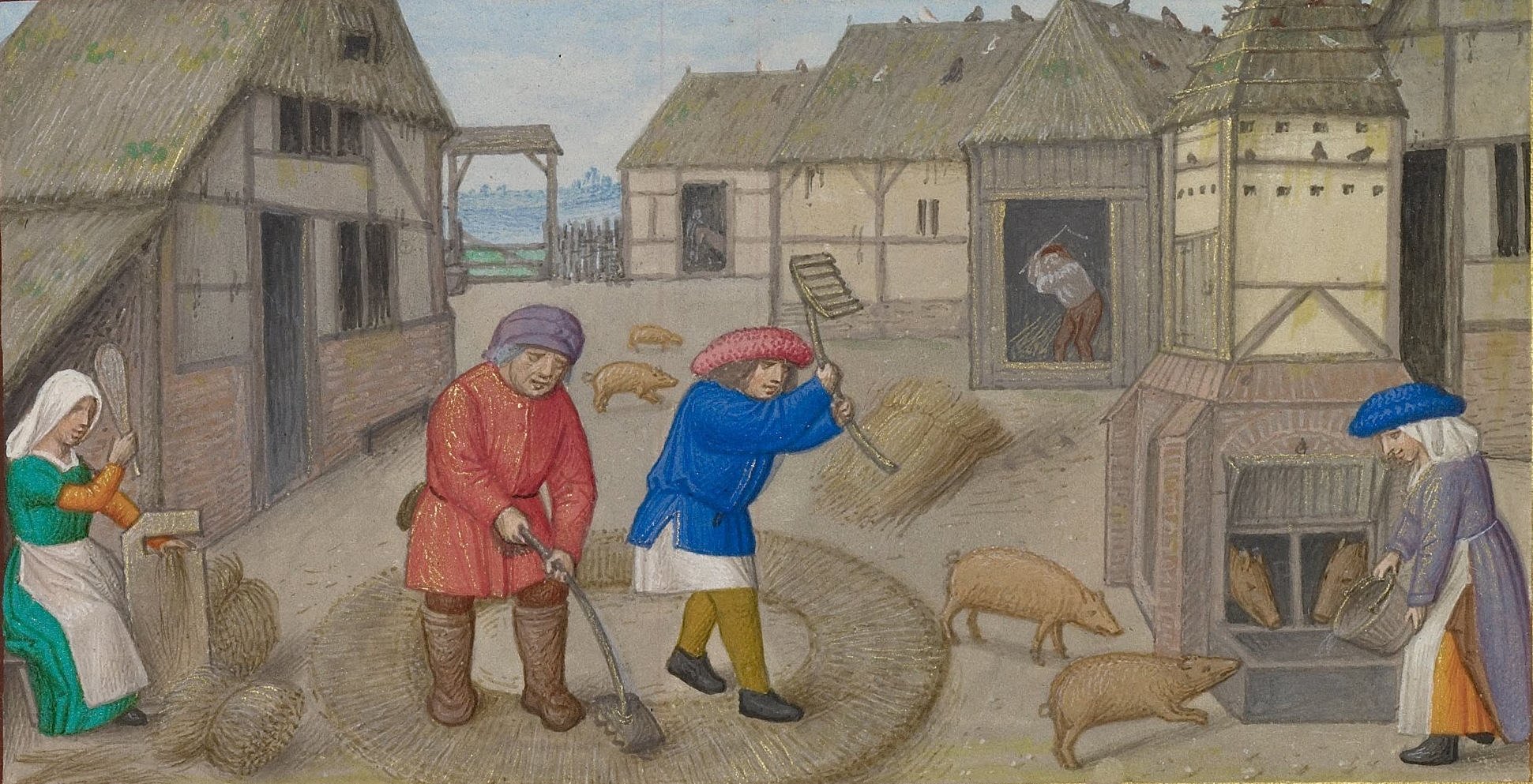
Threshing and pig feeding from a book of hours from the Workshop of the Master of James IV of Scotland (Flemish, c. 1541), Wikipedia (public domain)

A few years ago I was invited to present a paper at a colloquium of scholars gathered to discuss topics related to the intersection of faith and economic work in the history of the church. What I presented was a first stab at a research agenda: 2/3 of a larger idea about a certain theme in medieval Christianity. Since the paper was never published, I intend to blog it here in sections. So, to begin:

*************

The question of this paper is this: Was there, in the Middle Ages, an understanding of economic labor as inherently inimical to the spiritual life – especially as modeled by monasticism?

It is certainly true, as the great medievalist R. W. Southern says, that through its 1,200+ late ancient and medieval years of activity, monasticism was often involved in and compromised by the world. R. W. Southern talks about this complexity:

“Everywhere in the history of the religious Orders we find that associations which were founded as a protest against the world and all its ways had their destinies shaped for them by the society in which they had their being. There were many forces which shaped them, even against their will: their property, their family connexions, their secular functions, and the opportunity which they offered their members for advancement to the highest places in the social order. The ‘worldliness’ of medieval religious communities has often been remarked and generally criticized, and it is true that anyone who looks at these communities for a pure expression of the aims of their founders must very often be disappointed. The states of mind and aspirations expressed in the Rules and Foundation deeds of the various Orders were not realized in any large measure. The driving forces in their development were quite different from those of the original founders.”[i]

But the question is, would medievals themselves share the underlying assumption of this analysis: the supposed “fact” that economic work must, by its very nature, hamper spiritual formation?

Continue reading

Thoughts on faculty change management and innovation


Ken Bolden, Sandra Oh and Mark Philip Stevenson portray professors in “The Chair” on Netflix

I’ve mentioned that in the past few months, I’ve been honored to have rich conversations with theological educators across the country, focused in part on their vocational lives and challenges. (And at the same time, I’ve been reading every Chronicle article I could find on faculty vocation.)

As a (former) professor and the son of a professor, these people and these vocations are dear to my heart. And the pace of change in academe over the past ten years, and especially the past two, has been breathtaking. We’ve all been on a roller coaster, and we all feel new kinds of precarity (both personal and institutional) and we’ve all faced new challenges – as well as new opportunities – in our working lives.

In these conversations, the theme of change management and “forced innovation” came up again and again. Students are looking for new modes of education. The pandemic forced us to convert all our courses to online formats. Our budgets are more and more constrained, while we’re asked to do more and more. Shared governance seems largely a thing of the past, as institutions’ relationships with faculty continue to shift (and adjunctivization continues apace). In a previous post, I’ve paralleled this new reality to the tidal wave of change in the ’80s business world, which sparked the “third wave” faith and work movement.

Meanwhile, for those of us still in the academic trenches, how do we not only cope with this time of rapid change, but also build on the innovation we’ve been pushed into during the past few years – and the past decade?

Continue reading

Are we in academe’s “faith and work moment”?


Photo by Jeremy McGilvrey on Unsplash

Further to my piece yesterday – “Readings on the vocations, and challenges, of professors today” – and building on recent experiences of reading several dozen Chronicle of Higher Education articles and convening several groups of professors, here’s a reflection on the “moment” academe seems to be experiencing right now.

Back in March, I had the honor of convening several groups of theological educators (seminary and college faculty) to explore their vocational development needs. One question I asked was about the current vocational challenges faculty are facing. After breaking into small groups, we heard reports from each. One group identified these challenges (rendered here in note format):

  • Anxiety with changes, transition to virtual work – is this real education? Am I doing it well? Not as satisfying. Missing potential for formation?
  • Sense of living and working in a time of transition – everyone knows education is ripe for disruptive innovation
  • Identity: am I simply a professor or also a mentor, coach, something else? – transitions in teaching (and student needs and preferences) lead to questions of identity
  • The need for rest, with some burnout: schools have tighter budgets, are asking people to do more

As I read these notes, I was getting a strong feeling of déjà vu – where had we seen a combination of factors similar to this before? And it dawned on me: this was reminding me of David Miller’s characterization, in his book God at Work, of the 1980s-90s in the American business world, the rise of the “third wave” of the faith and work movement, and his description of the factors and pressures that led boomers to turn to questions of spirituality (both new age and traditionally religious) related to their work, in search of a revived and restructured identity and a recovered vocational satisfaction.

I went back and re-read the main section of Miller that dealt with this and that made the link between vast changes in the business sector (in particular) and an increased focus on “spiritual” issues related to work. I’m pasting it below, then I want to draw out the parallel with today’s higher ed situation and faculty’s current vocational experience.

Continue reading

Questions that arise about Christian humanism as foundation for the faith & work conversation


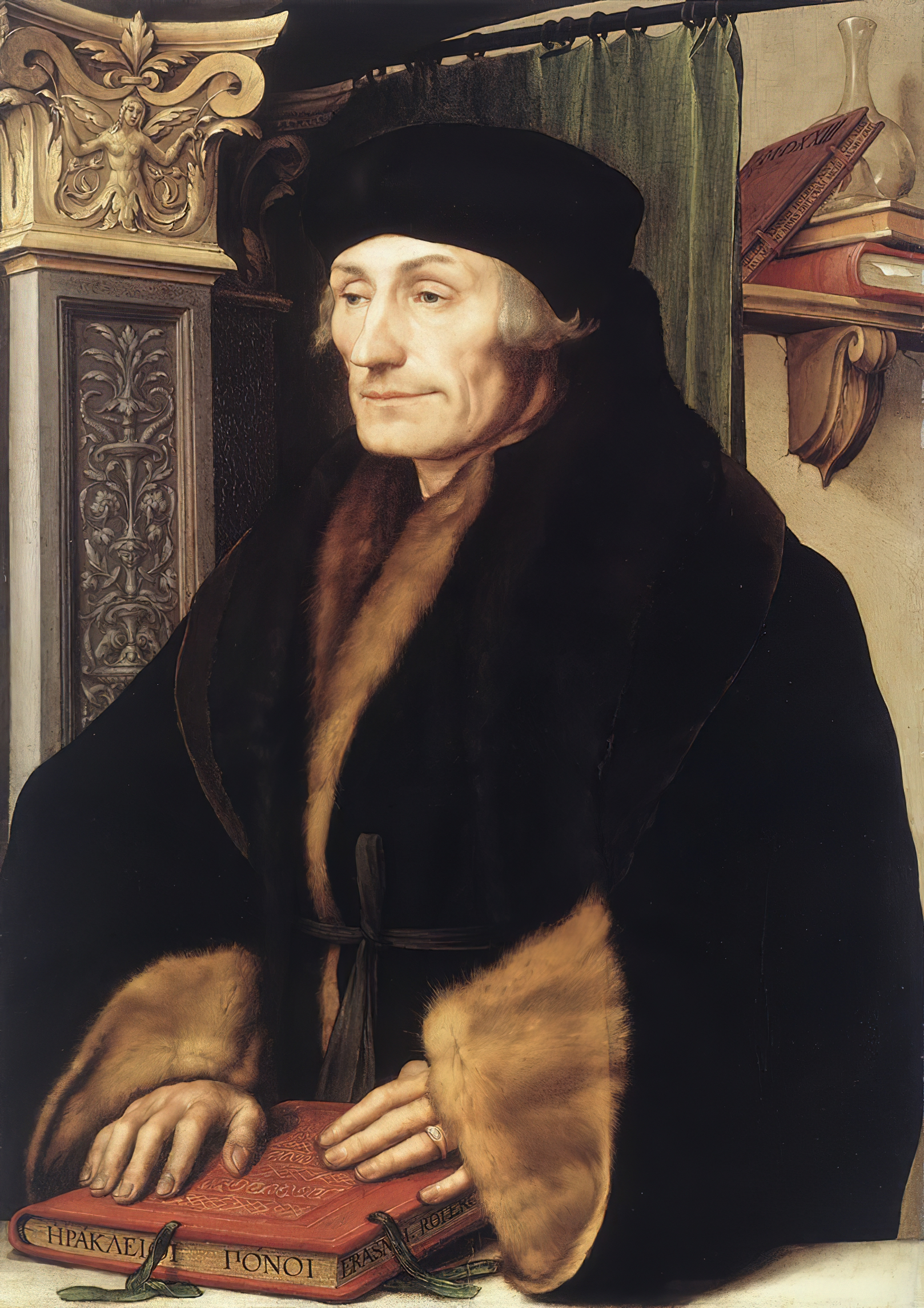
Portrait of Desiderius Erasmus of Rotterdam with Renaissance Pilaster, wikipedia, public domain

I have argued that the faith & work conversation needs a stronger theological foundation, and that the long tradition of Christian humanism can and should provide that foundation. I recognize in making that argument that many questions now arise. So I am beginning to line up those questions. The following is a preliminary list, not yet carefully ordered nor comprehensive; I also recognize that any number of these overlap significantly with each other:

Continue reading

In brief: Why Christian humanism is the essential foundation of the faith & work conversation


  • In light of theologically, biblically, and historically weak popular presentations of faith & work arguments, we must speak primarily in theological terms
  • We must not speak in narrowly theological terms
  • In other words, we must draw on a theological discourse that embraces and can be embraced by all current Christian traditions (e.g. not a discourse that is exclusively neo-Calvinist/Kuyperian, or Wesleyan/Pentecostal, or grounded in Catholic social thought, etc., but informs and converses with all of those traditions and more)
  • We must draw on a theological discourse that stretches back to the earliest church
  • We must draw on a theological discourse that is clear about what human beings are, how we (are to) flourish, and how we are (to be) redeemed
  • We must draw on a theological discourse that is not narrowly “spiritual,” but instead addresses the broadest possible range of human activities (including all major sectors of work) and that affirms material and social as well as spiritual flourishing
  • We must draw on a theological discourse that therefore includes a well-articulated approach to human cultural (including economic) activity
  • We must draw on a theological discourse grounded in undeniable major orthodox doctrines such as creation, the incarnation, and the atonement, and with clear scriptural foundations such as Genesis and the Gospels
  • Christian humanism is the only theological tradition I know of that fulfils all of the above criteria

Further:

Continue reading

Is work irredeemably secular? – part IV


Continued from part III

The Methodist story gives us a vision for responsible work and broad social action, but we may still wonder today—and this is our third question—(3) how we can work faithfully while also while actively pushing back against those parts of our organizations and sectors that are unjust, or immoral—that is, that harm rather than hurt people? Where are the Christian resources that can help us act redemptively within unredeemed systems?

One Christian leader who armed others for such redemptive action was the late-Victorian American Congregational pastor Charles Sheldon.

It’s a Sunday morning near the end of the 1800s, in the comfortable upper-middle-class “First Church” in the town of Raymond, somewhere in the Midwest. Halfway through the service, a tired, sick homeless man walks into the church, up the aisle to the front, and begins to speak. He wonders aloud why there is so much trouble and misery in the cities when their well-off Christians sing so much about consecrating themselves entirely to God. “It seems to me,” he says, “there’s an awful lot of trouble in the world that somehow wouldn’t exist if all the people who sing such songs went and lived them out. I suppose I don’t understand.” Then he asks, in that now-familiar phrase: “But what would Jesus do?’”

Continue reading

Is work irredeemably secular? – part III


2012 London Olympics final rehearsal, “Pandemonium” section, by Matt Lancashire (Wikipedia, Creative Commons license)

Part II of this series ended with this statement:

So our first question—does time dedicated to working in the secular world endanger our souls?—is answered by Gregory like this: the active life of service may serve as handmaiden to the contemplative life – and the contemplative to the active, in return.

Sadly, medievals did not always remember this insight, tending to return to the old elevation of the monastic life above the ordinary life. This was one reason Martin Luther found himself, in the 16th century, needing to recover the God-givenness of bakers baking and tailors sewing and fathers changing their infants’ diapers.

On Luther, more later. But now another challenging question arises in our complex, post-Christian workplaces full of real, fallen people:

2. Does practicing the virtues demanded by the working life (such as industriousness, self-control, service to others, obedience to rules and leaders) reduce us to drones or pawns in exploitive structures of modern work? Or, Does becoming a good Christian worker mean sacrificing social conscience for placid obedience—prophetic witness for financial security?

To help us answer this, we turn to our second past leader, England’s 18th-century evangelical pioneer, John Wesley.

Anyone remember the opening ceremony of the 2012 London Olympics? As the spectacle started, before millions of worldwide viewers, England’s pastoral island paradise rose slowly into view from below ground, to the wafting strains of British composer Edward Elgar.

But then – suddenly – the paradise was shattered. 

Continue reading

Is work irredeemably secular? – part II


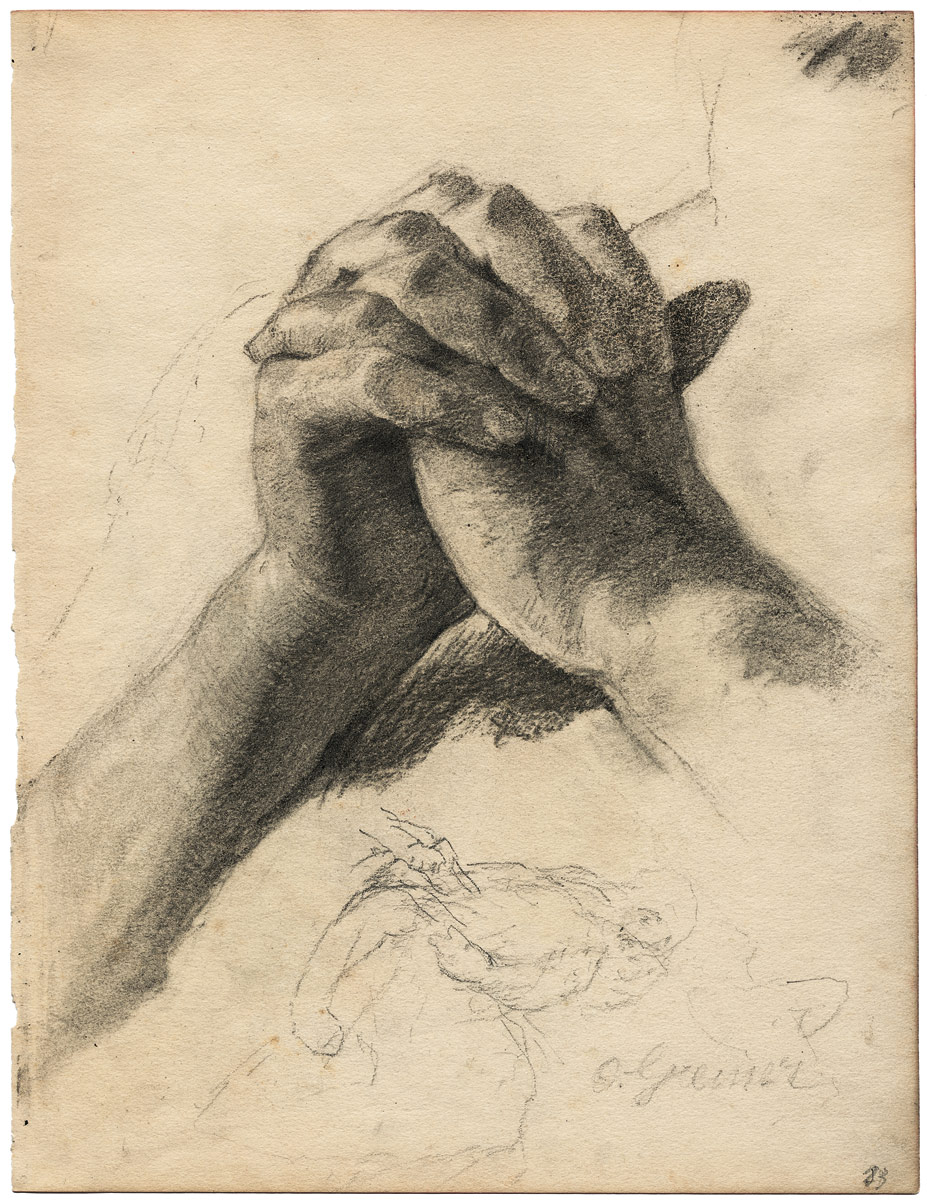
Otto Greiner, “Betende Hande”

Continued from part I

Let’s jump right in. I’m going to frame each of these four issues in the form of a question that may stand between us and a sense of Christian vocation in our work.

Here’s the first question that may be nagging us as we seek a sense of vocation in our work:

  1. Does time dedicated to working in the secular world endanger our souls? Is there an inherent tension or contradiction between the “worldliness” of work and the “spirituality” of faith?

A century or two before the opening of the Middle Ages, the theologian whose influence would become definitive for the next thousand years, Augustine of Hippo, distinguished two spheres of human endeavor: the “active life”—our work in the world—and the “contemplative life”—our private worship and prayer. The active life could be good, but the contemplative life, such as that enjoyed by monks and nuns, was much better—and indeed safer for our souls.

Augustine’s bifurcated view of work has persisted in some circles right up to this day – but it was quickly challenged by the man some consider the spiritual father of the medieval church, as Augustine was its theological father.

Continue reading

Is work irredeemably secular? – part I


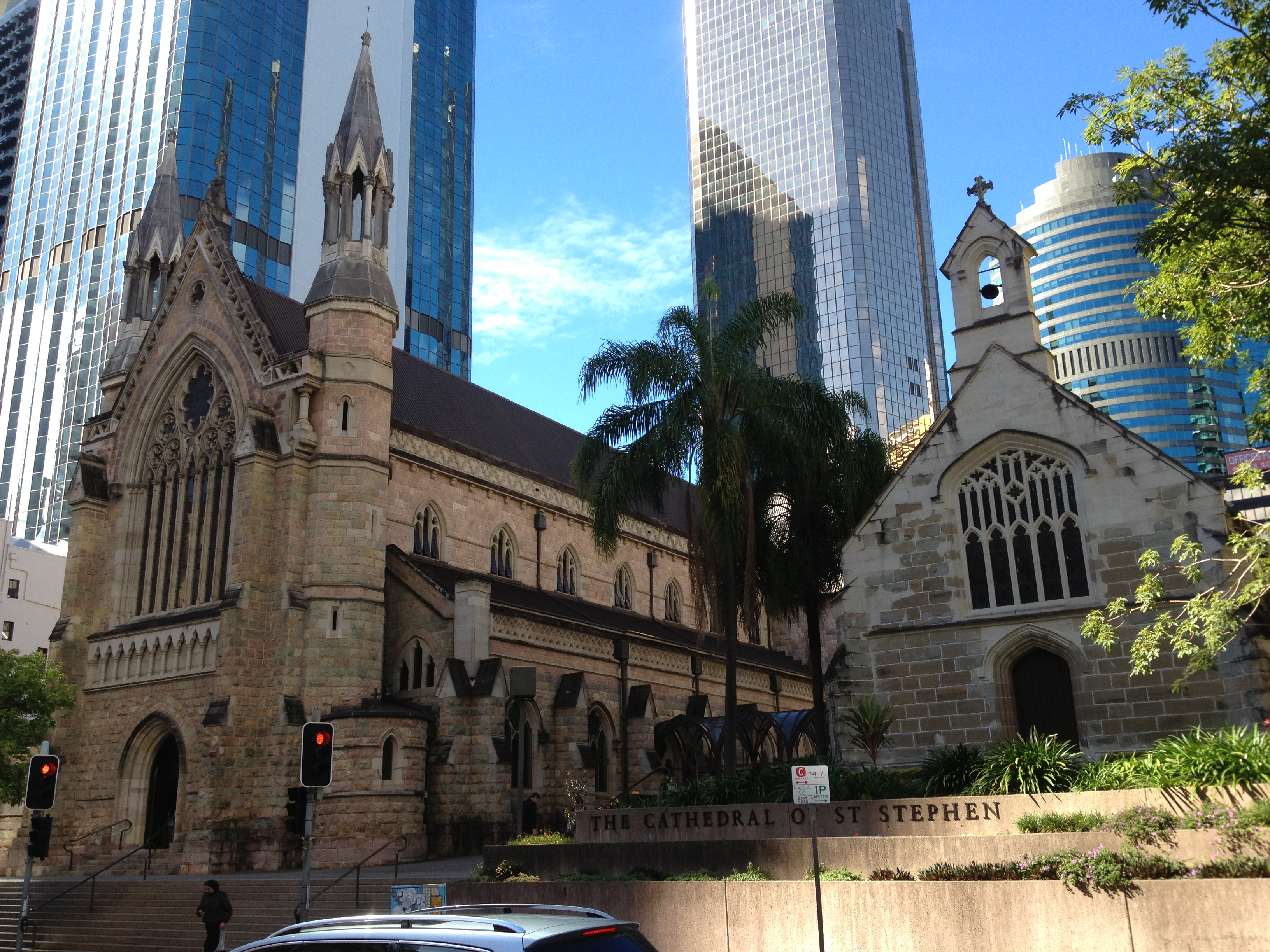
Cathedral of St Stephen, Brisbane; wikimedia (creative commons)

A couple of years back, in the depths of the COVID pandemic, I was invited by Sioux Falls Seminary to address an international group of their students via Zoom on a topic related to faith and work. Reflecting on the assignment, and aware that I would be addressing workplace Christians studying for ministry in one of the most innovative seminaries in the world (which has now spread globally and renamed itself Kairos University), I decided to address the “sacred-secular divide” that many experience acutely in their working lives. The resulting talk draws on four historical figures who addressed this divide in various ways. Here it is, in five parts:

This past January, I was co-teaching a group of graduate students at Regent College, in Vancouver, BC, with that wise and humane thinker on faith and vocation, my friend Steve Garber. Steve had asked me to join with him in creating and teaching a course for Regent called “Models of Public Engagement.” My contribution was to provide readings, mini-lectures, and discussion prompts from a wide variety of historical people of Christian faith. By the class’s second day together, in our Vancouver intensive week during which it would snow, rain, and blow gusts of freezing wind every day, it had already become a class joke that all of Dr. Armstrong’s best friends are dead.

This is actually not far off the mark. You can find my blog-site, for example, at “gratefultothedead.com.” (This, by the way, has confused more than a few Grateful Dead fans, who have wandered onto the blog expecting to find me writing about Jerry Garcia.)

But I can’t help myself. I love introducing people to my friends. As a wise priest once said to me, the teaching gifts of our past leaders have a very long shelf life. Yes, and I’d add, their lives as well as their teachings can also still speak to us today. So this afternoon as we dive into a few questions about how to find Christian vocation in a working world where Christ is so rarely named, I’ll be sharing with you from the thought and lives of four of my best dead friends. These are Gregory the Great, John Wesley, Charles Sheldon, and C. S. Lewis.

Continue reading

For the professors: are we at the “faith (spirituality) and work moment” in academe?


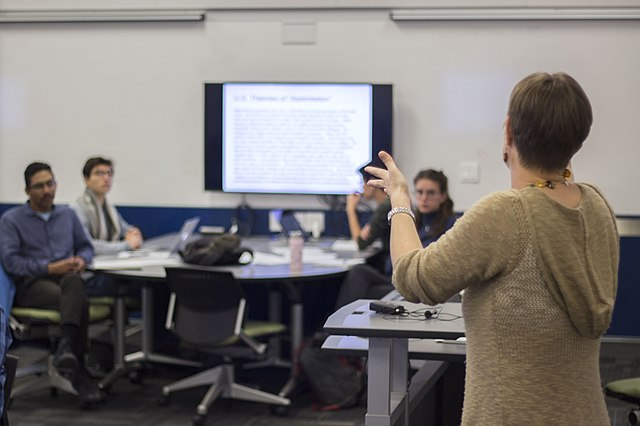
UC Berkeley April 2018 – Creative Commons

Recently I read several dozen articles from the Chronicle of Higher Education from the past few years, diagnosing “the moment” at which faculty find ourselves.

At the same time, I was re-reading my notes from a recent gathering of theological educators (people forming the next generation of pastors) I hosted–also to “diagnose this moment” at institutions with such programs. I asked about theological educators’ current sense of their vocations and their careers. Where are faculty in this specialized area finding themselves these days? Early on the first day of conversations, these factors emerged:

  • Anxiety with changes, transition to virtual work – is this real education? Am I doing it well? Not as satisfying. Missing potential for formation?
  • Sense of living and working in a time of transition – everyone knows education is ripe for disruptive innovation
  • Identity: am I simply a professor or also a mentor, coach, something else? – transitions in teaching [and I’d add: student needs and preferences in education] lead to questions of identity
  • The need for rest, with some burnout: schools have tighter budgets, are asking people to do more
  • New opportunities, flexibility to relocate, work from home, be near family, flourish in new ways, get in front of new audiences and address issues, needs, concerns beyond the traditional seminary (etc.)

As I read these notes, I was getting a strong feeling of déjà vu – where had we seen a combination of factors similar to this before? And it dawned on me: this was reminding me of David Miller’s characterization of the 1980s-90s in America, the rise of the “third wave” of the faith and work movement, and his description of the factors and pressures that led boomers to turn to questions of spirituality related to their work (both new age and traditionally religious), in search of a revived and restructured identity and a recovered satisfaction in work [in his book Got at Work]. I went back and re-read the main section of Miller that dealt with this and that made the link between vast changes in the business sector (in particular) and an increased focus on “spiritual” issues related to work. I’m pasting it below, then I want to draw out the parallel with today’s higher ed situation and faculty’s experience.

Continue reading