Category Archives: Christian humanism

Reading CS Lewis’s medieval retrieval as a Christian humanism for today


I’ve had occasion before to recommend on this blog the excellent magazine Common Good. Despite my occasional appearance in its pages, it’s just chock full of good stuff, and it’s well worth subscribing. Here’s a review of a fascinating new book (I don’t say this just because its author cites my Medieval Wisdom book a bunch) that they asked me to write – it’ll appear in an upcoming issue, no doubt improved from this draft by editor extraordinaire Aaron Cline Hanbury:

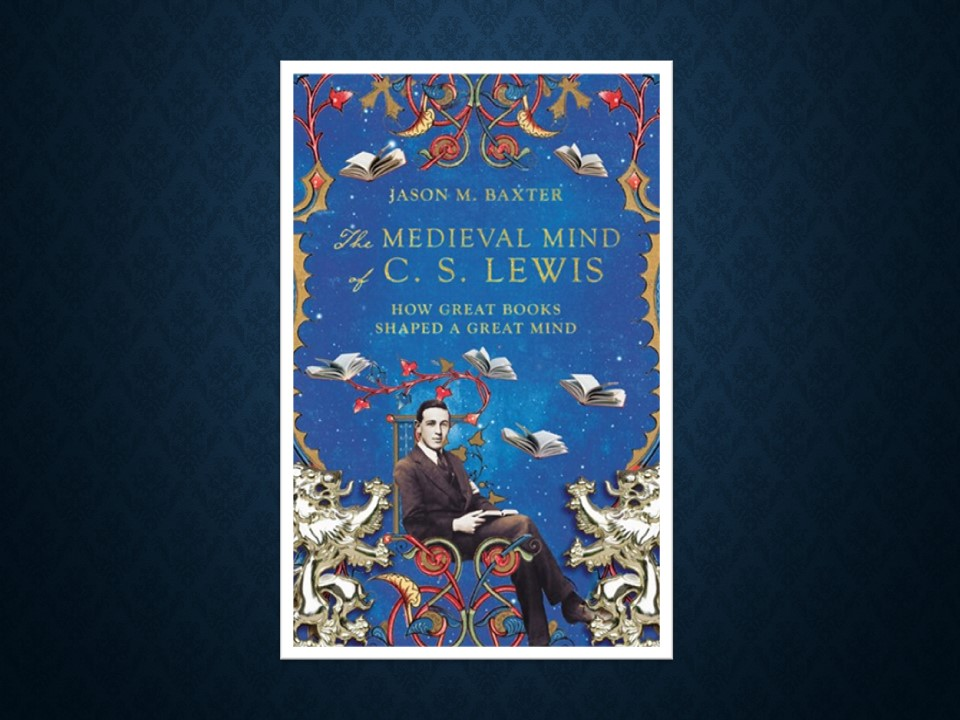
Jason M. Baxter’s new book The Medieval Mind of C S Lewis: How Great Books Shaped a Great Mind is a suggestive introduction to the literary and theological substance of what we may call, following Baxter’s own clues, CS Lewis’s “long-medieval Christian humanism.”

It is suggestive in helping us understand Lewis’s mind better—Baxter starts the book by puzzling over the fact that despite lavish attention to Lewis the apologist and Lewis the fiction-writer, most modern readers know little to nothing about a “third Lewis”: Lewis the medievalist.

But more than this, it is suggestive in understanding Lewis’s distinctive approach to the cultural crisis of his lifetime – shadowed as it was by two World Wars – and in assessing what we can learn from that approach for our own troubled times.

Continue reading

The Christian Story of the University


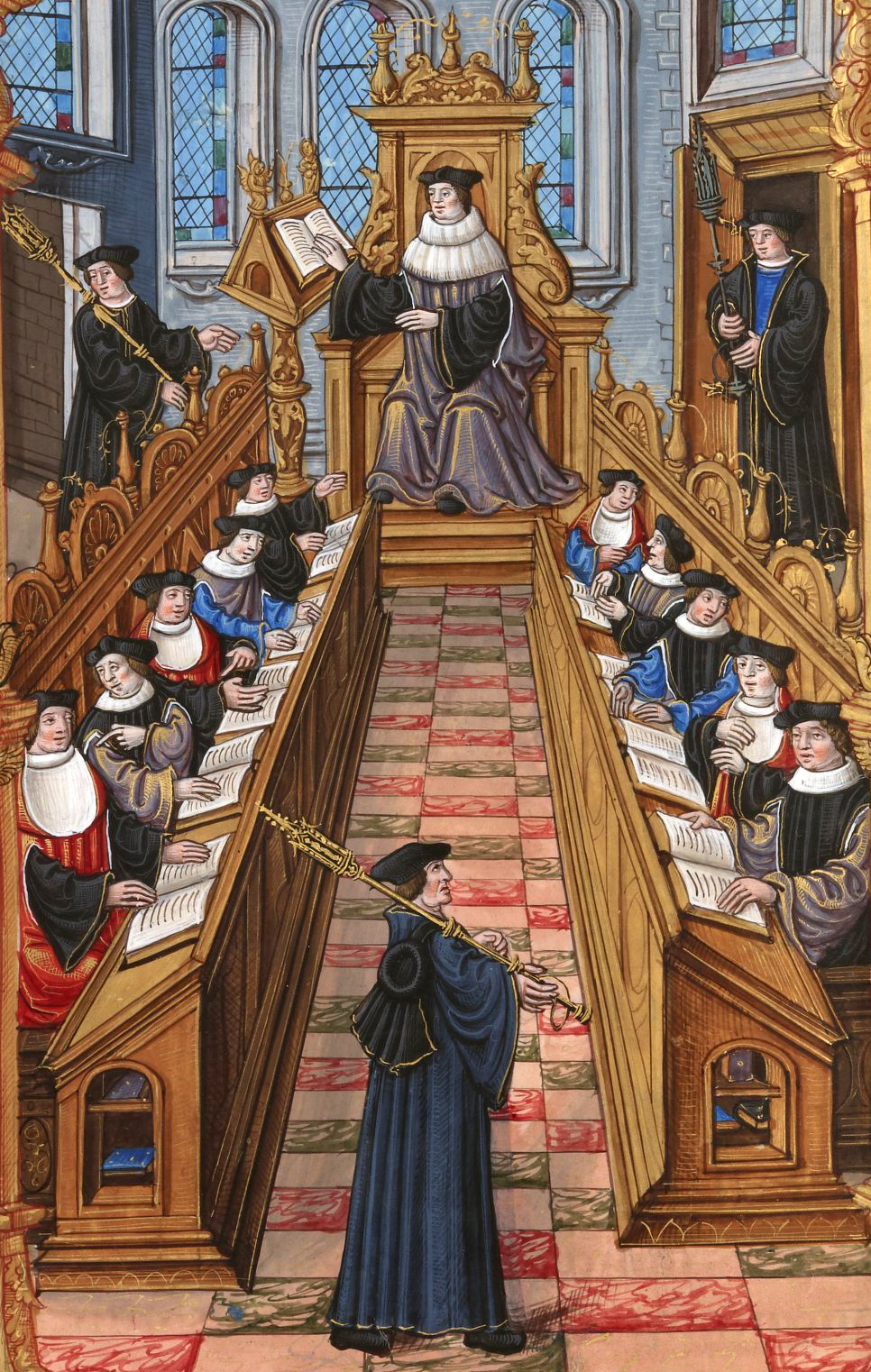
Illustration from a 16th-century manuscript showing a meeting of doctors at the University of Paris; wikipedia, public domain

Continuing this emerging series of posts on the vocation of the (Christian) faculty member–and this will surprise none of my regular readers–I want to take a moment to brag on a recent issue of Christian History magazine, which delves into the Christian (and, here’s a surprise, medieval) history of the university.

The issue is called “Hallowed Halls: The Christian Story of the University,” and is available both in full color and downloadable individual articles at the preceding link. As always, an impressive roster of (that rare bird) scholars-who-can-write-for-ordinary-folks lined up to write about this topic for our indefatigable managing editor, Jennifer Woodruff Tait (yes, you absolutely should read her Intervarsity Press book Church History in Seven Sentences, her even-more-recent co-edited The Cambridge Companion to American Protestantism, and her prize-winning published dissertation The Poisoned Chalice: Eucharistic Grape Juice and Common-Sense Realism in Victorian Methodism). Among the stellar authors in the issue: George Marsden, Jens Zimmermann, Thomas Albert Howard, and Gillian Evans.

And when Marsden was responding to a symposium convened to discuss the new edition of his Soul of the American University, and reflecting in that response on the original, Christian humanist purposes of the university, which motivated its medieval founders, he was moved to refer to the author of the lead article, Regent College scholar of Christian humanism Jens Zimmermann, and to recommend the issue as a whole:

Continue reading

Questions that arise about Christian humanism as foundation for the faith & work conversation


Portrait of Desiderius Erasmus of Rotterdam with Renaissance Pilaster, wikipedia, public domain

I have argued that the faith & work conversation needs a stronger theological foundation, and that the long tradition of Christian humanism can and should provide that foundation. I recognize in making that argument that many questions now arise. So I am beginning to line up those questions. The following is a preliminary list, not yet carefully ordered nor comprehensive; I also recognize that any number of these overlap significantly with each other:

Continue reading

In brief: Why Christian humanism is the essential foundation of the faith & work conversation


  • In light of theologically, biblically, and historically weak popular presentations of faith & work arguments, we must speak primarily in theological terms
  • We must not speak in narrowly theological terms
  • In other words, we must draw on a theological discourse that embraces and can be embraced by all current Christian traditions (e.g. not a discourse that is exclusively neo-Calvinist/Kuyperian, or Wesleyan/Pentecostal, or grounded in Catholic social thought, etc., but informs and converses with all of those traditions and more)
  • We must draw on a theological discourse that stretches back to the earliest church
  • We must draw on a theological discourse that is clear about what human beings are, how we (are to) flourish, and how we are (to be) redeemed
  • We must draw on a theological discourse that is not narrowly “spiritual,” but instead addresses the broadest possible range of human activities (including all major sectors of work) and that affirms material and social as well as spiritual flourishing
  • We must draw on a theological discourse that therefore includes a well-articulated approach to human cultural (including economic) activity
  • We must draw on a theological discourse grounded in undeniable major orthodox doctrines such as creation, the incarnation, and the atonement, and with clear scriptural foundations such as Genesis and the Gospels
  • Christian humanism is the only theological tradition I know of that fulfils all of the above criteria

Further:

Continue reading

Christian humanism and “faith, work, and economics” – notes engaging Jens Zimmermann


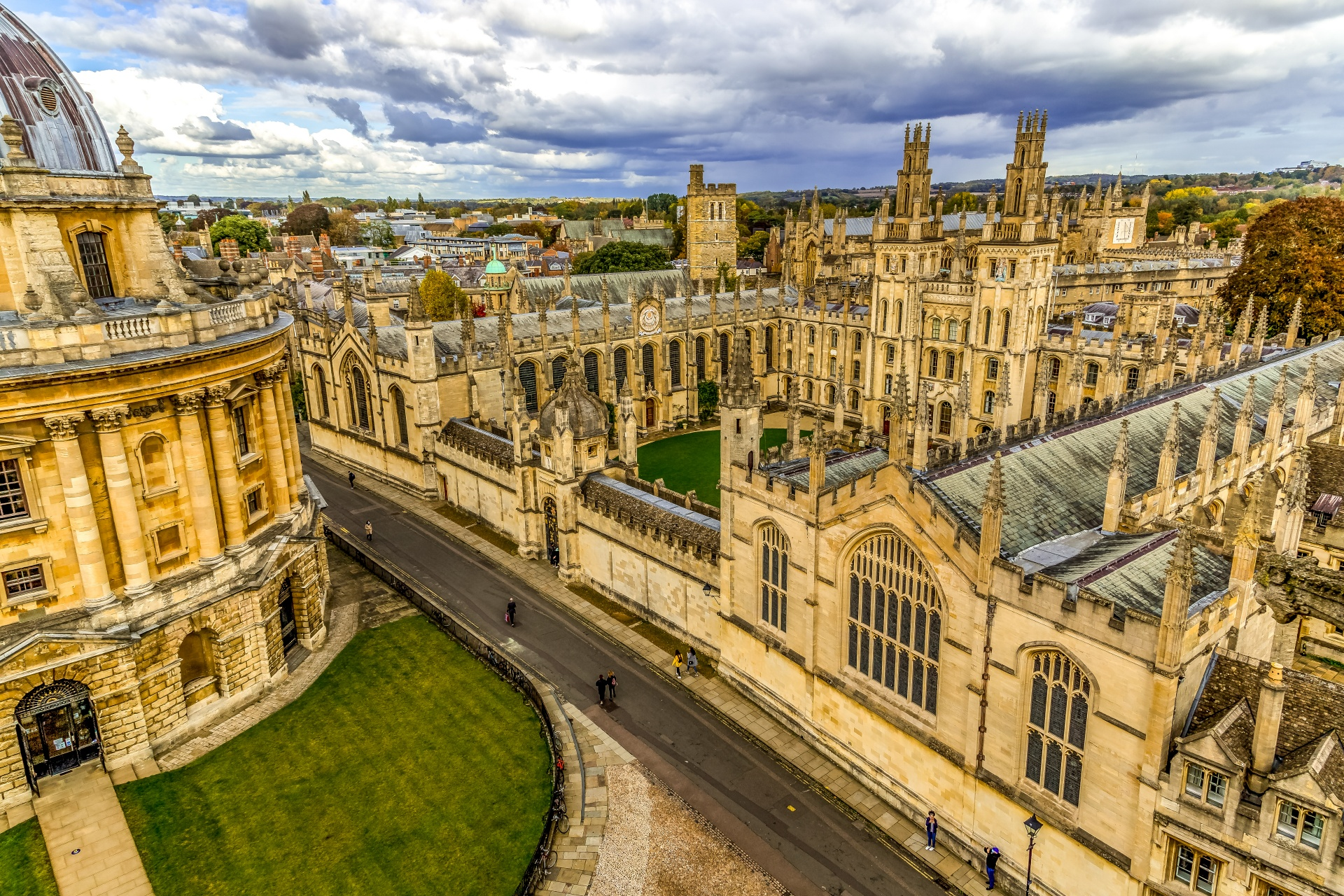
Oxford University, George Hodan, publicdomainpictures.net

Some key points, drafted by C Armstrong, 2-25-21 in engagement with Jens Zimmermann

The following are some key points I drafted early (Feb 2021) in my exploration of the link between Christian humanism and the “faith, work, and economics” conversation, interacting with the work of Jens Zimmermann, JI Packer Professor of Theology at Regent College, Vancouver, Canada. These themes are informing my work in that conversation at the Kern Family Foundation (Wisconsin), engaging a national network of seminaries and Christian colleges preparing future pastors (note that the book cited parenthetically as “Re-Envisioning” at a number of points below is the Zimmermann-edited volume Re-Envisioning Christian Humanism: Education and the Restoration of Humanity):

Continue reading

Is work irredeemably secular? – part I


Cathedral of St Stephen, Brisbane; wikimedia (creative commons)

A couple of years back, in the depths of the COVID pandemic, I was invited by Sioux Falls Seminary to address an international group of their students via Zoom on a topic related to faith and work. Reflecting on the assignment, and aware that I would be addressing workplace Christians studying for ministry in one of the most innovative seminaries in the world (which has now spread globally and renamed itself Kairos University), I decided to address the “sacred-secular divide” that many experience acutely in their working lives. The resulting talk draws on four historical figures who addressed this divide in various ways. Here it is, in five parts:

This past January, I was co-teaching a group of graduate students at Regent College, in Vancouver, BC, with that wise and humane thinker on faith and vocation, my friend Steve Garber. Steve had asked me to join with him in creating and teaching a course for Regent called “Models of Public Engagement.” My contribution was to provide readings, mini-lectures, and discussion prompts from a wide variety of historical people of Christian faith. By the class’s second day together, in our Vancouver intensive week during which it would snow, rain, and blow gusts of freezing wind every day, it had already become a class joke that all of Dr. Armstrong’s best friends are dead.

This is actually not far off the mark. You can find my blog-site, for example, at “gratefultothedead.com.” (This, by the way, has confused more than a few Grateful Dead fans, who have wandered onto the blog expecting to find me writing about Jerry Garcia.)

But I can’t help myself. I love introducing people to my friends. As a wise priest once said to me, the teaching gifts of our past leaders have a very long shelf life. Yes, and I’d add, their lives as well as their teachings can also still speak to us today. So this afternoon as we dive into a few questions about how to find Christian vocation in a working world where Christ is so rarely named, I’ll be sharing with you from the thought and lives of four of my best dead friends. These are Gregory the Great, John Wesley, Charles Sheldon, and C. S. Lewis.

Continue reading

A few more accessible, fully illustrated, scholar-written resources on faith and science!


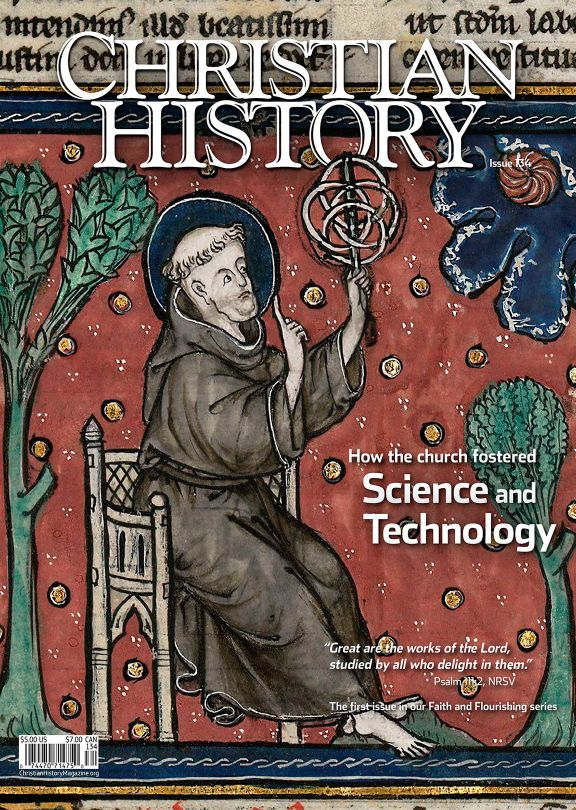
Issue 134, 2020

For those who enjoyed my faith & science history series over the past couple of weeks, there’s a treasure trove awaiting: The recent Christian History issue(s) on the same topic. You can browse the issue in full color and download pdfs of individual articles here.

Which reminds me to say . . .

. . . if I had a nickel for every time someone has said they didn’t know that Christian History had re-started after its then 26-year run ended in the fateful year 2008 . . . well, I’d be able to buy a fancy coffee or two. And little did anyone know – leastwise the magazine’s editors and parent (non-profit) organization – that in 2022 we’d be cruising into CH’s 40th anniversary year (special anniversary issue coming – keep an eye out at this link!).

But since 2011, the magazine has indeed lived again – and what a run it’s been, under the indefatigable editorial leadership of scholar/editor/writer/priest extraordinaire Jennifer Woodruff Tait. Among the topics we’ve covered just in the past few years: America’s love affair with the Bible; CS Lewis’s friends & family and their influence on him; Christian support for the common good in science, healthcare, higher education, the public square, and the marketplace; Christianity and Judaism; plagues and epidemics; Latin American Christianity; the women of the Reformation; the Quakers . . .

And for those interested in topics churchly/scientific, check out the following issues:

Hard to believe that last one, my very first issue as (short-lived) managing editor, came out a full 20 years ago! And I’m still proud of it . . .

Thanks y’all for reading my blog. I hope you enjoy these resources!

Christian foundations of science and technology innovation, part VII (final)


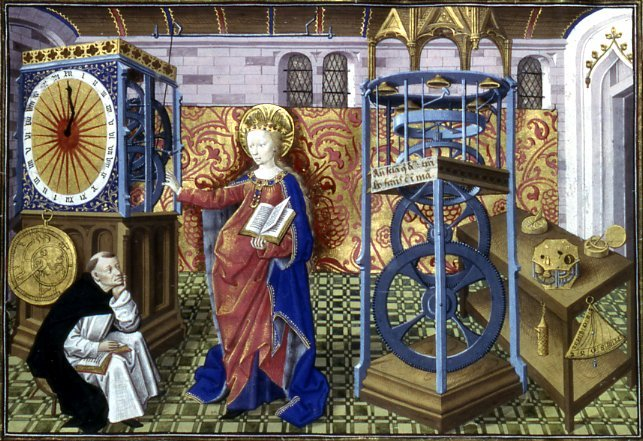
Miniature from 1450 taken from a copy of “Horologium Sapientiae” written around 1330 by Constance Henrich Seuse, Bibliothèque Royale Albert 1er, Bruxelles

. . . continued (and completed) from part VI

But though intellectual curiosity or the expectation of a lawfulness in nature mirroring the rationality of God did help drive the rise of science, it was not the only factor. Another, more practical consideration also contributed, and this brings us to Fact #9. That is, that medieval Christians also saw their rational study of creation as helping fulfil the cultural mandate of Genesis by developing new tools for better living.

In other words, the pursuit of scientific knowledge was already, even among the medieval scholastics, a matter not just for speculative or devotional interest, but also a way of contributing to human flourishing. The scholastics understood that God wants us to live in full enjoyment of his creation as well as his fellowship. God will not allow this full enjoyment and flourishing to be completely destroyed by the disobedience of humans in the fall, and so he works with and through human reason to improve every area of human life through new technologies, advances in medicine, and every other field of material culture.

Thus medieval theological education fostered every science and art—the quadrivium of the maths and sciences (arithmetic, geometry, music, astronomy) as well as the trivium of the humanities (grammar, logic, rhetoric). Though theology remained the “queen of the sciences,” every medieval university student, in order to earn a bachelor’s degree, had to study arithmetic, geometry, and astronomy as well.

Continue reading

Christian foundations of science and technology innovation, part VI


William Blake, The Ancient of Days setting a Compass to the Earth, frontispiece to copy K of the artist’s Europe a Prophecy

. . . continued from part V

As they sorted and tidied, the university-based natural philosophers began discovering that nature often contained its own causal explanations, which could be identified through observation and experiment. In the heyday of the scholastics, Thomas Aquinas’s teacher Albertus Magnus, for example, wrote two scientific treatises that helped to found empiricism and the scientific method—one on botany and one on zoology—and sought empirical knowledge everywhere he went through observation and experiment. “[Albert] used his journeys through the Western world to further this interest, and was forever asking questions of fishermen, hunters, beekeepers, and bird-catchers.”

Such thinkers certainly did not intend to deny God’s creative, providential activity—just to highlight the more and more evident fact that nature operates according to its own mechanisms, which are describable in naturalistic terms.

By the early 14th century, those terms were becoming increasingly mathematical. Scholars of that day such as Thomas Bradwardine at Oxford (later to become Archbishop of Canterbury) used mathematical theory to challenge and update old, incorrect scientific beliefs inherited from Aristotle. The new and more accurate groundwork they provided on a variety of scientific questions prepared the way for the work of Sir Isaac Newton (1642-1717) and other stars of the scientific revolution.

Lest we think, though, that as math entered, faith exited (as some have interpreted Newton’s work!), it is important to see how our eighth fact, the harmonization of scientific and theological understandings, was already emerging in the time of the scholastics.

Continue reading